No model yet, material choice and wall thickness are explained from a practical angle.
Knowledge Center
Blueprint News
lantu3D reviews wall thickness, structure, materials, process, quantity and finishing before quotation.
01Guides
02Materials
03Customer View
Content should help customer decisions
lantu3D articles focus on materials, processes, cost, modeling and manufacturability so customers understand key decisions before submitting a request.
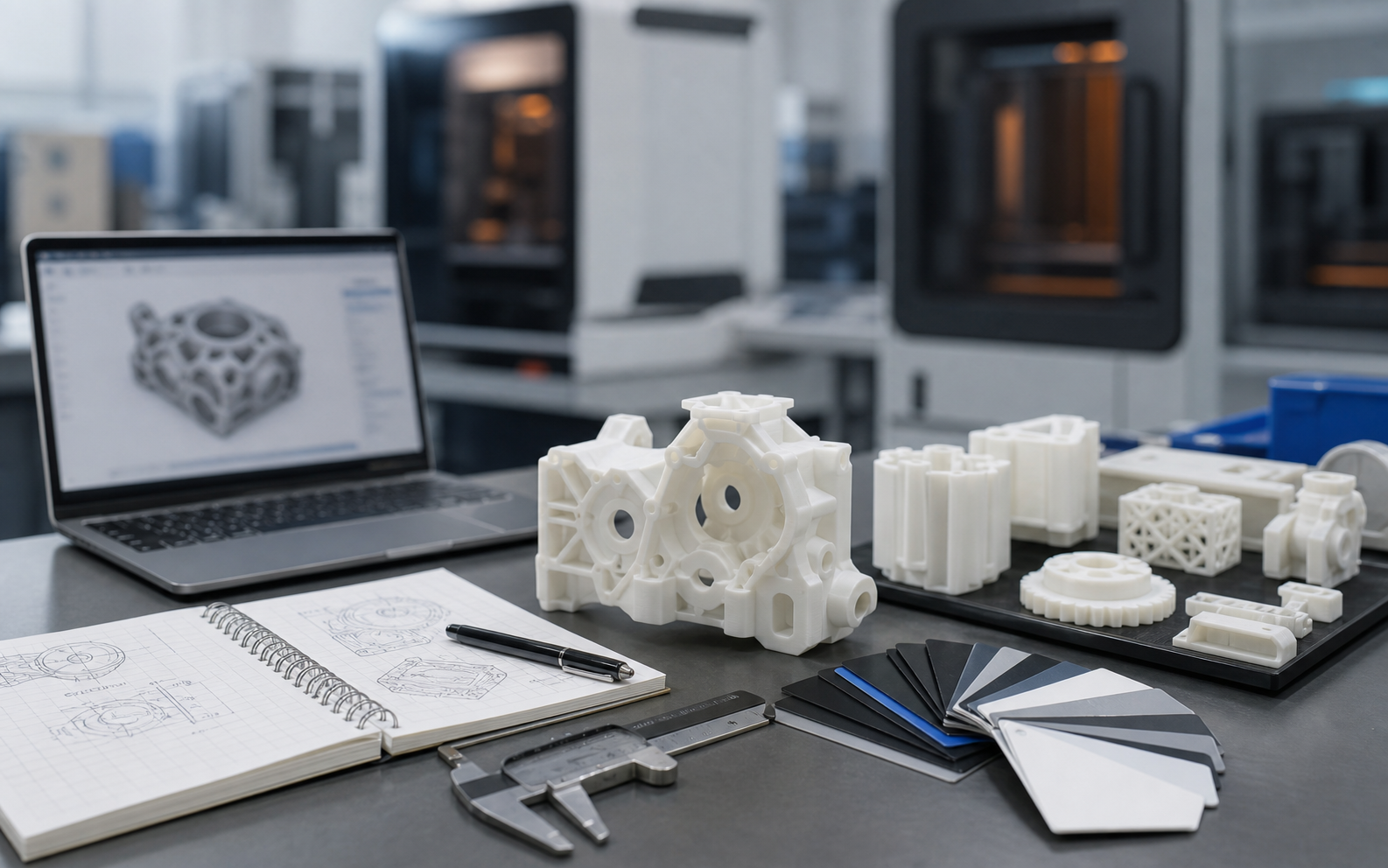
Prototype, fixture, custom part, small batch and cost-control topics for business users.
lantu3D is positioned as blueprint realization and lifecycle management, not just a print shop.

news
Equipment Lifecycle Management for 3D Printing Service Enterprises: From Procurement Evaluation to Decommissioning
A systematic introduction to how 3D printing service enterprises can build an equipment lifecycle management system, covering the complete management process from equipment selection evaluation and procurement decisions to installation and commissioning, maintenance, performance upgrades, and decommissioning.
news
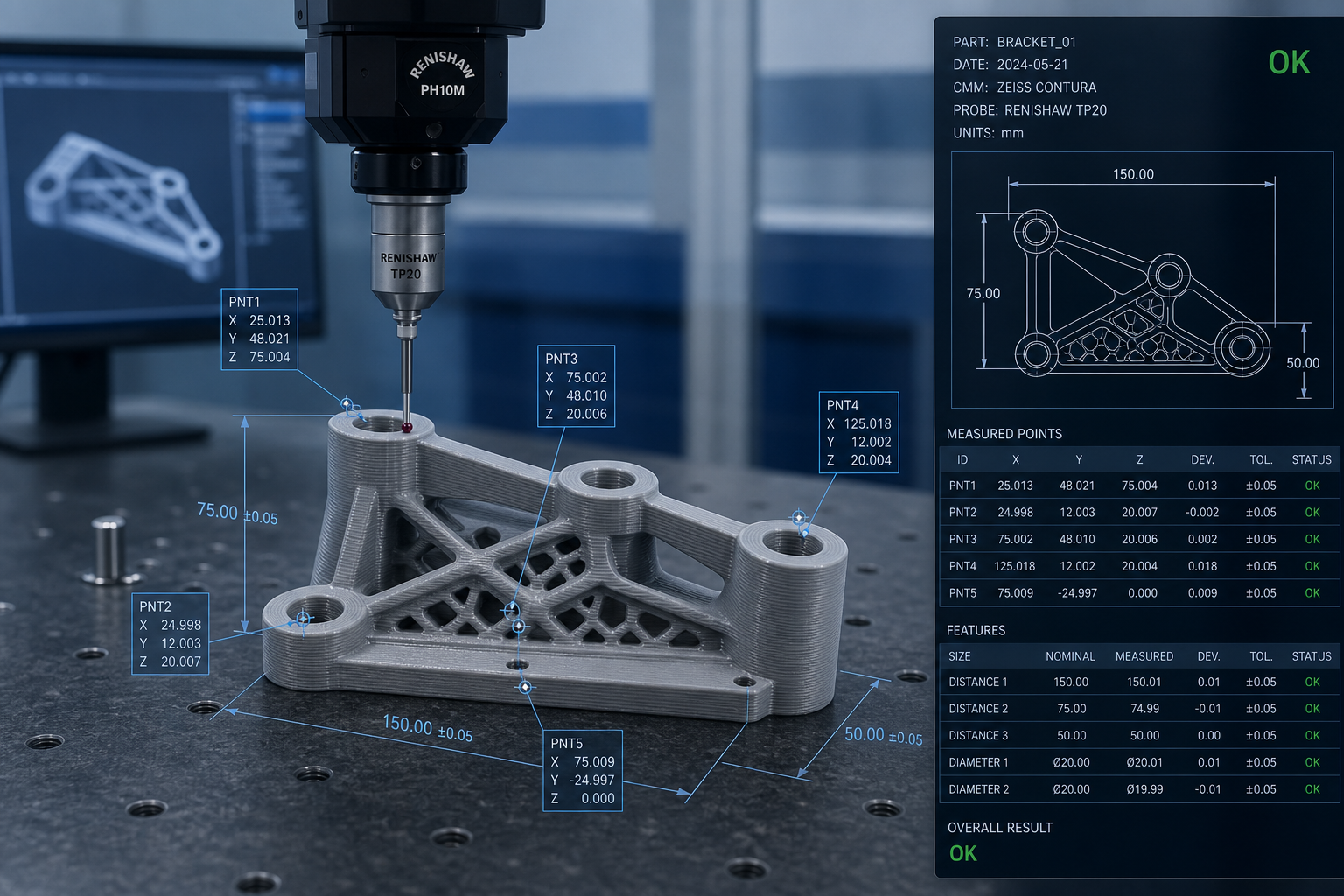
Designing for Inspectability in 3D Printed Parts: Reserved Inspection Datums and Measurement Plans
Explains how to reserve inspection datums and measurement interfaces during the design stage of 3D printed parts to ensure efficient dimensional inspection, performance verification, and quality assessment after printing, providing an inspectability design guide aligned with GD&T standards.
news
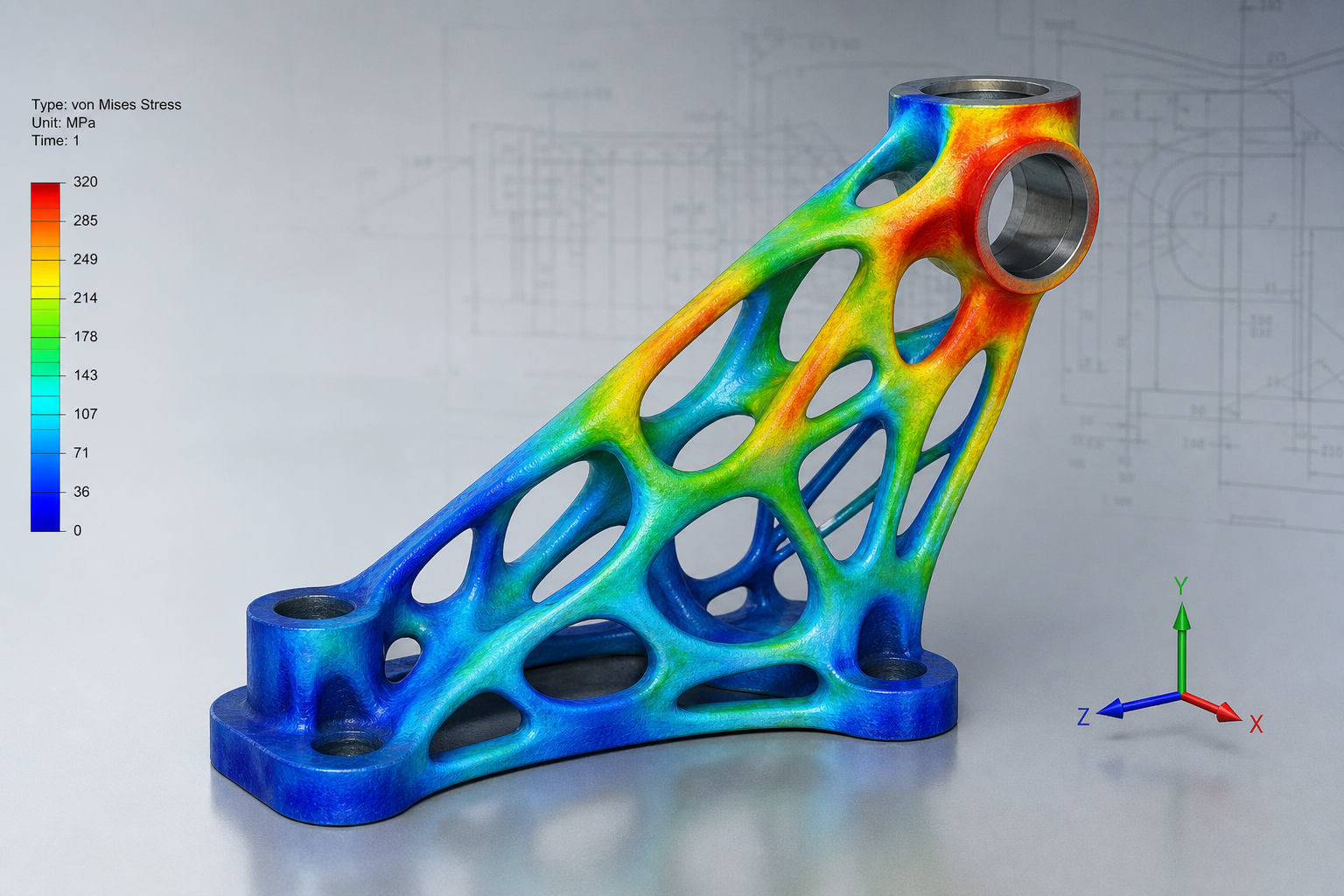
Engineering Practice of Topology Optimization in 3D Printing: A Full Workflow from Simulation to Manufacturing
A complete guide to the engineering practice of combining topology optimization with 3D printing, covering the full workflow from simulation setup, optimization algorithm selection, result interpretation, manufacturability validation, to final print parameter tuning.

news
Understanding and Applying Anisotropy in 3D Printing: Engineering Use of Strength Directionality
An in-depth analysis of the inherent anisotropic characteristics of 3D printing processes, explaining how to understand and leverage strength directionality to optimize part design, and providing engineering decision methods for print orientation, infill strategies, and structural reinforcement direction.
news
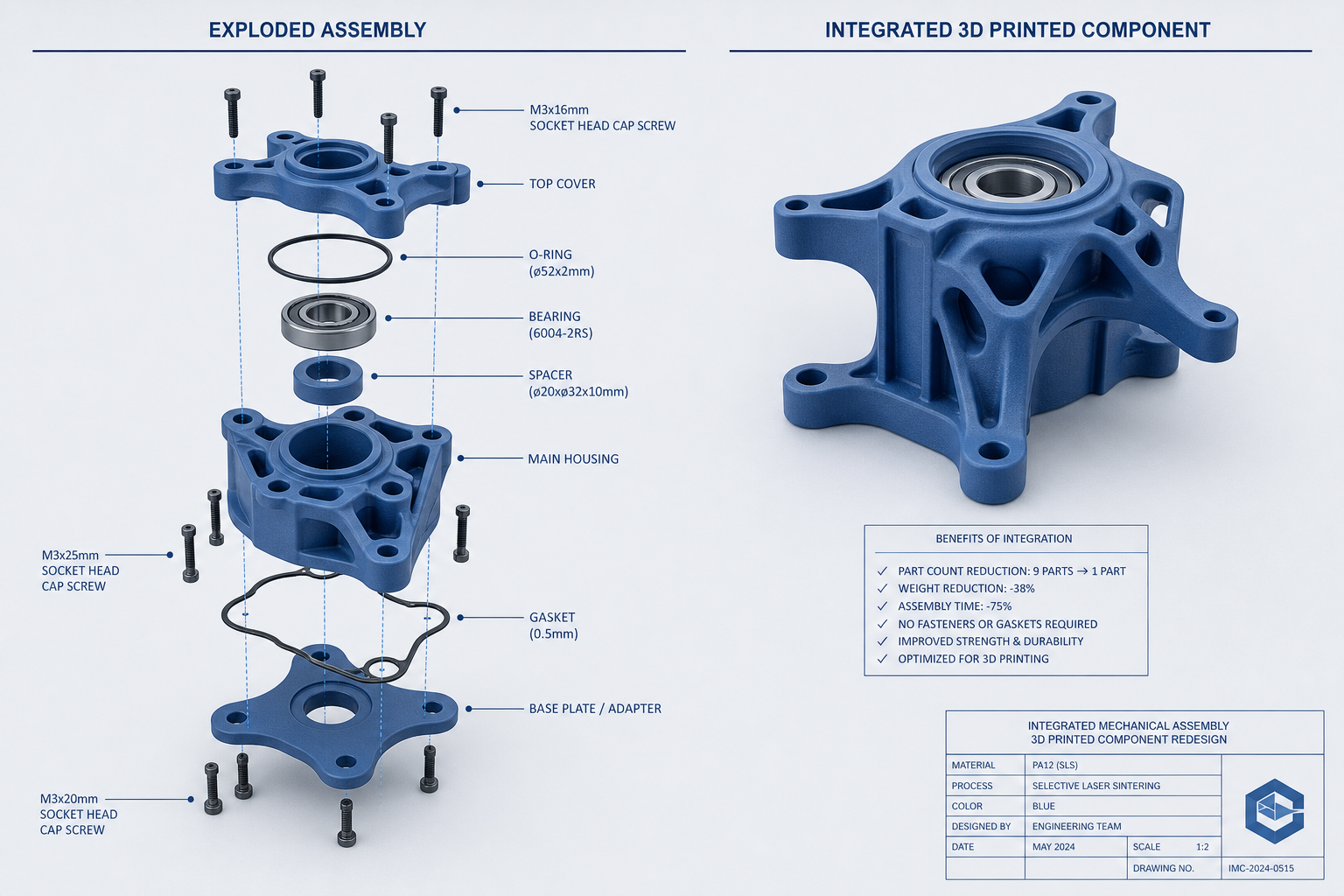
Multi-Functional Integrated 3D Printing Design: Reducing Part Count and Assembly Steps
Explore how integrated 3D printing design can merge multiple traditional parts into a single printed component, lowering assembly complexity, reducing failure points, and improving system reliability, with practical design methods and engineering case studies.
news
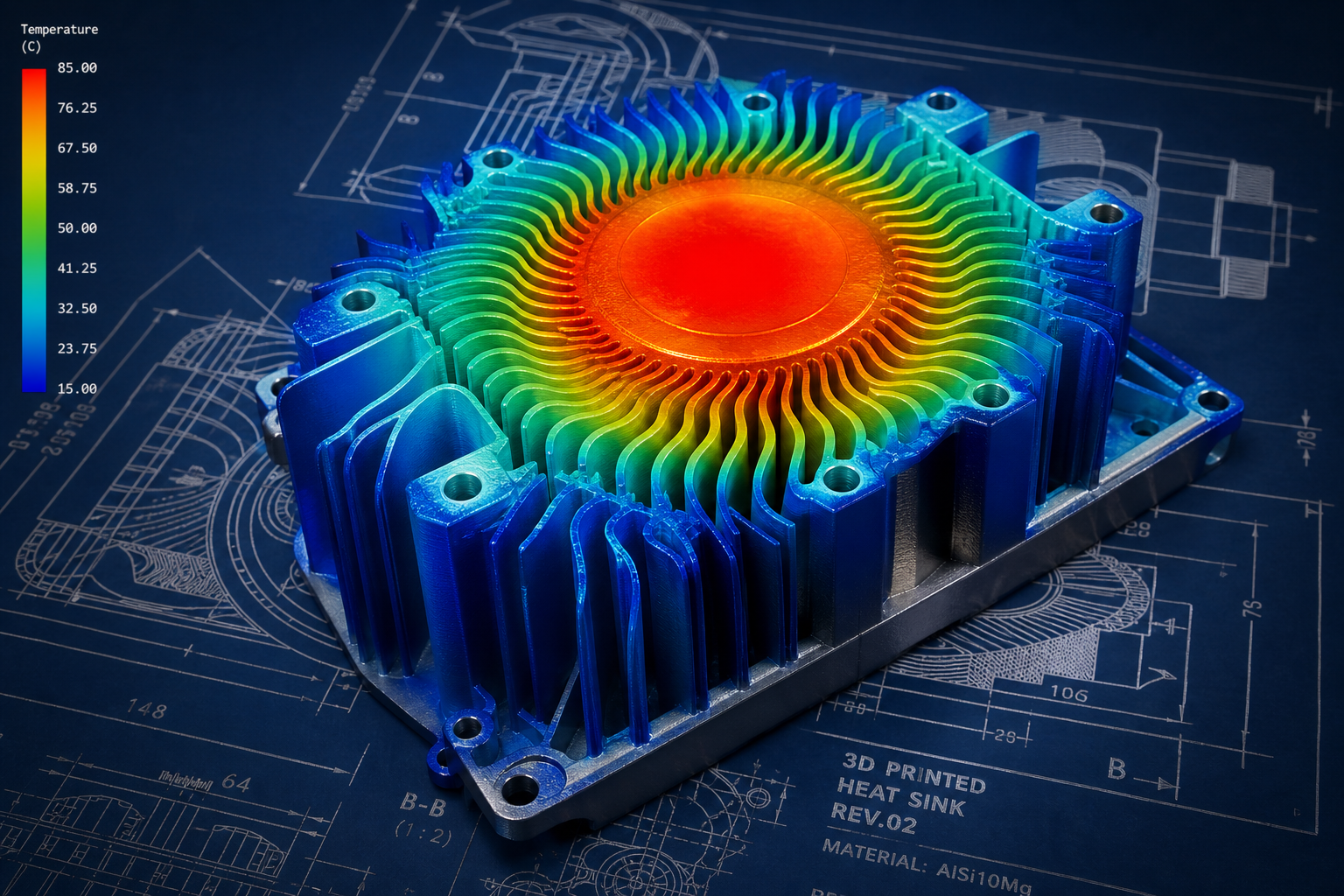
Thermal Design Considerations for 3D-Printed Parts: Preventing Thermal Deformation and Optimizing Heat Dissipation Structures
This article systematically explains how to address thermal deformation in the design stage of 3D-printed parts, and provides engineering methods for optimizing heat dissipation structures, relieving thermal stress, and compensating for thermal deformation to help designers achieve higher-precision parts in additive manufacturing.
news
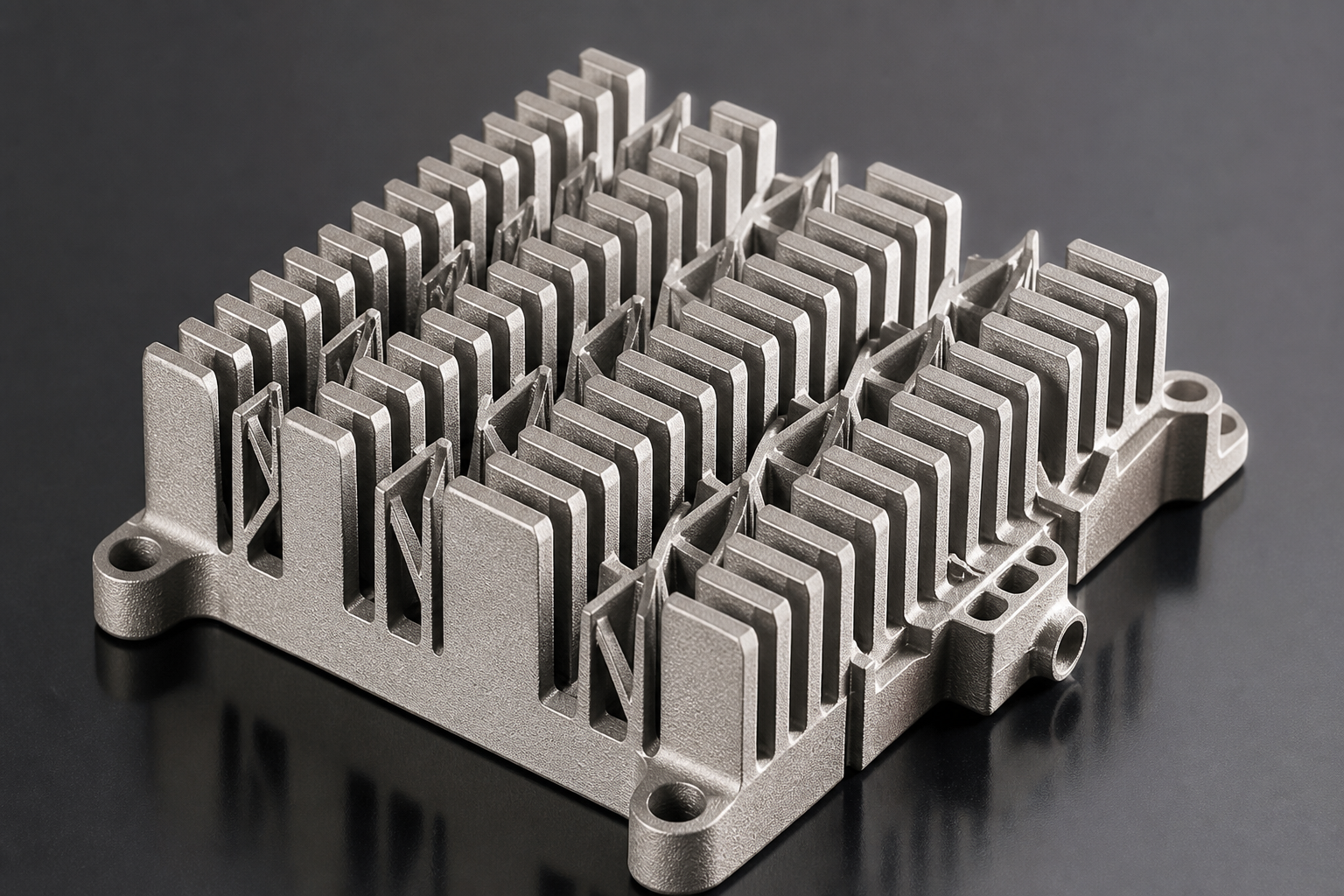
TEST Thermal Design Considerations for 3D Printed Parts
Test summary in English.
news
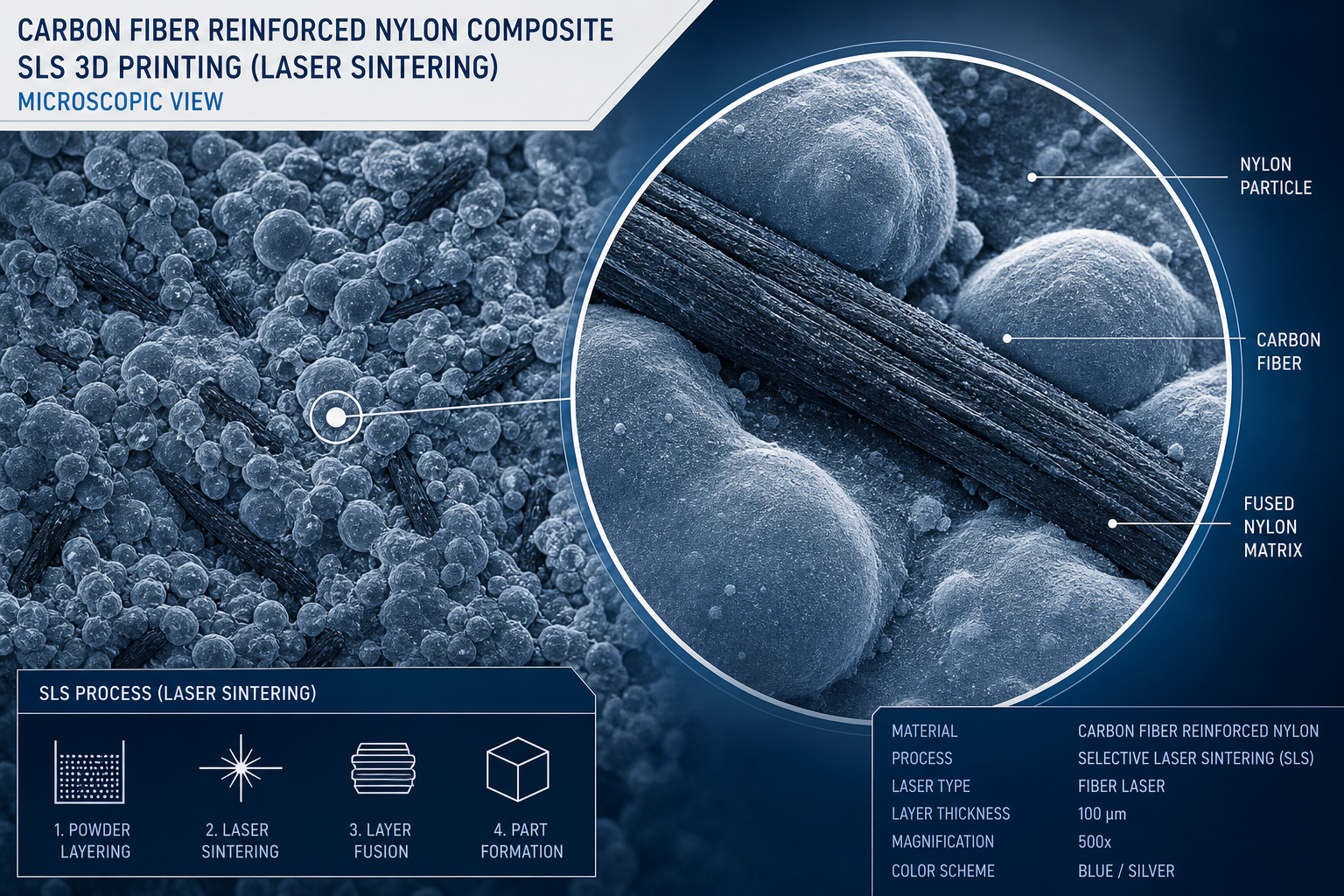
Crystallization Behavior and Control Strategies of Carbon Fiber Reinforced Nylon Composites in SLS Process
An in-depth analysis of the crystallization kinetics of carbon fiber reinforced nylon composites during selective laser sintering (SLS), exploring the relationships among fiber orientation, cooling rate, and crystallinity, and proposing process parameter optimization strategies to improve part mechanical performance.
news
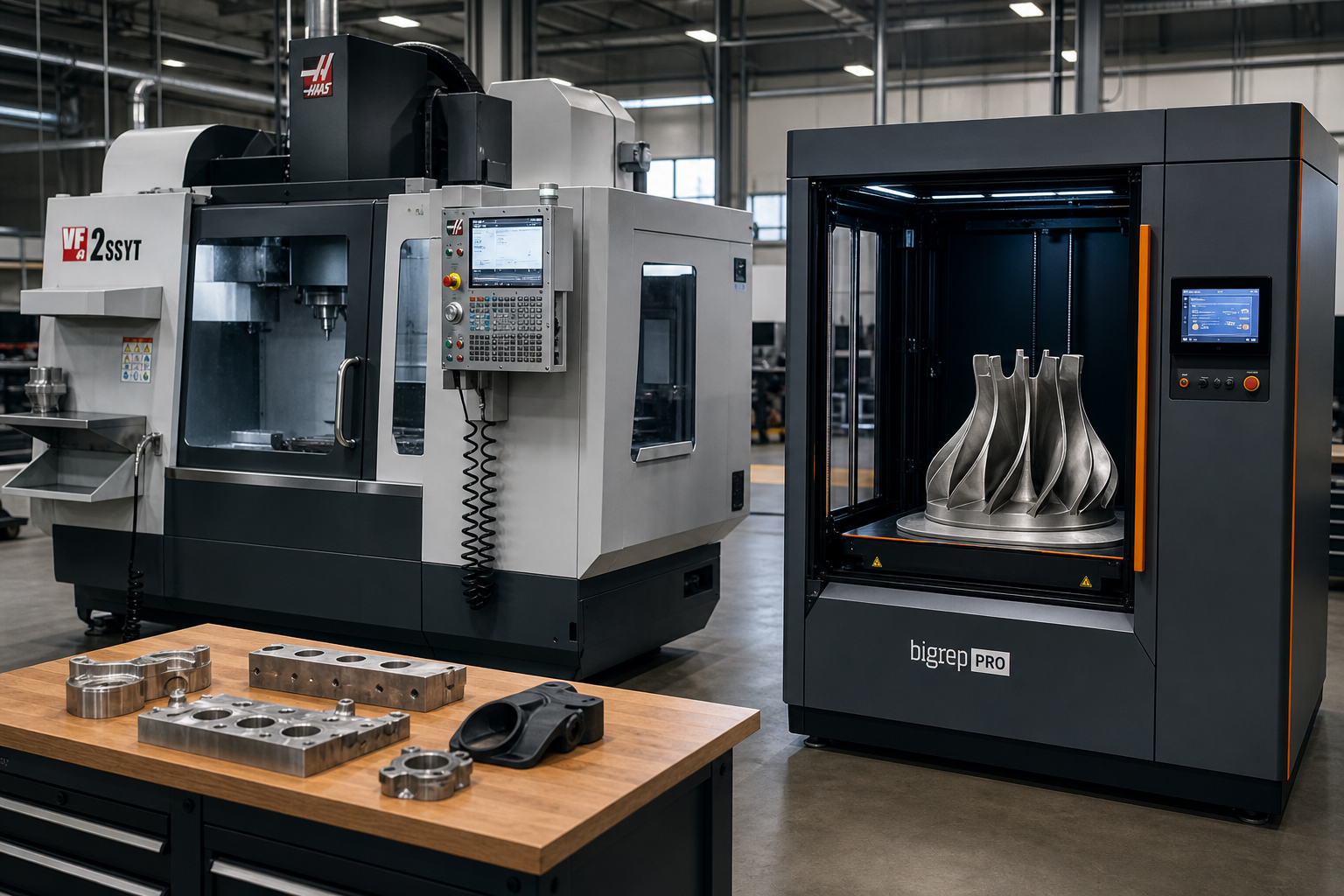
Hybrid 3D Printing and CNC Manufacturing: Process Selection Matrix and Cost Break-Even Analysis
This article explains that 3D printing and CNC machining are not competing alternatives, but complementary processes determined by geometry, precision, batch size, material requirements, and lead time. It introduces a five-dimension process selection matrix, shows how to calculate cost break-even points using fixed and variable costs, and compares typical application scenarios through two case studies. The article also emphasizes hybrid manufacturing strategies that assign functional surfaces to CNC and complex geometries to additive manufacturing, helping enterprises reduce assembly steps, improve design iteration speed, and optimize total manufacturing cost.
news
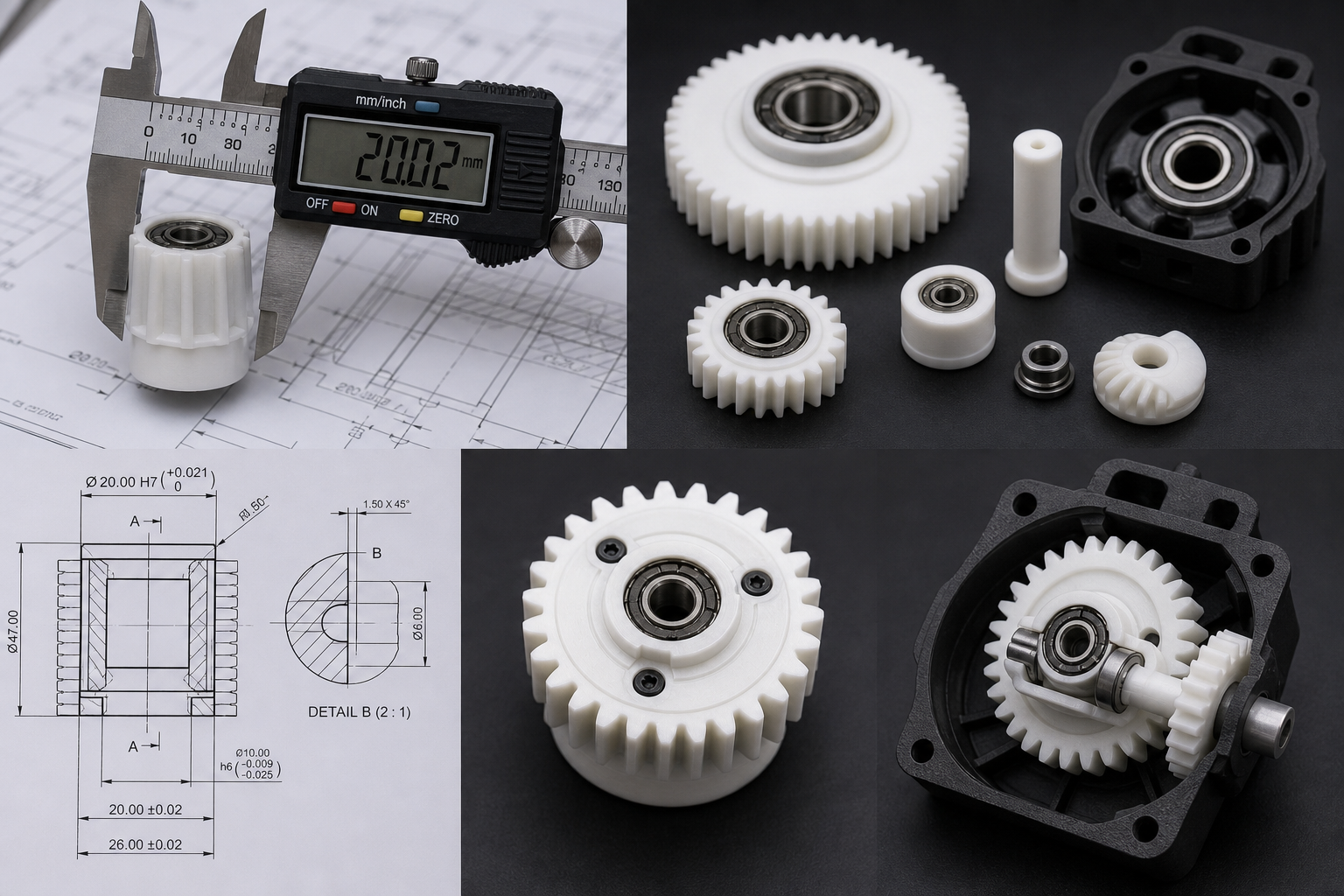
3D Printing Assembly Tolerance Design Standards: An Engineering Guide to Shaft-Hole Fits, Sliding Clearances, and Press Fits
This article explains how to design tolerances for 3D-printed assemblies by starting from process capability, material shrinkage, and post-processing deformation. It compares shaft-hole fits, sliding clearances, and press fits across FDM, SLA, SLS, and MJF, and provides practical values and calibration methods to reduce interference, looseness, and rework.
news
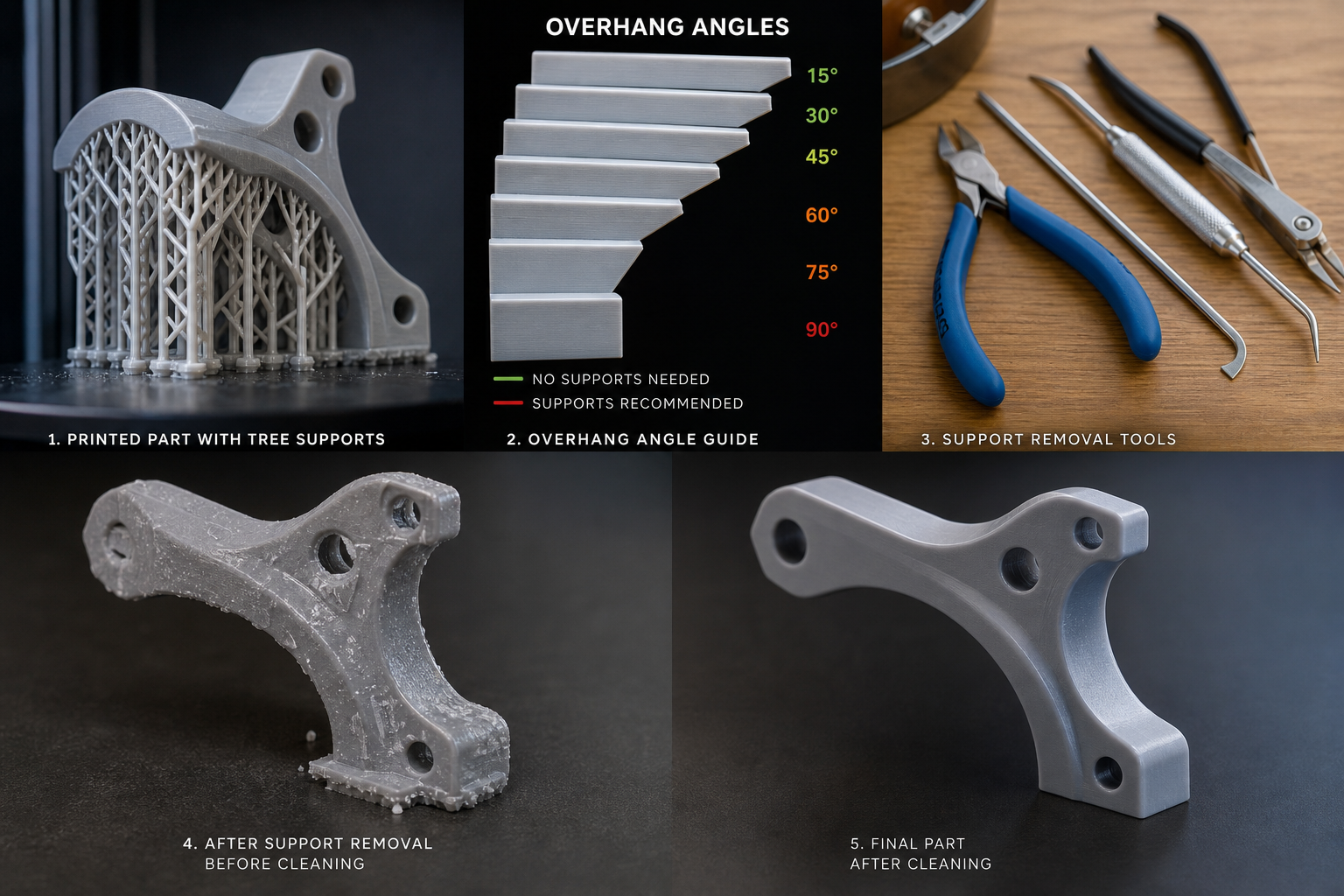
3D Printing Support Structure Design Principles: Overhang Angles, Contact Point Optimization, and Post-Processing Considerations
This article outlines practical principles for designing 3D printing support structures across major additive manufacturing processes. It explains how to first assess whether a part can be printed without supports using overhang-angle thresholds, then optimize support contact points to balance stability and surface quality, and finally design supports for easier removal with lower post-processing cost. It also compares the differing logic behind FDM, SLA/DLP, and SLS/MJF support strategies, and shows how build orientation, part splitting, and process parameters can significantly reduce visible support marks. Real-world case studies demonstrate how iterative support tuning can improve print success rates, reduce labor, and make production more stable.
news
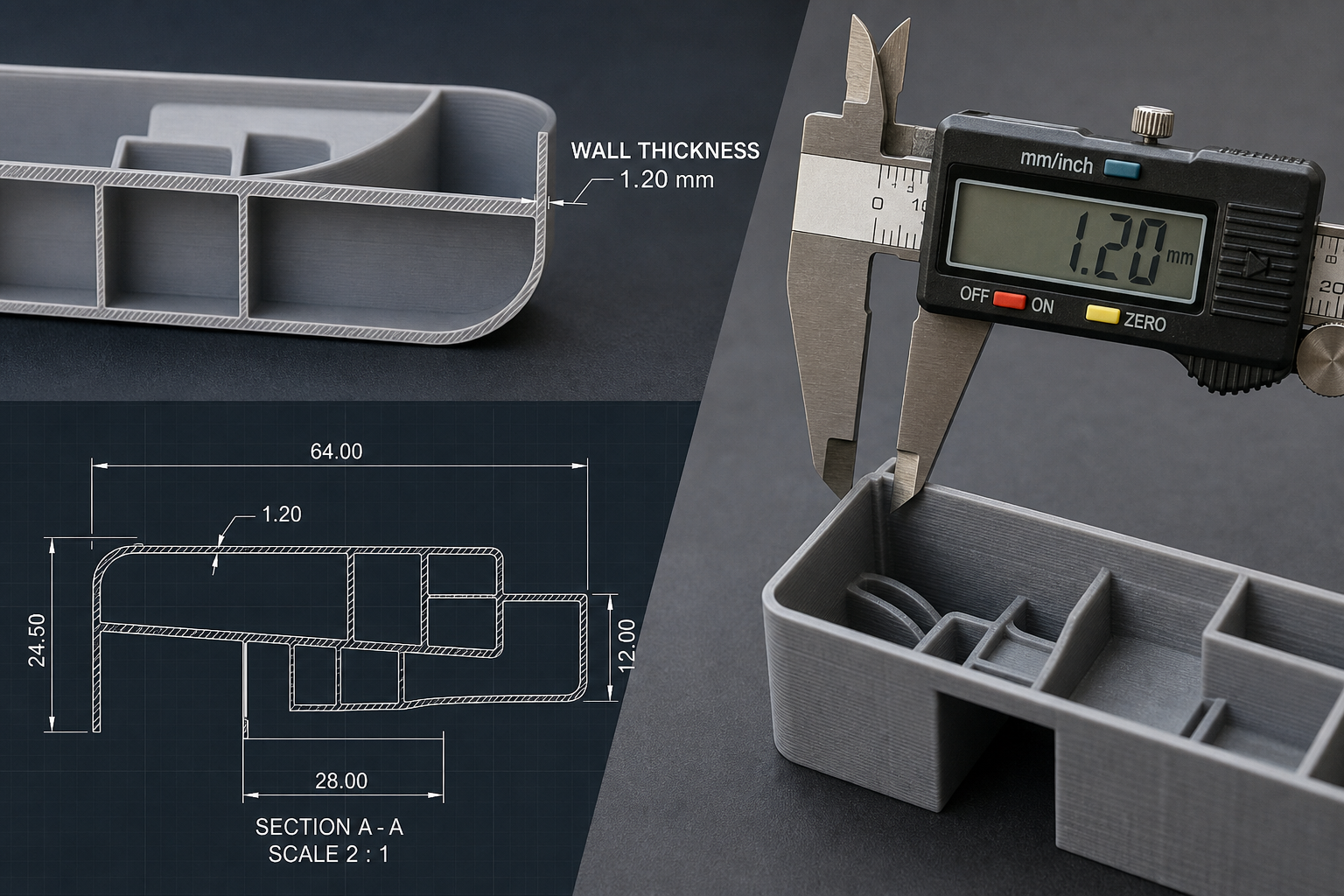
3D Printing Minimum Wall Thickness Design Guidelines: Thickness Thresholds by Process and Material
Minimum wall thickness is not a case of “thinner is better.” In 3D printing, wall thickness determines whether a part can be printed reliably, depowdered or support-removed safely, post-processed without damage, and used with sufficient structural integrity. This guide explains practical thickness thresholds for SLA, SLS, FDM, and SLM, and shows how material shrinkage, interlayer bonding, thermal distortion, support dependence, and service loads affect real-world performance. It also summarizes common failure modes such as warping, cracking, delamination, and transport damage, and provides engineering margins for functional parts.
Start From Here
Have a model, drawing, or only an idea?
Submit your requirement and our engineers will recommend a better design and manufacturing path based on use, size, quantity, material, tolerance and lead time.