No model yet, material choice and wall thickness are explained from a practical angle.
Knowledge Center
Blueprint News
lantu3D reviews wall thickness, structure, materials, process, quantity and finishing before quotation.
01Guides
02Materials
03Customer View
Content should help customer decisions
lantu3D articles focus on materials, processes, cost, modeling and manufacturability so customers understand key decisions before submitting a request.
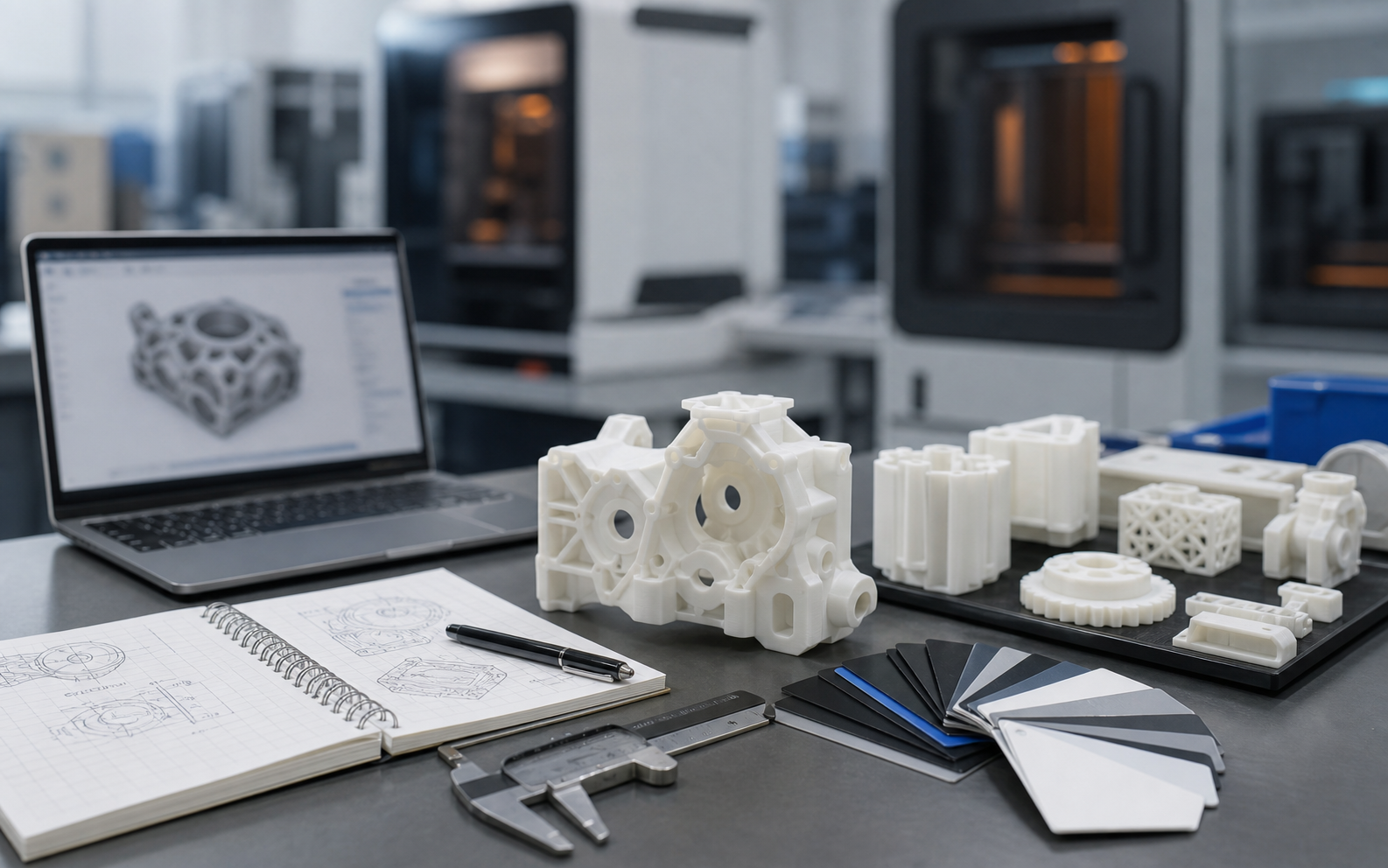
Prototype, fixture, custom part, small batch and cost-control topics for business users.
lantu3D is positioned as blueprint realization and lifecycle management, not just a print shop.
news
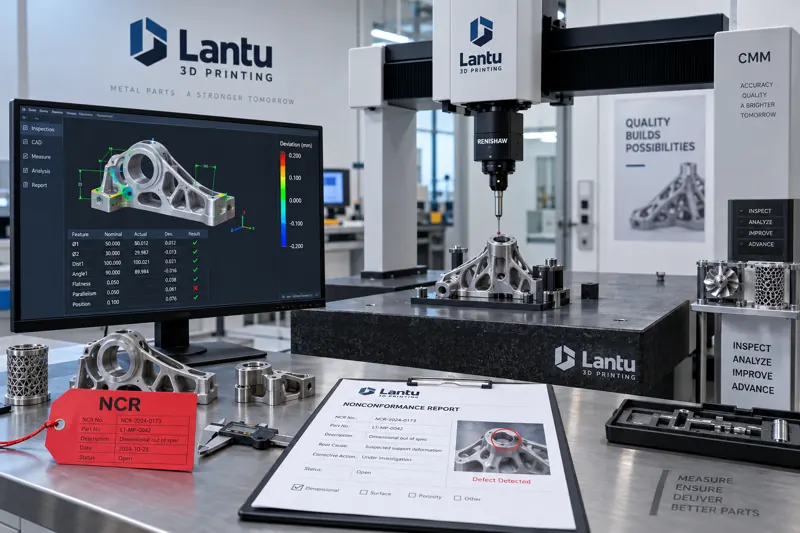
Handling Production Abnormalities and Controlling Nonconforming Products in 3D Printing: A Closed Loop from Deviation Detection to Corrective and Preventive Action
When visible cracks appear on SLM metal parts after powder removal and only 36 hours remain before delivery, this is where a production abnormality handling and nonconforming product control (NCR) system begins. This article systematically explains abnormality identification, nonconformance determination, and the corrective and preventive closed loop, covering interception at powder spreading, printing, and post-processing stages, as well as MES traceability.
news
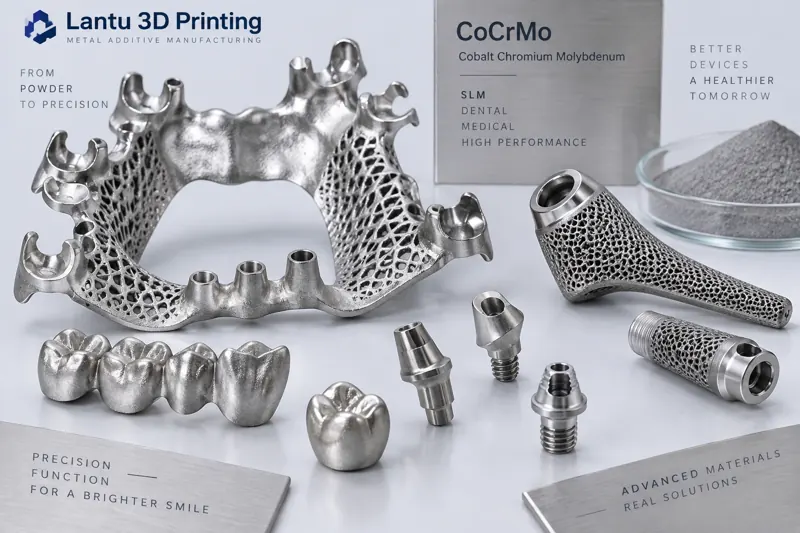
Applications of Cobalt-Chromium Alloy 3D Printing in Dental and Medical Implants: Process Control from Powder Selection to Post-Processing
Cobalt-chromium alloy (CoCrMo), with its high strength, corrosion resistance, and biocompatibility, has become a mainstream metal additive manufacturing material for dental frameworks, implant superstructures, and orthopedic implants. This article outlines a process control path from material to delivery, covering powder particle size and oxygen content, laser energy density windows, defect suppression, hot isostatic pressing, and surface post-processing, helping engineering teams produce CoCr parts that are dense, stable, and compliant.
news
SLM Process Optimization for 316L Stainless Steel: Engineering Control from Powder Characteristics to Density and Corrosion Resistance
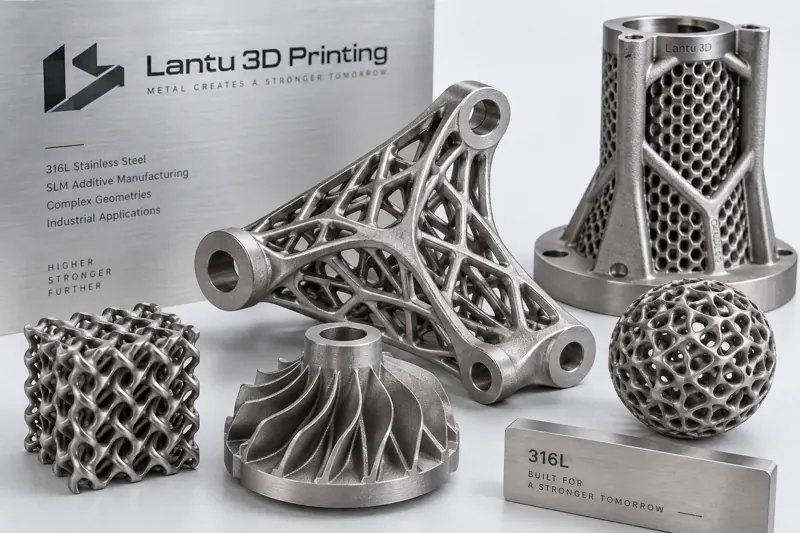
316L stainless steel is one of the most mature and widely used materials in metal additive manufacturing, but being printable does not mean being consistently printable. This article covers powder particle size and oxygen content, the energy density window formed by laser power and scanning speed, pore suppression, residual stress, heat treatment, and passivation post-processing. It provides a process control path from material to delivery to help engineering teams produce 316L parts that are dense, stable, and corrosion-resistant.
news
Supplier Incoming Quality Control and 3D Printing Powder Batch Consistency: A Closed Loop from Incoming Inspection to Process Stability
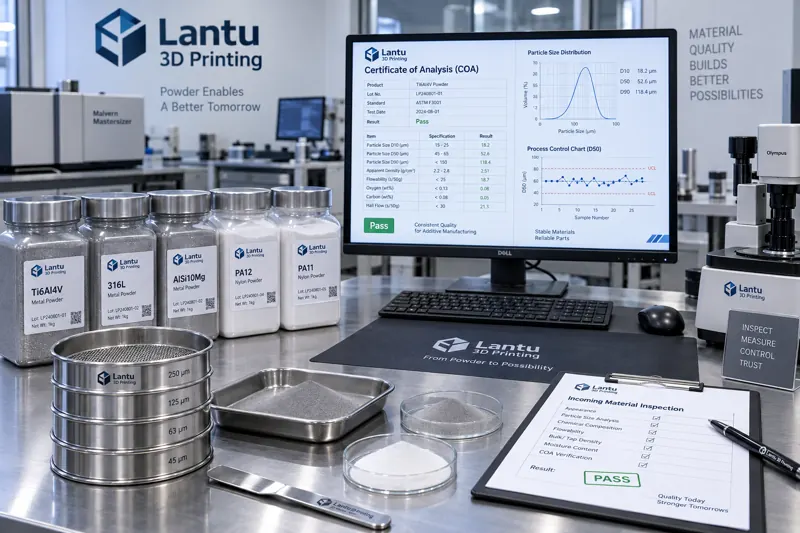
Batch stability in 3D printed parts is often determined the moment powder arrives at the factory. From an engineering perspective on supplier incoming quality control, this article breaks down incoming inspection items for metal/nylon powders, methods for judging batch consistency, the impact of incoming material variation on SLM/SLS processes and final performance, and provides a practical closed loop for material release and traceability to help companies maintain consistent delivery quality between small-batch and mass production.
news
Analysis of Metal 3D Printing Defects: Causes and Process Suppression of Balling, Porosity, Hot Cracking, and Warping
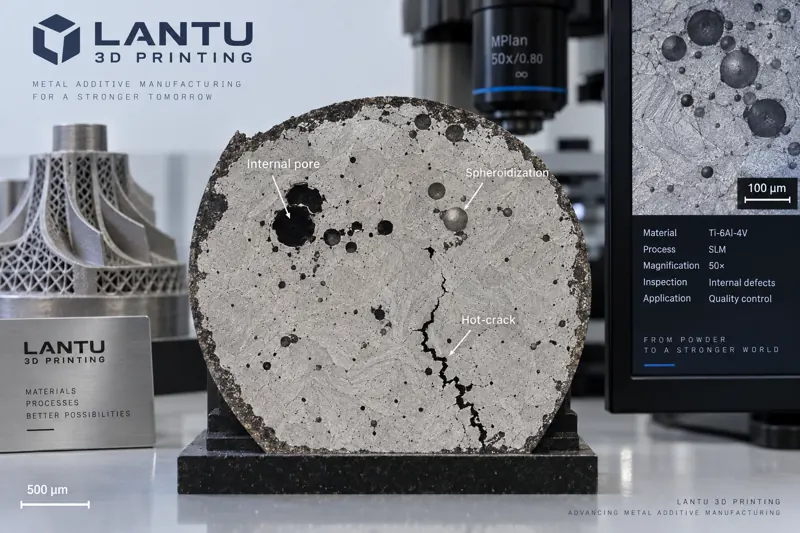
Balling, porosity, hot cracking, and warping deformation in metal additive manufacturing are core defects that affect yield and delivery schedules. This article analyzes the mechanisms behind these four types of defects, provides practical process parameters such as energy density, overlap rate, substrate preheating, scanning strategy, and stress-relief annealing, and establishes a defect-analysis closed loop based on CT inspection and Cpk control.
news
SLM Process Optimization for Nickel-Based Superalloy Inconel 718: An Additive Manufacturing Path for Aero-Engine Hot-Section Components
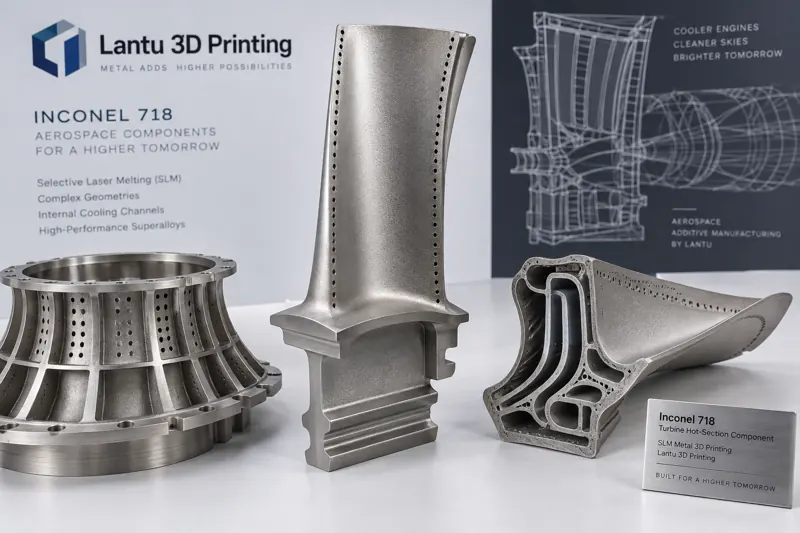
As the most widely used nickel-based superalloy, Inconel 718 (GH4169) has long been used in aero-engine combustors, turbine disks, and piping thanks to its high strength and creep resistance at 650°C. However, traditional forging plus machining can remove more than 80% of the material and requires long lead times. This article systematically reviews the implementation path for SLM processing of Inconel 718 from five dimensions: powder characteristics, laser parameter window, control of hot cracking and residual stress, post-processing, and quality qualification.
news
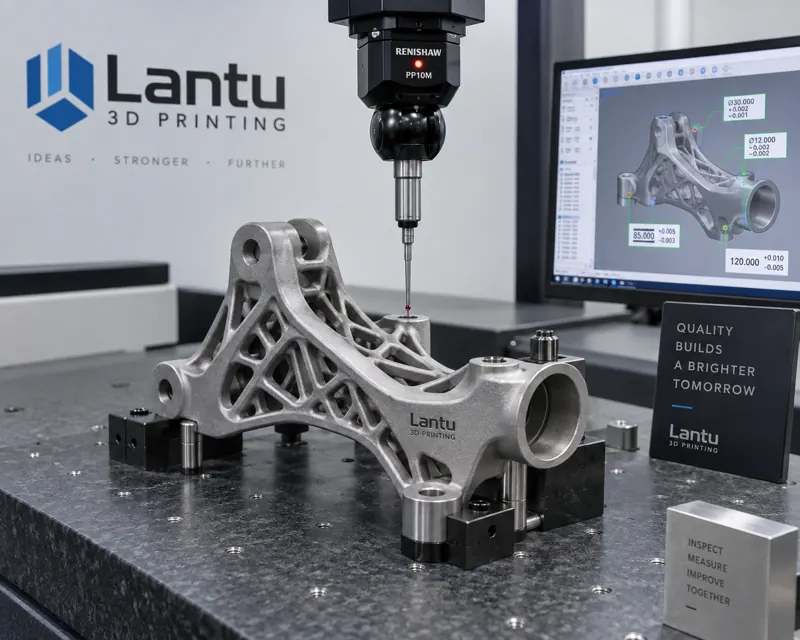
3D Printing First Article Inspection (FAI) and Process Capability Validation: A Quality Release Method from Small Batches to Mass Production
In the past, small-batch 3D printing was often delivered as soon as parts were printed, lacking systematic first-article release. This led to frequent dimensional drift, strength variation, and missing traceability during batch production. First Article Inspection (FAI) borrows the quality-gate mechanism from the aerospace and automotive industries. By conducting closed-loop verification of dimensions, materials, and process parameters on the first article, it blocks uncertainty before batch production begins. This article systematically explains the scope of FAI, acceptance criteria, CPK/PPK process capability validation, and the three-stage release ladder and data closed loop from first article to mass production.
news
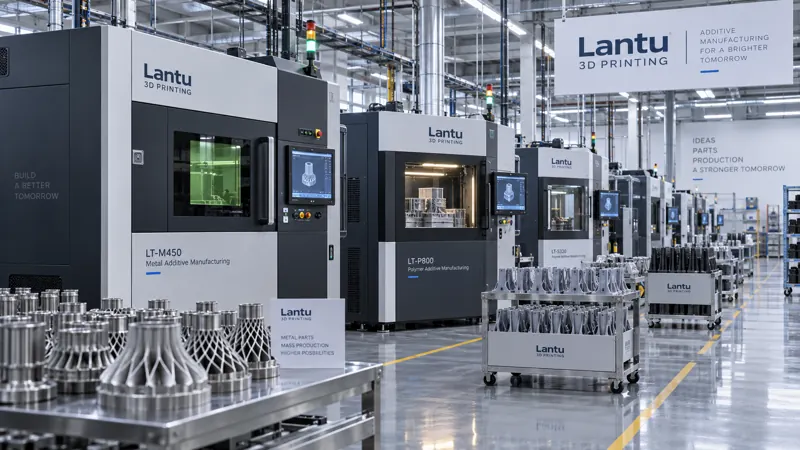
3D Printing Industry Trends: The Industrialization Inflection Point from Prototyping to Mass Production
Over the past decade, 3D printing has largely remained in the prototyping stage, but the 2024–2026 cycle is crossing an industrialization inflection point: technology and cost curves continue to decline, and unit economics in small- and medium-batch scenarios are beginning to outperform traditional processes. This article analyzes the meaning and implementation path of this inflection point from four dimensions: technology maturity, cost structure, material systems, and industrial ecosystem.
news
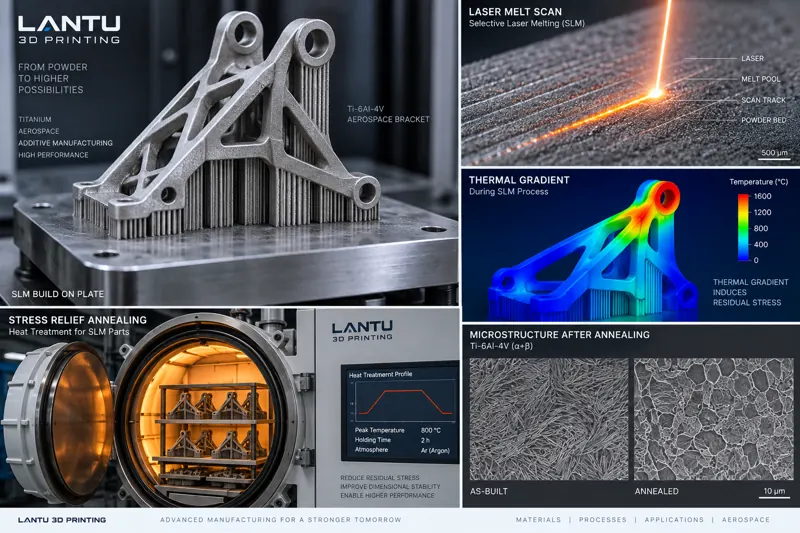
Residual Stress Control and Annealing Process Optimization in SLM Metal 3D Printing: Engineering Methods from Interlayer Stress to Dimensional Stability
In SLM (Selective Laser Melting) metal 3D printing, rapid melting/solidification and extremely high thermal gradients accumulate residual stress inside parts, causing warping, cracking, and dimensional drift. Starting from the origins of stress, this article explains four key stress-control methods—process parameter optimization, build plate preheating, scan strategy, and support design—and provides process windows and selection logic for stress-relief annealing, hot isostatic pressing (HIP), and aging treatment, helping manufacturers move metal parts from “printable” to “dimensionally stable and ready for engineering delivery.”

news
Cross-Department Collaboration in 3D Printing: A Collaborative Workflow from Requirement Alignment to Closed-Loop Delivery
In high-mix, low-volume 3D printing operations, a single part must pass through sales, design, process engineering, production, quality, and logistics from customer request to final delivery. This article breaks down a cross-department collaboration method from requirement alignment to closed-loop delivery: turning vague needs into manufacturable metrics, moving manufacturability reviews forward to prevent rework, eliminating information errors through shared Kanban visibility, and using review loops to prevent recurring issues.
news
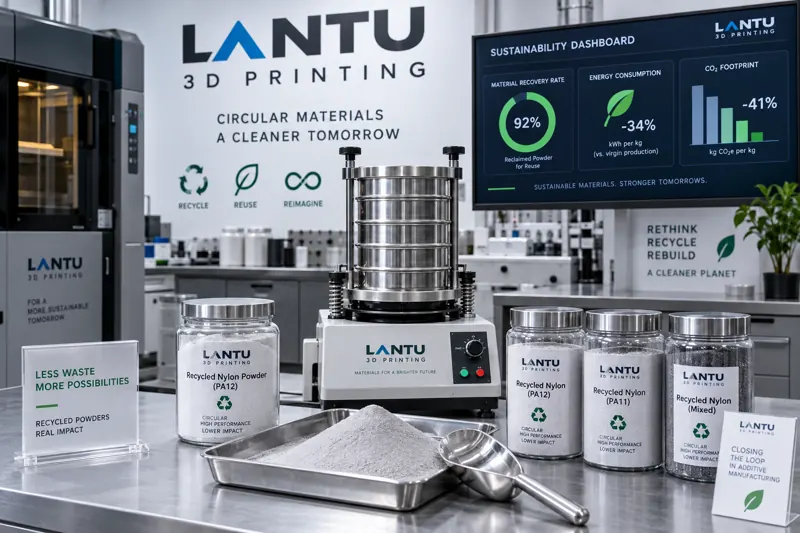
Green Manufacturing in 3D Printing: Practical Paths for Powder Recycling, Energy Optimization, and Carbon Footprint Accounting
The green transformation of manufacturing is moving from slogans to measurable indicators. This article systematically breaks down practical paths for green manufacturing in 3D printing, from closed-loop powder recycling on the materials side, energy structure and standby optimization on the equipment side, near-net-shape forming and support minimization on the process side, to carbon footprint accounting and customer delivery value, while providing quantifiable management metrics and an implementation sequence.
news
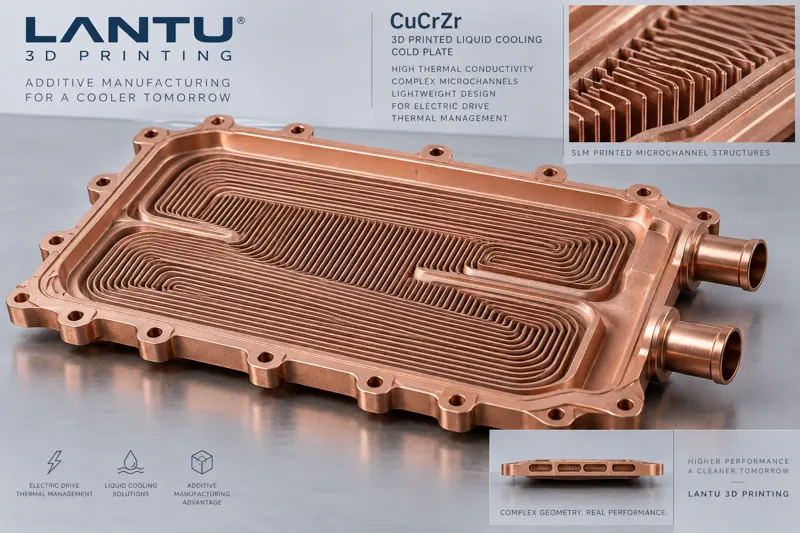
Applications of Copper Alloy 3D Printing in Electric Drive Thermal Management: From Material Selection to Channel and Interface Processes
As the power density of electric drive assemblies continues to rise, the heat transfer capability of traditional straight-groove copper cold plates is approaching its limit. This article systematically explains the application path of copper alloy 3D printing in electric drive thermal management: comparing the trade-offs in thermal conductivity and strength among CuCrZr, pure copper, and aluminum; analyzing key design points for conformal channels and microchannels; outlining SLM process windows and density control methods; and focusing on critical delivery steps such as interfacial thermal resistance, powder removal and cleaning, and airtightness testing, while quantifying engineering value.
Start From Here
Have a model, drawing, or only an idea?
Submit your requirement and our engineers will recommend a better design and manufacturing path based on use, size, quantity, material, tolerance and lead time.