No model yet, material choice and wall thickness are explained from a practical angle.
Knowledge Center
Blueprint News
lantu3D reviews wall thickness, structure, materials, process, quantity and finishing before quotation.
01Guides
02Materials
03Customer View
Content should help customer decisions
lantu3D articles focus on materials, processes, cost, modeling and manufacturability so customers understand key decisions before submitting a request.
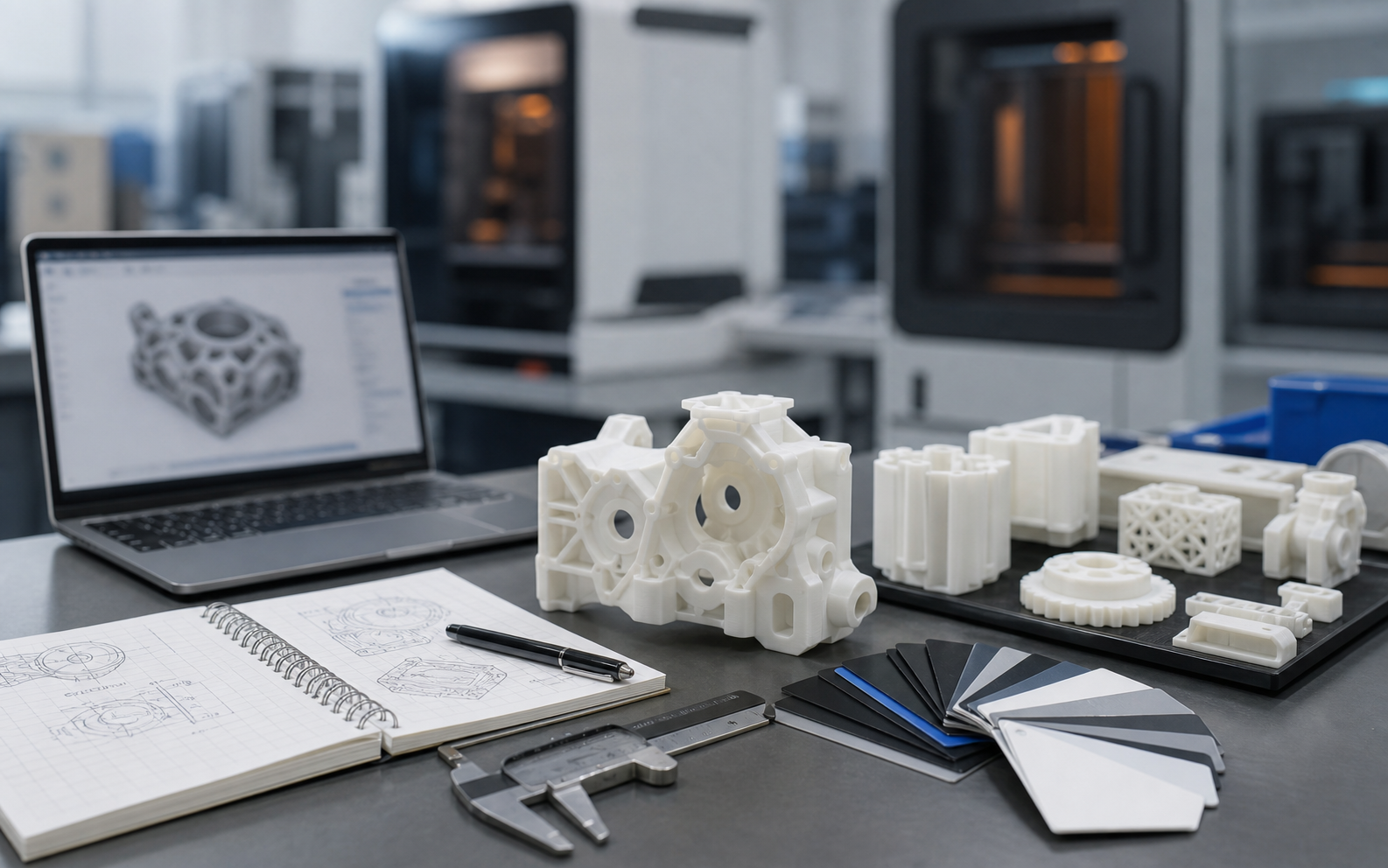
Prototype, fixture, custom part, small batch and cost-control topics for business users.
lantu3D is positioned as blueprint realization and lifecycle management, not just a print shop.
news
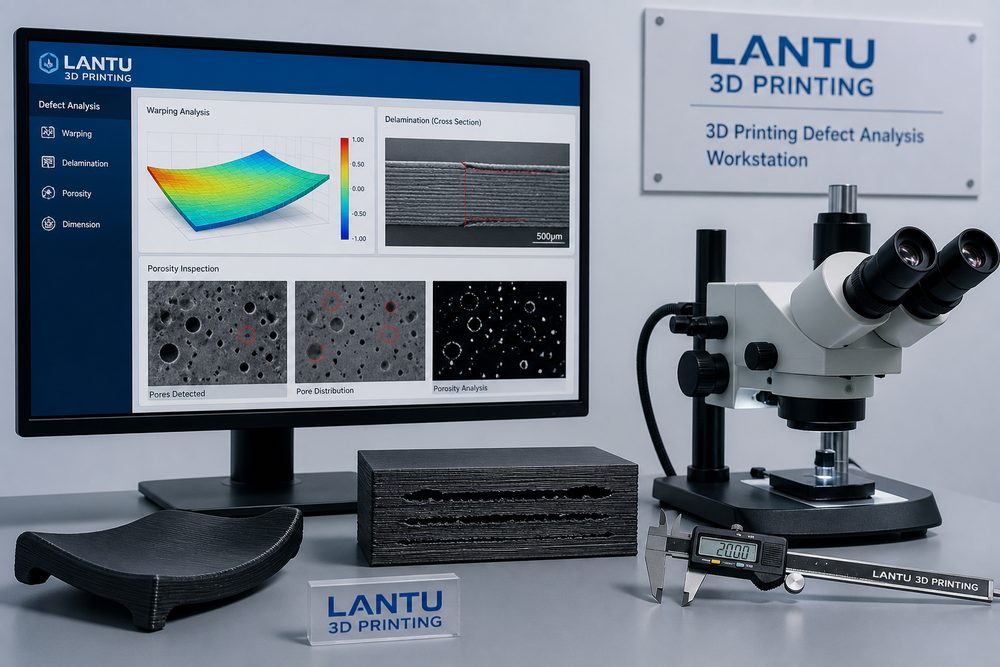
3D Printing Defect Analysis Methods: A Root-Cause Checklist from Warping, Delamination, to Porosity
Warping, delamination, porosity, under-sintering, and dimensional drift are common quality issues in 3D printing projects. This article builds a troubleshooting checklist across model, material, equipment, process parameters, environment, and post-processing to help teams identify root causes with data instead of repeated trial and error.
news
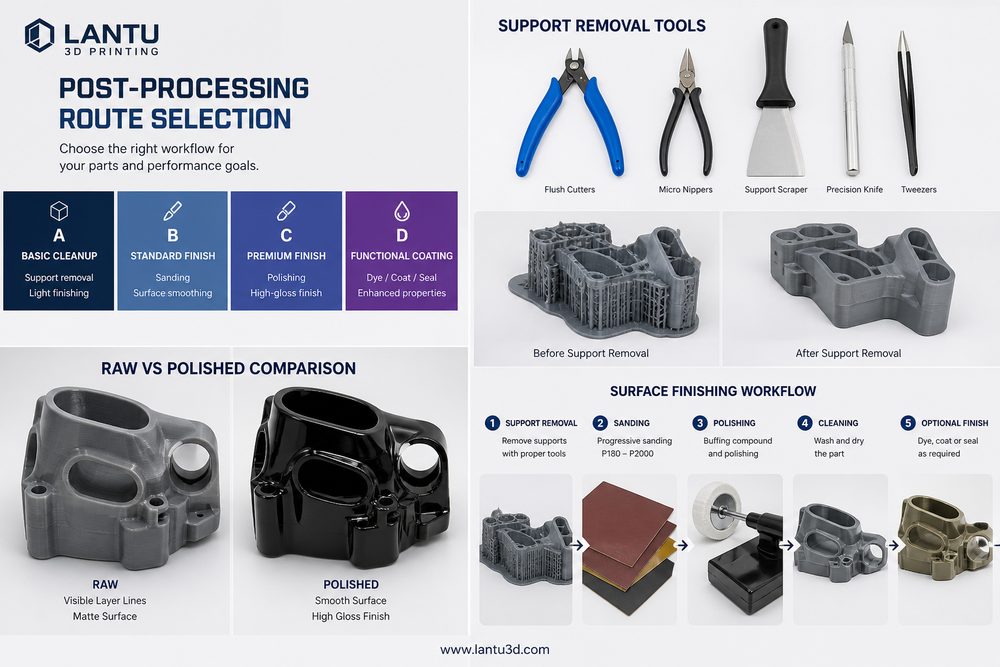
How to Choose a 3D Printing Post-Processing Workflow: Engineering Decisions from Support Removal to Surface Functionalization
The delivery quality of 3D printed parts depends not only on the build equipment but also on the post-processing workflow, which determines dimensions, appearance, assembly fit, and service life. This article covers support removal, depowdering, curing, sanding, coating, plating, and inspection loops, and provides post-processing decision methods for prototypes, small batches, and functional parts.
Service Process
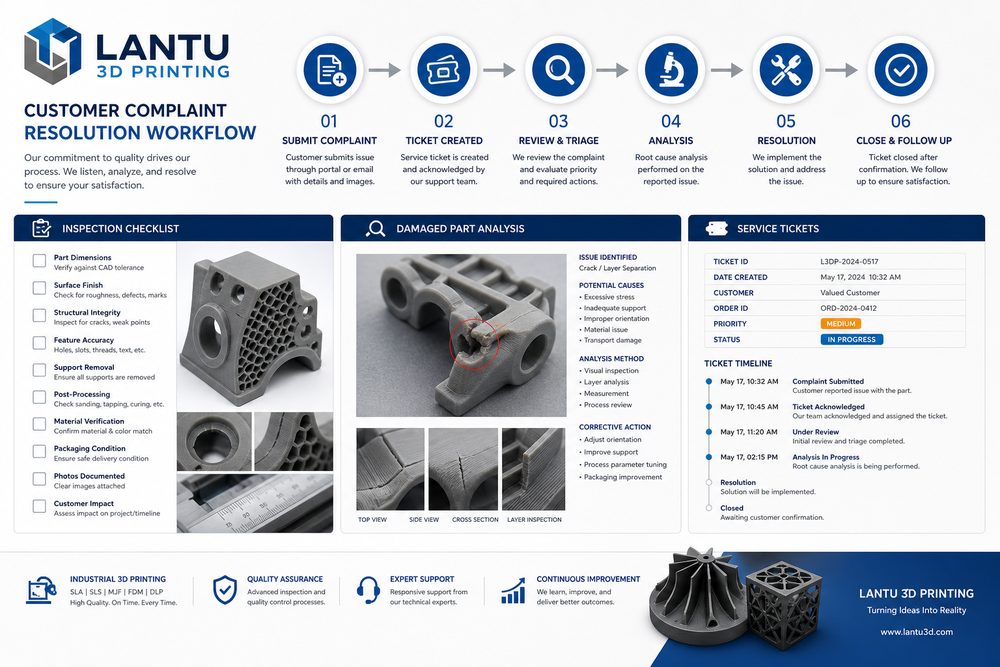
3D Printing Customer Complaint Handling Process: Turn After-Sales Issues into Repeat Orders
3D printing complaints often involve design, process, production, post-processing, and logistics. This article proposes a five-step mechanism of classification, response, review, resolution, and prevention to help service teams close the after-sales loop with engineering data and turn problems into repeat-order opportunities.
3D printing services
Enterprise Manufacturing
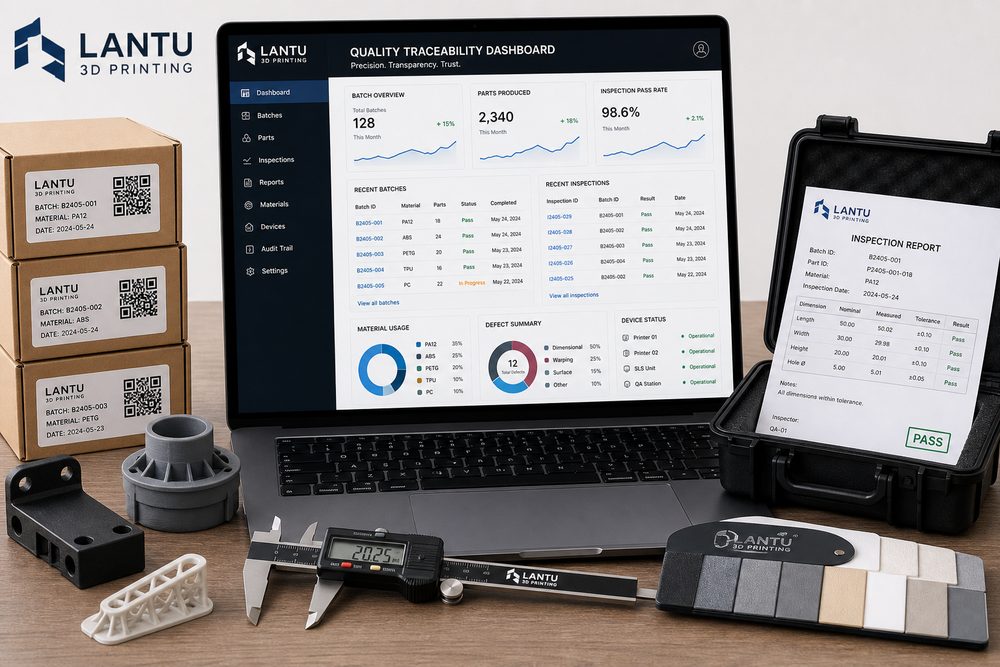
How to Build a 3D Printing Quality Traceability System: End-to-End Management from File Versions to Delivery Batches
Small-batch 3D printing jobs are more prone to version mix-ups, unclear material lots, and post-processing variation. This article breaks traceability into five stages—files, process, equipment, inspection, and packaging—to help companies build a delivery chain that is searchable, reviewable, and reusable.
quality control
Standardization Systems
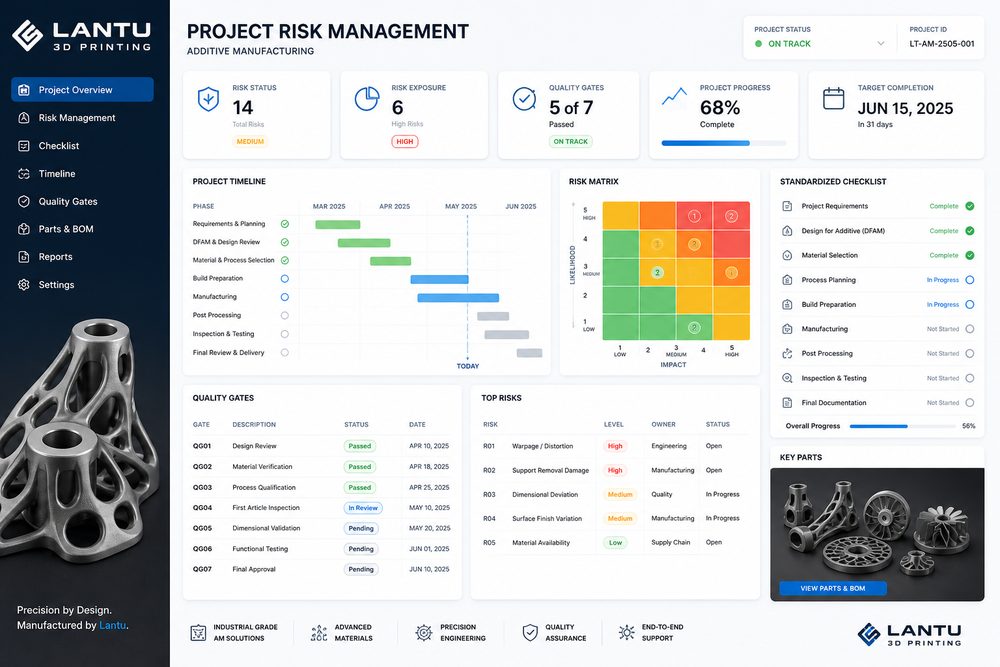
3D Printing Project Risk Management: A Standardized Checklist from Requirements Freeze to Delivery Acceptance
Risks in 3D printing projects often stem from unclear requirements, model defects, incorrect material selection, mismatched post-processing expectations, and changing acceptance criteria. This article provides a standardized checklist from requirements freeze, model review, process confirmation, and first-article verification to delivery acceptance.
Design Guide
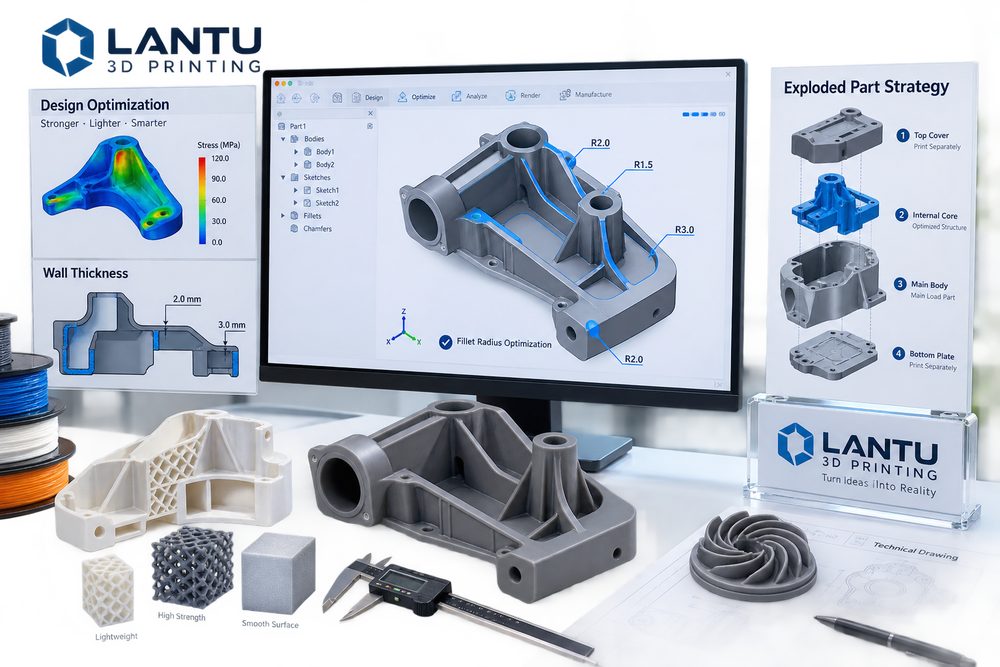
Design Optimization for 3D Printing: How Wall Thickness, Fillets, and Part Splitting Strategies Reduce Project Risk
3D printing does not mean every model can be manufactured with low risk. This article explains how to reduce failure rates, post-processing costs, and delivery uncertainty at the modeling stage, focusing on wall thickness, fillets, holes and slots, overhangs, part splitting, assembly clearance, and inspection datums.
Post-Processing Technology
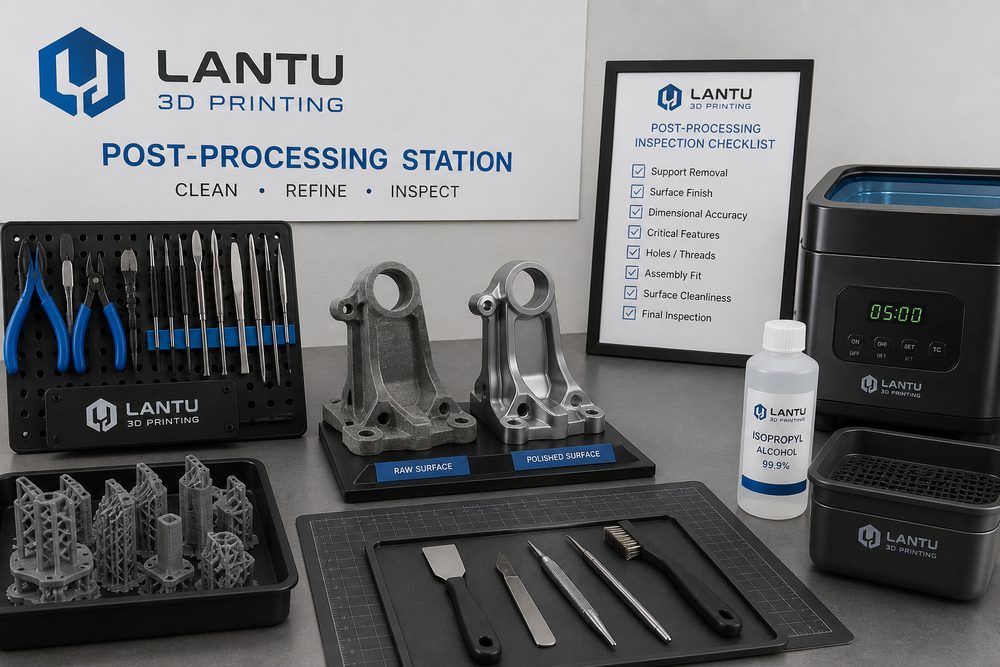
3D Printing Post-Processing Is Not a Finishing Step: Delivery Control from Support Removal to Surface Consistency
Post-processing determines whether a 3D printed part can move from a prototype to a true deliverable. This article explains support removal, washing and curing, sandblasting and polishing, dyeing and painting, dimensional re-inspection, and batch consistency, showing how lantu3D integrates post-processing into lifecycle management from design to physical delivery.

Enterprise Manufacturing
The More Orders You Have, the More You Need to Know How to Schedule: Practical Methods for Optimizing 3D Printing Production Scheduling
3D printing production scheduling must balance equipment utilization, material batches, post-processing capacity, and delivery priorities. This article explains how to build order grading, equipment task pools, bottleneck identification, and dynamic adjustment mechanisms so that multi-variety, small-batch orders remain controllably deliverable even during peak periods.
Service Process
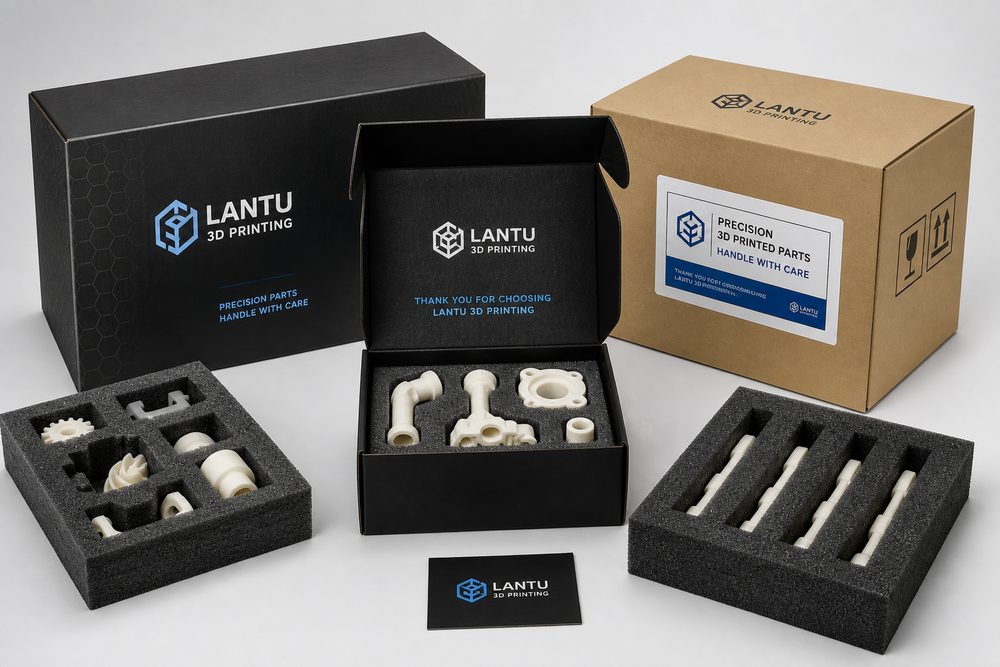
Don't Let the Last Mile Ruin Your Project: A Guide to 3D Printing Packaging and Shipping Management
3D printed parts often feature thin walls, many details, and complex surface finishing, so packaging and shipping management directly affect the delivery experience. This article explains how to reduce transit damage and after-sales disputes from five aspects: part classification, protective structures, labeling traceability, temperature and humidity control, and arrival inspection.
Design Guide
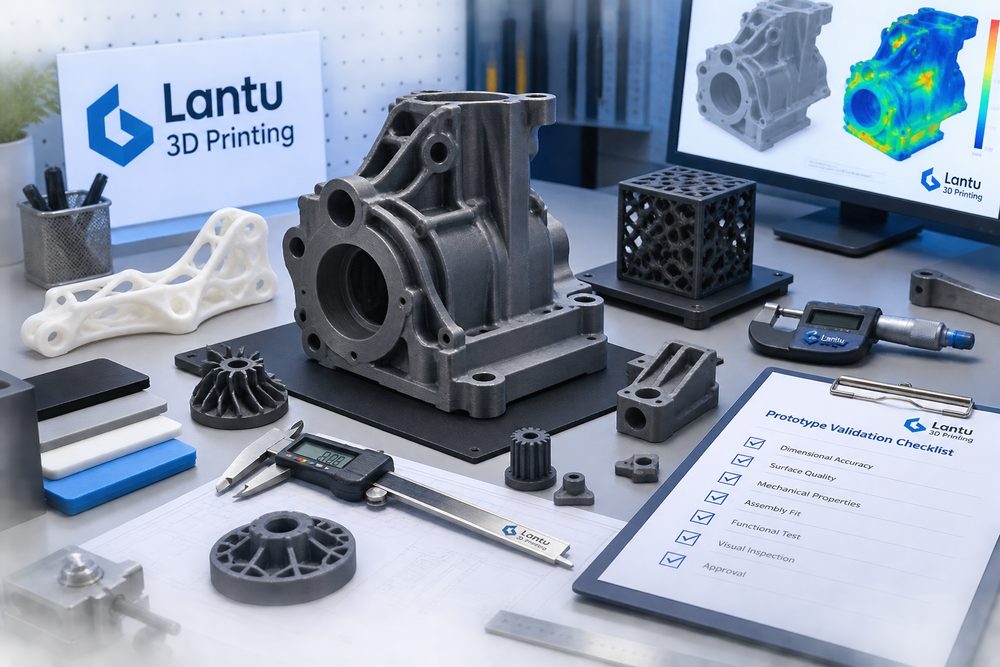
Samples Are Not the End Point: How 3D Printing Sample Validation Reduces Mass Production Risk
The goal of sample validation is not to prove that a model can be printed, but to use quantifiable testing to confirm whether the structure, material, assembly, and usage scenarios meet requirements. This article introduces the complete 3D printing sample validation process, including the validation plan, first article review, functional testing, dimensional inspection, design iteration, and production transfer.
engineering validation
DFAM
Enterprise Manufacturing
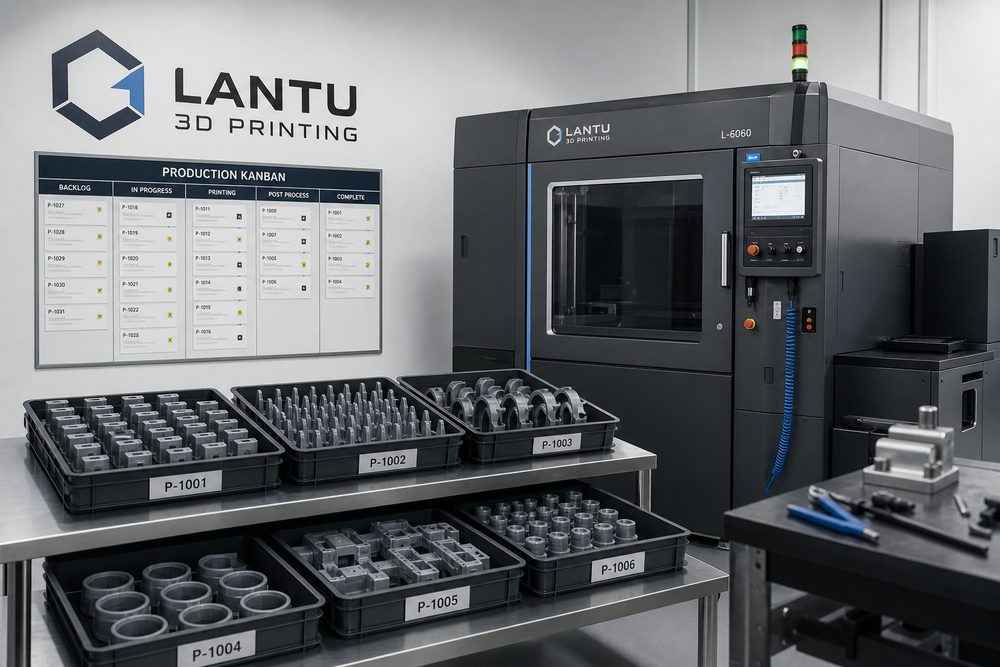
From Prototyping to Delivery: 10 Key Control Points for 3D Printing Small-Batch Production Management
Small-batch production is not about printing the same prototype a few more times; it is about turning requirement confirmation, process freeze, scheduling, quality inspection, and delivery into a traceable closed loop. This article, from the project management perspective of lantu3D, outlines the key control points for 3D printing small-batch orders from prototyping to delivery, helping companies maintain stable cost, lead time, and quality at scales of dozens to hundreds of pieces.
quality control
Enterprise Manufacturing
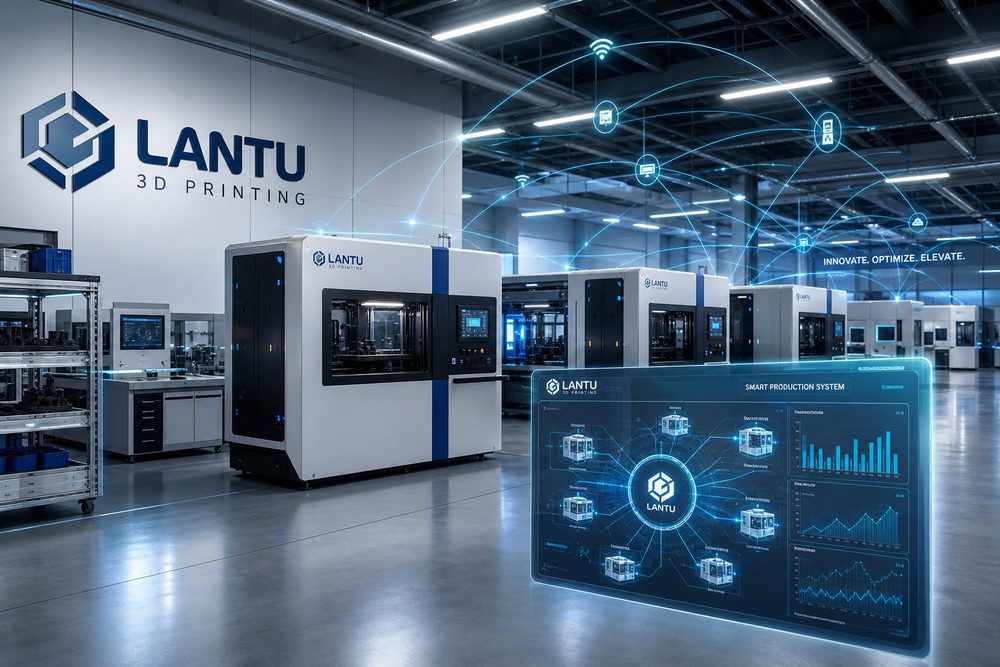
From Rapid Prototyping to a Digital Manufacturing Node: 3D Printing Industry Trends and Future Outlook
3D printing is evolving from a prototyping tool into an important node in the digital manufacturing network. This article analyzes the industry's future direction from the perspectives of materials, software, automation, quality certification, and business models.
Start From Here
Have a model, drawing, or only an idea?
Submit your requirement and our engineers will recommend a better design and manufacturing path based on use, size, quantity, material, tolerance and lead time.