
No model yet, material choice and wall thickness are explained from a practical angle.
Knowledge Center
Blueprint News
lantu3D reviews wall thickness, structure, materials, process, quantity and finishing before quotation.
01Guides
02Materials
03Customer View
Content should help customer decisions
lantu3D articles focus on materials, processes, cost, modeling and manufacturability so customers understand key decisions before submitting a request.
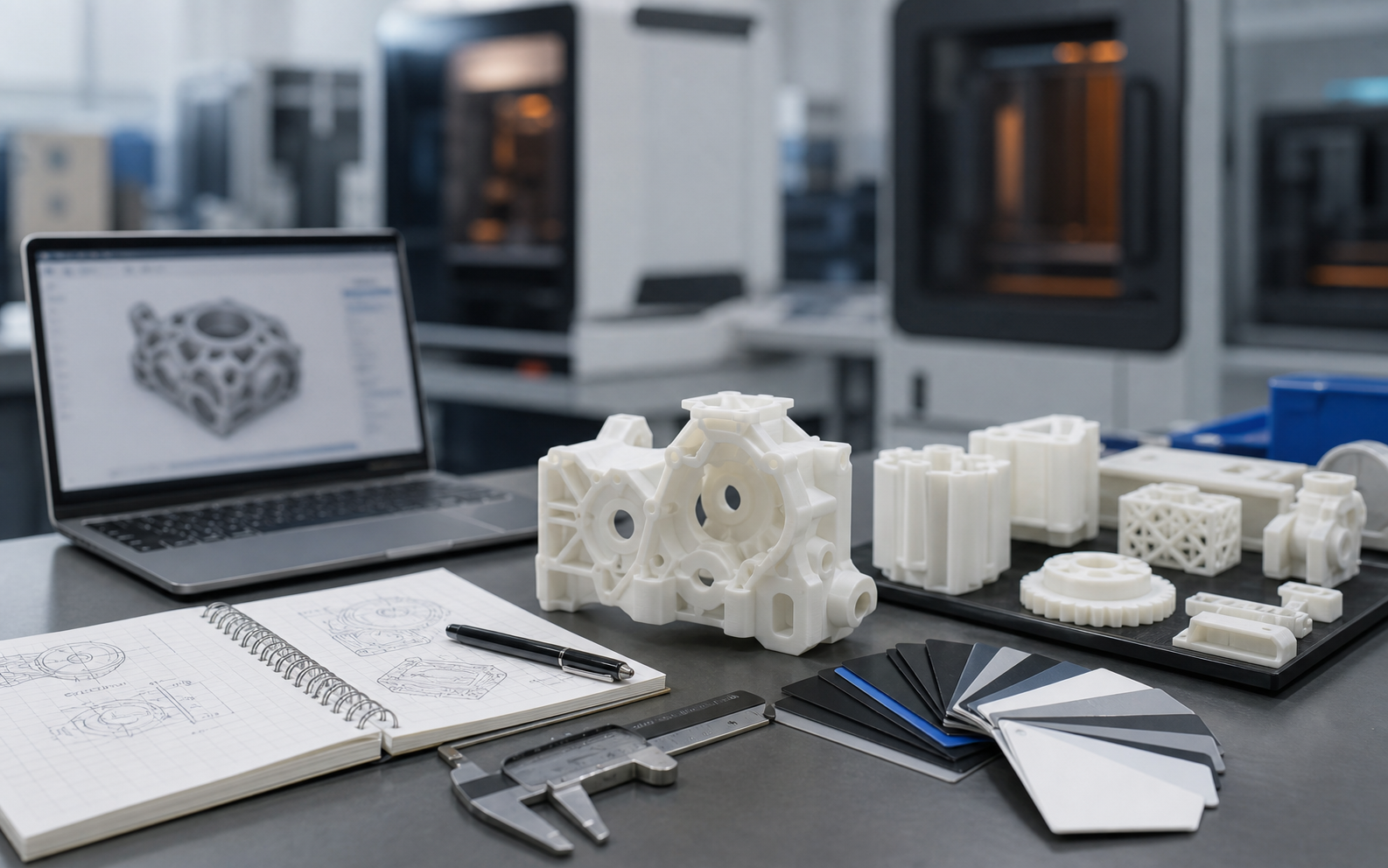
Prototype, fixture, custom part, small batch and cost-control topics for business users.
lantu3D is positioned as blueprint realization and lifecycle management, not just a print shop.
news
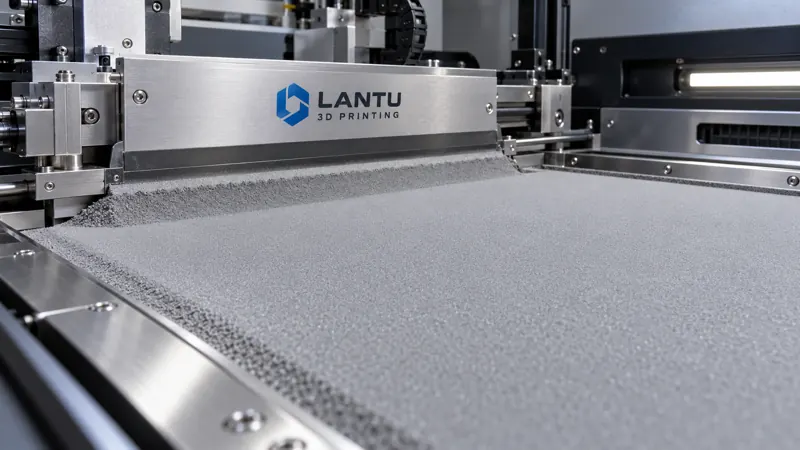
Powder Layer Quality and Recoater Blade Management in 3D Printing: Engineering Methods from Layer Consistency to Build Stability
Metal LPBF defects are often attributed to laser energy parameters, but powder-layer thickness deviations, recoater blade-edge wear, and powder degradation through reuse are equally important root variables. This article presents a complete approach covering powder-layer density-ratio monitoring, recoater selection and blade-life management, coordination of recoating speed and clearance, powder-condition testing, process imaging, and standard operating checklists.

news
Material and Warehouse Management for 3D Printing Workshops: From Powder Batch Traceability to FIFO Deliverable Inventory
Metal powders, resins, and supporting consumables are far more state-sensitive than conventional bars and plates. If warehouse zoning, batch identification, FIFO control, and environmental records are not properly managed, stable process windows cannot be converted into reliable delivery. This article presents a complete engineering approach covering warehouse zoning, item-level identification, batch status cards, in-storage environmental maintenance, inventory accuracy, and closed-loop inventory discrepancy management.
news
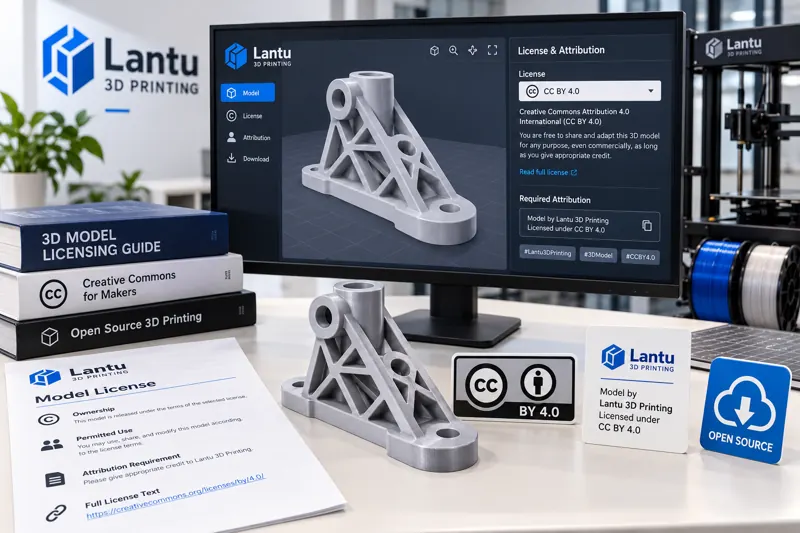
Copyright, Open-Source Licensing, and Secondary Development in 3D Printing Projects: Defining Rights Boundaries from Model Files to Deliverables
3D printing order contracts typically specify price and delivery schedules but rarely clarify ownership of model files, modified versions, process parameters, and deliverables. This article provides practical methods and a project documentation checklist for defining rights boundaries across copyright ownership, open-source license compliance, secondary development classification, and trademark and design risks.
news
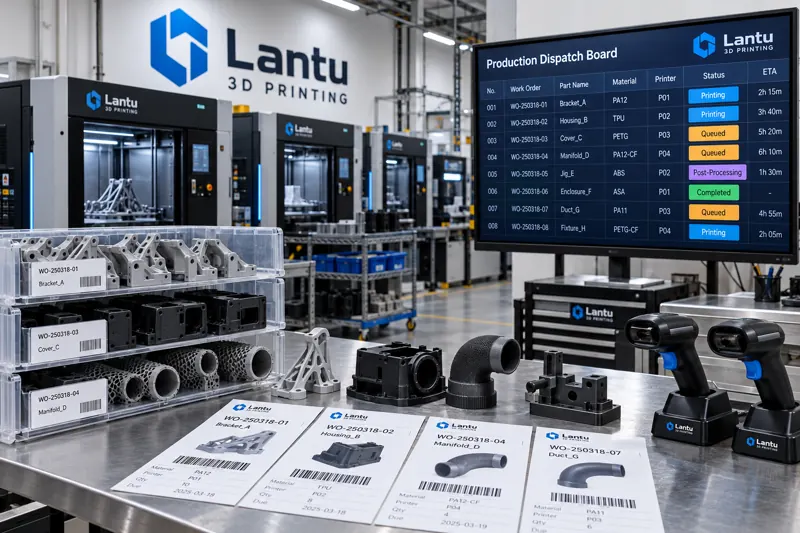
Work Order, Dispatching, and Reporting Closed Loop in 3D Printing Workshops
With multiple machines and orders running in parallel, 3D printing workshops often face duplicate builds, idle time caused by material shortages, and discrepancies between production reporting and outbound shipments. This article outlines a practical implementation path covering minimum work-order fields, pre-dispatch completeness checks, rule-driven dispatching, structured production reporting, and shift-handover traceability.
news
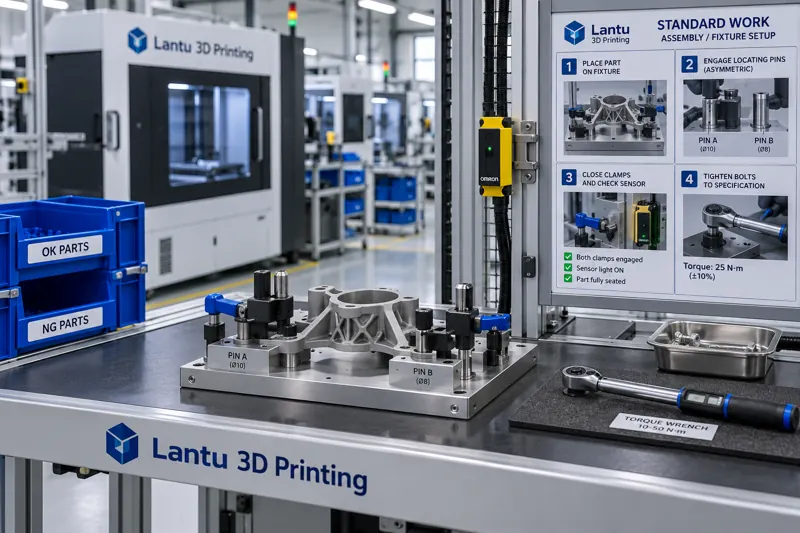
Poka-Yoke Design and Standard Work in 3D Printing Workshops: From Recurring Defects to System Interception
Recurring defects persist because control measures remain at the level of reminders. This article breaks down mistake-proofing design in additive manufacturing workshops into warning, control, and physical levels, covering four typical failure points: powder batch interlocks, build plate mismatches, datum surface damage, and missed post-processing steps. It also provides an implementation path for the three elements of standard work, mandatory work-order fields, and a seven-step exception closed loop.

news
3D Printing Enterprises Participating in Group Standard Development: A Practical Path from Internal Process Specifications to Industry Influence
When tender documents begin requiring compliance with a specific standard, 3D printing enterprises realize that their well-functioning internal process specifications lack a referenceable identification number. This article breaks down the four-tier system of national, industry, group, and enterprise standards; explains the full cycle of group standard initiation, drafting, public consultation, publication, and review; outlines the verifiability requirements needed to turn internal specifications into public standards—including powder characteristics, process windows, sampling directions, statistical criteria, and interlaboratory comparisons; and provides an input-output analysis and a five-step implementation checklist for participating in standard development.

news
Activity-Based Costing (ABC) for 3D Printing Services: A Granular Model from Cost Drivers to Capacity Utilization
Why do some orders make money while others quietly lose money, even on the same machine with the same material? This article breaks down the activity-based costing (ABC) approach for 3D printing service providers: from two-stage allocation using resource drivers and activity drivers, to driver selection for key activity centers such as printing, depowdering and support removal, inspection, and process review, as well as the amplifying effect of capacity utilization on fixed-cost absorption. It also covers work-order-level WIP cost retention and phased implementation recommendations, helping companies base quotations on traceable activity data rather than experience-based estimates.

news
Sub-Metering Energy Consumption and Calculating Unit Energy Use in 3D Printing Workshops: The Data Foundation from Master Meter to Process Decisions
Most 3D printing workshops do not lack the willingness to save energy; they lack a clear accounting basis for energy consumption. This article presents a four-layer sub-metering layout, dual definitions of unit energy consumption, methods for quantifying hidden baselines from standby and auxiliary systems, assessment of shiftable electricity use under peak-valley tariffs, and a full-process work-order energy ledger including rework, so that the effects of energy-saving measures can be verified rather than judged by experience.
news
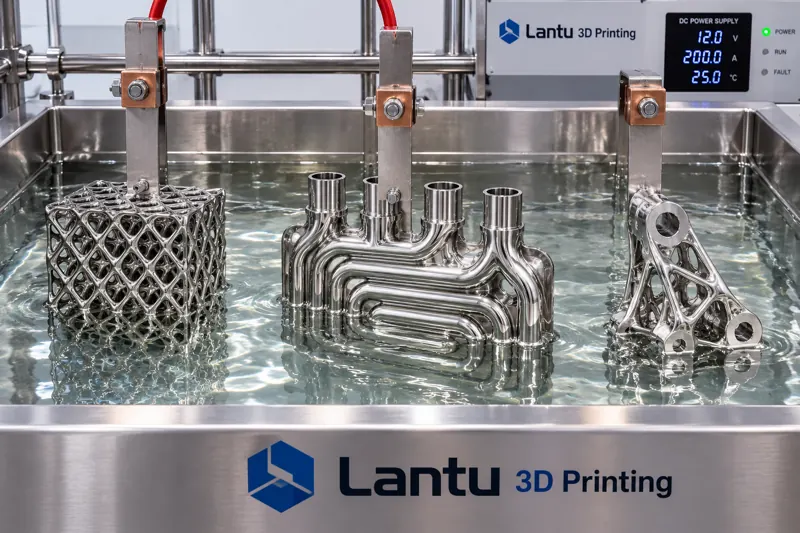
Electropolishing 3D-Printed Metal Parts: An Engineering Approach from Leveling Mechanisms to Passivation Release
Lattice interiors, bends in conformal channels, and the back sides of thin walls in metal 3D-printed parts are blind spots for mechanical polishing. Electropolishing enables non-contact leveling through selective anodic dissolution. This article outlines coupled process windows for current density, temperature, and time; methods for calibrating material removal; special risks caused by near-surface pores, unmelted adhered powder, and microstructural non-uniformity in printed parts; pretreatment countermeasures; and key points for passivation film formation, post-cleaning, and release verification.
news
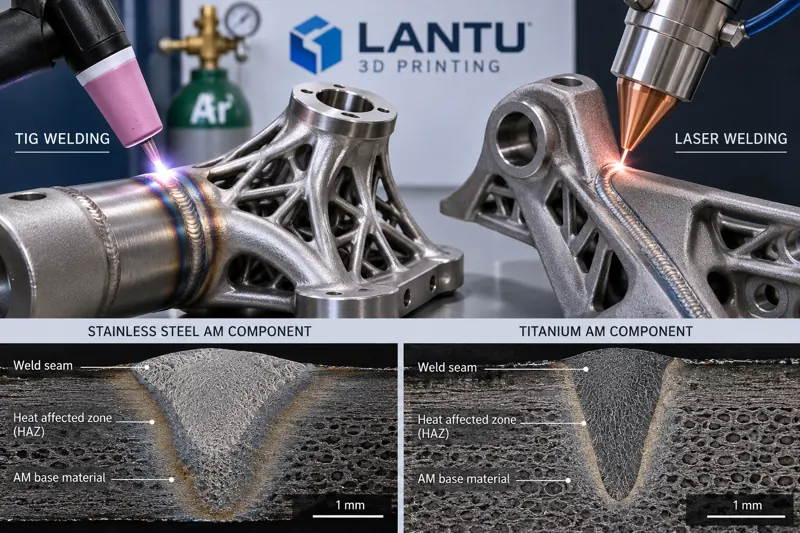
Welding, Brazing, and Diffusion Bonding of 3D-Printed Metal Parts: Engineering Methods from Similar-Metal Assemblies to Dissimilar-Material Transition Joints
When part dimensions exceed the build envelope, local performance cannot be obtained economically, or the cost of printing the entire component is too high, joining processes become the final engineering route for additive manufacturing. This article systematically reviews the application boundaries of fusion welding, brazing, and solid-state bonding; provides pre-weld preparation and shielding parameters for printed titanium and aluminum alloy parts; analyzes transition-joint design for steel-aluminum and copper-stainless steel combinations; and lists release criteria for nondestructive testing, mechanical validation, and pressure testing of joints.
news
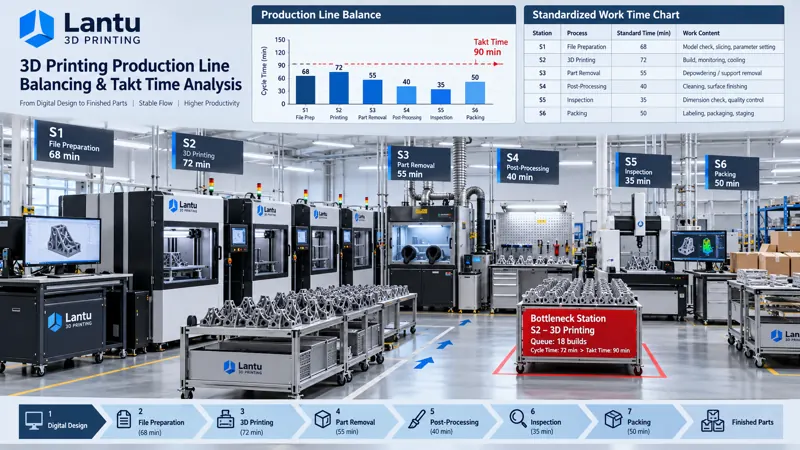
Line Balancing and Standard Time in 3D Printing Workshops: An Engineering Approach from Bottleneck Identification to Takt Optimization
3D printing factories often see high machine utilization, growing work-in-process inventory, and repeatedly delayed deliveries. The root cause is often not insufficient capacity, but imbalanced takt times across process steps. This article presents a complete engineering method covering standard time measurement, bottleneck identification, line balancing rate calculation, and takt optimization, including time model formulas, buffer-setting rules, and four common implementation pitfalls.
news
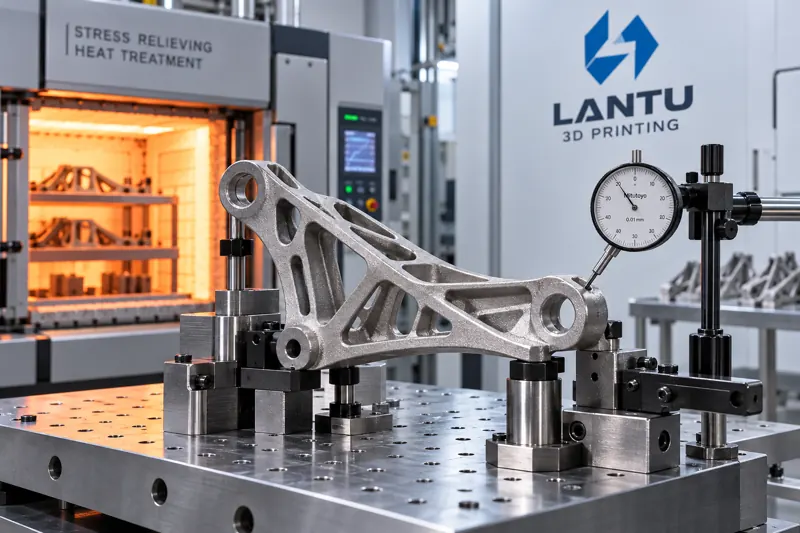
Deformation Correction and Dimensional Compensation for 3D-Printed Parts: Engineering Methods from Counter-Deformation Design to Closed-Loop Shape Calibration
Deformation is the final-mile challenge in additive manufacturing delivery. Starting from the causes of thermal stress and constraint release, this article systematically reviews counter-deformation design, suppression through orientation and supports, process windows for thermal and mechanical straightening, and a digital closed loop for dimensional compensation based on 3D scanning point-cloud comparison, along with release verification evidence chains, practical parameter ranges, operating principles, and common pitfalls.
Start From Here
Have a model, drawing, or only an idea?
Submit your requirement and our engineers will recommend a better design and manufacturing path based on use, size, quantity, material, tolerance and lead time.