No model yet, material choice and wall thickness are explained from a practical angle.
Knowledge Center
Blueprint News
lantu3D reviews wall thickness, structure, materials, process, quantity and finishing before quotation.
01Guides
02Materials
03Customer View
Content should help customer decisions
lantu3D articles focus on materials, processes, cost, modeling and manufacturability so customers understand key decisions before submitting a request.
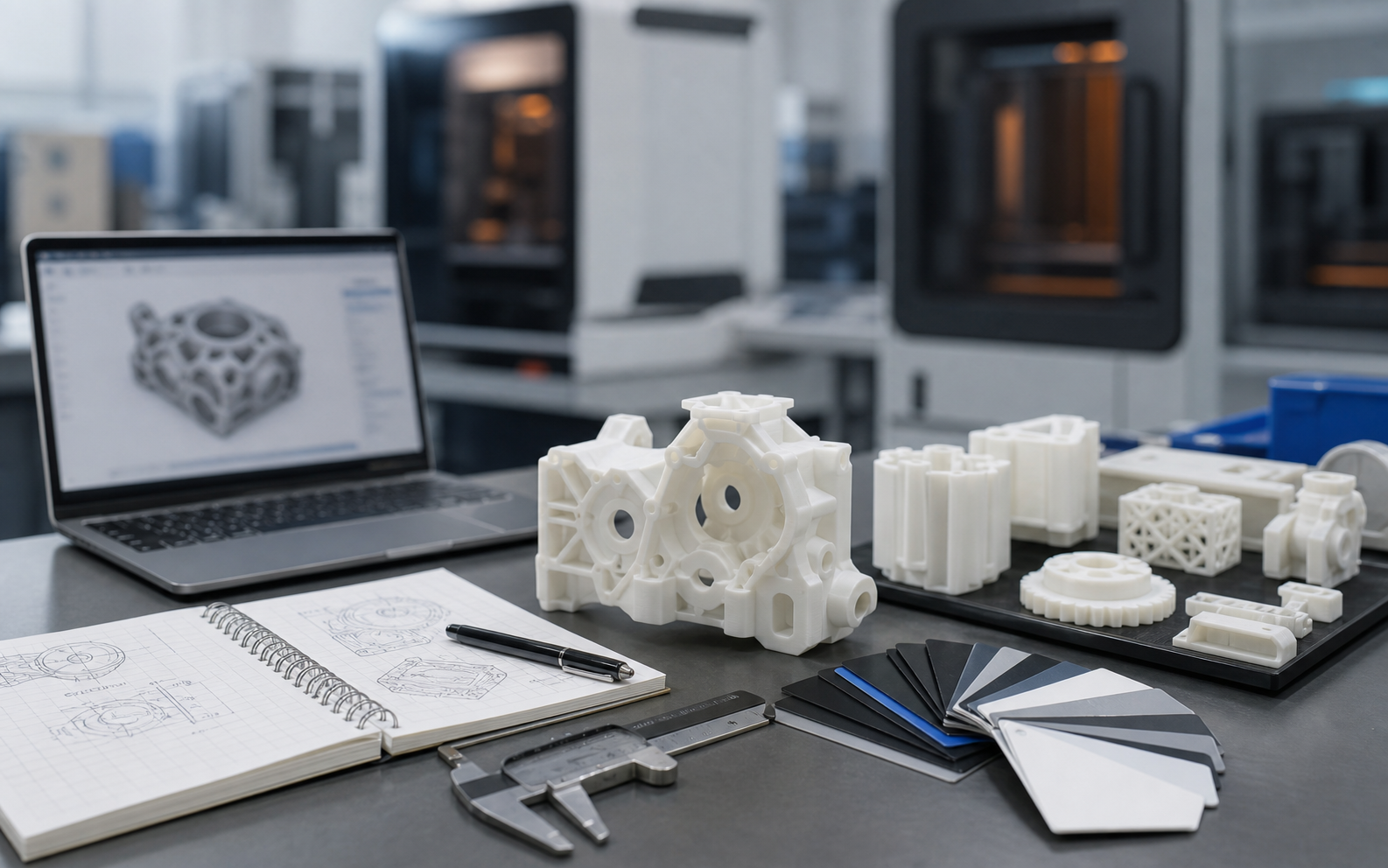
Prototype, fixture, custom part, small batch and cost-control topics for business users.
lantu3D is positioned as blueprint realization and lifecycle management, not just a print shop.
Enterprise Manufacturing
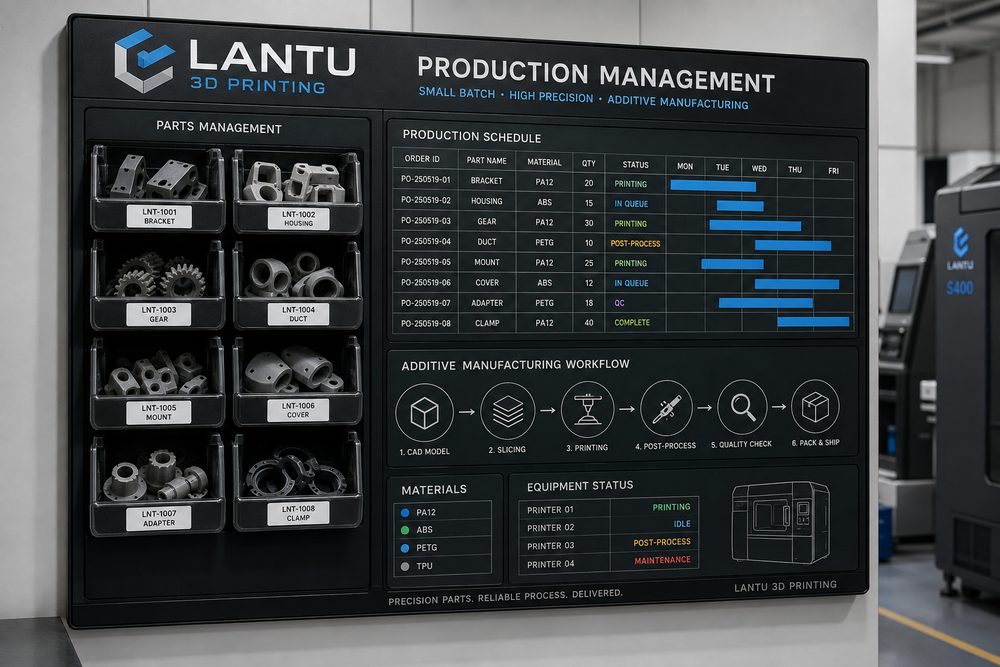
Small-Batch Production Management: Takt Control Methods for 3D Printing Orders from Prototyping to Delivery
Small-batch 3D printing orders often shift between multiple product types, short lead times, and frequent changes. This article explains how to turn one-off prototyping experience into a repeatable small-batch production management method across six stages: order breakdown, process freeze, equipment takt, WIP visibility, risk buffers, and delivery review.
Enterprise Manufacturing
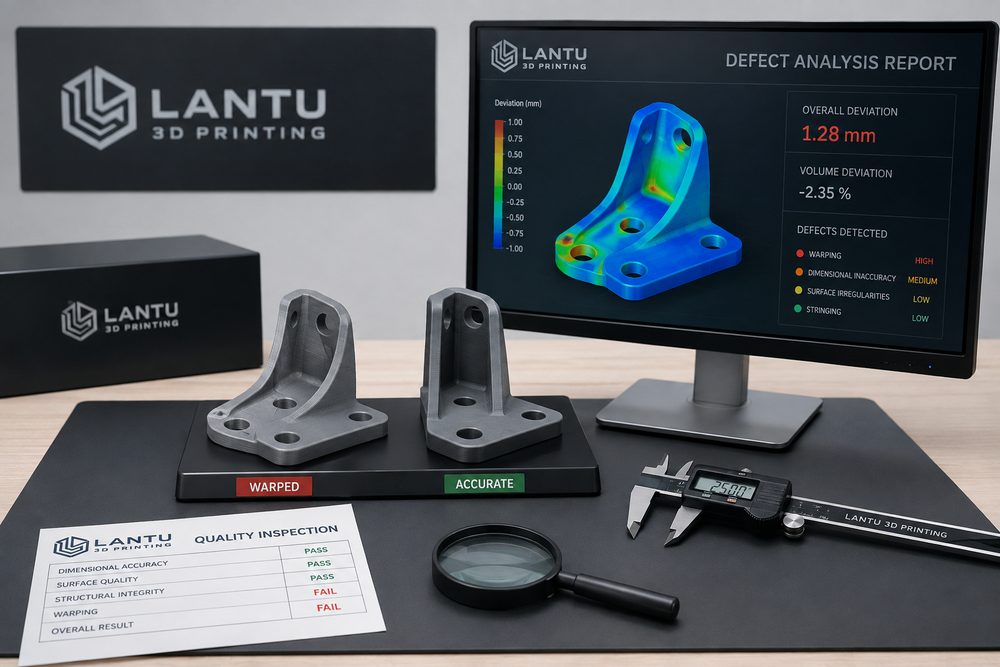
3D Printing Defect Analysis Methods: Systematic Troubleshooting for Warping, Cracking, and Dimensional Deviation
3D printing defects should be traced through a chain of evidence across materials, models, equipment, parameters, environment, and post-processing. This article systematically examines common causes of warping, cracking, interlayer delamination, surface particles, and dimensional deviation, and provides a closed-loop method from temporary fixes to long-term prevention to help projects move from experience-based judgment to stable control.
Design Guide
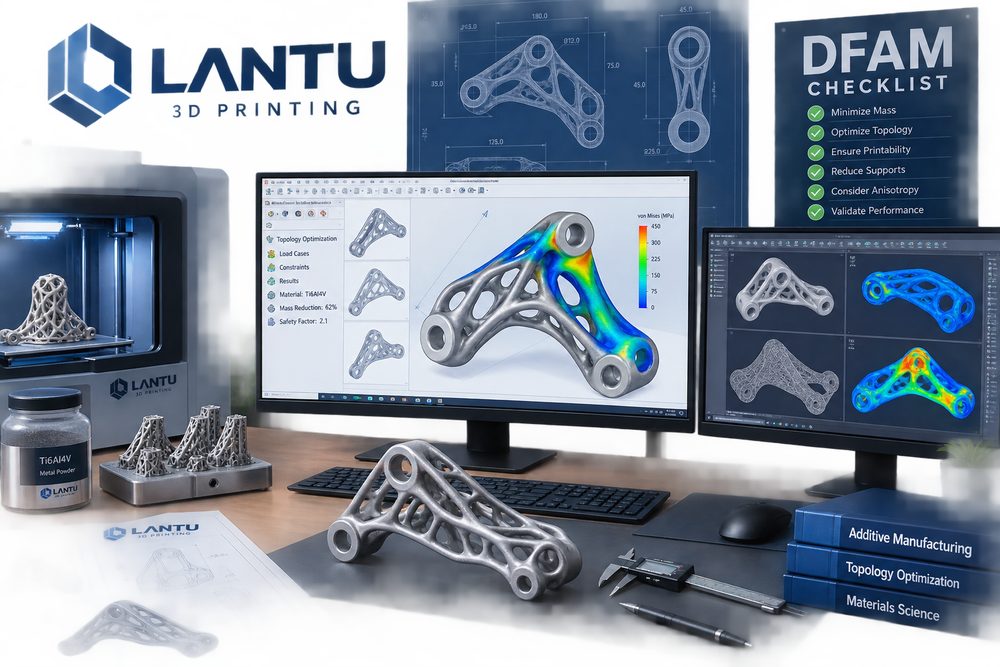
DFAM-Oriented 3D Printing Design Optimization: Key Checks from Model to Physical Part
Design optimization is the key to reducing 3D printing costs and rework rates. This article focuses on functional goals, wall thickness and clearances, lightweighting, support orientation, and model checklists, showing how lantu3D embeds DFAM reviews throughout the full process from concept to physical delivery so models are not only printable, but also reliably assemblable and verifiable.
DFAM
Materials and Processes
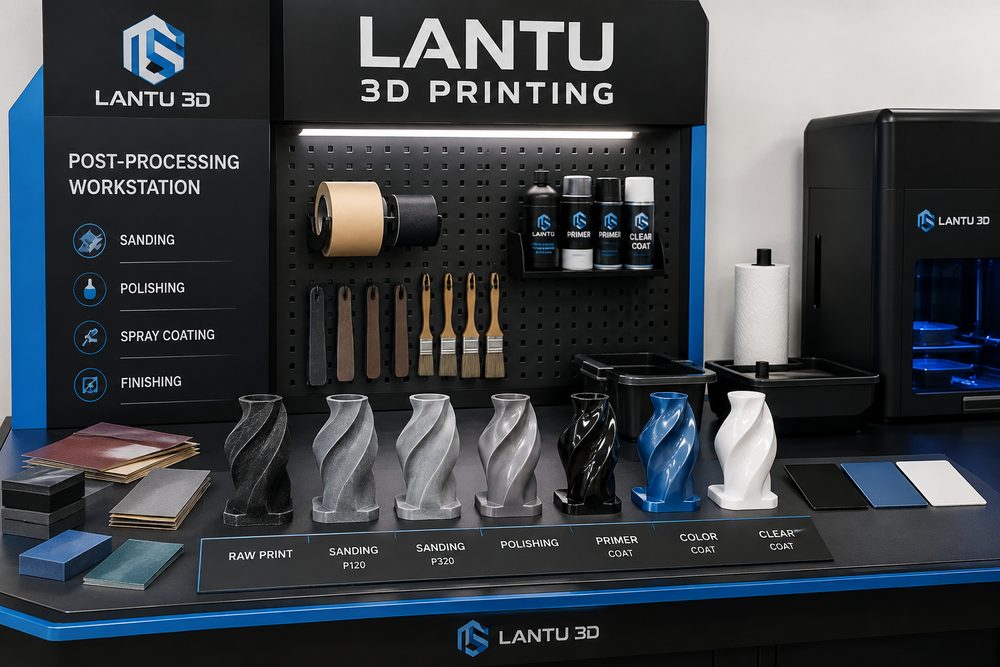
How Post-Processing Technology Determines the Final Delivery Quality of 3D Printed Parts
Post-processing directly affects the appearance, dimensions, assembly fit, and reliability of 3D printed parts. Drawing on typical workflows for SLA, SLS, FDM, and metal printing, this article explains how to reserve process allowances early in design reviews and reduce rework risk through process sheets, dimensional rechecks, and first-article approval.
quality control
news
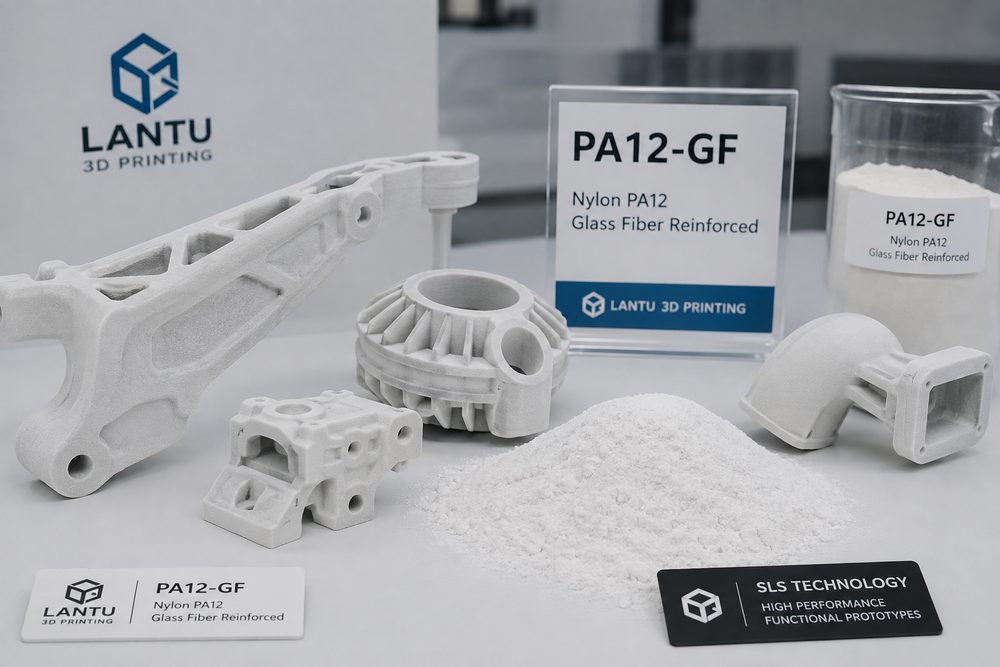
Selection Logic for Nylon and Modified Composite Materials in Functional Prototypes
Functional prototypes are not just about visual similarity; they also need to come close to real-world use in strength, heat resistance, assembly, and small-batch validation. Starting from the performance differences among PA12 nylon, glass-fiber-reinforced materials, flame-retardant grades, and toughened modified materials, this article explains how Blueprint3D helps customers build a measurable selection logic across design, materials, processes, and delivery.
Enterprise Manufacturing
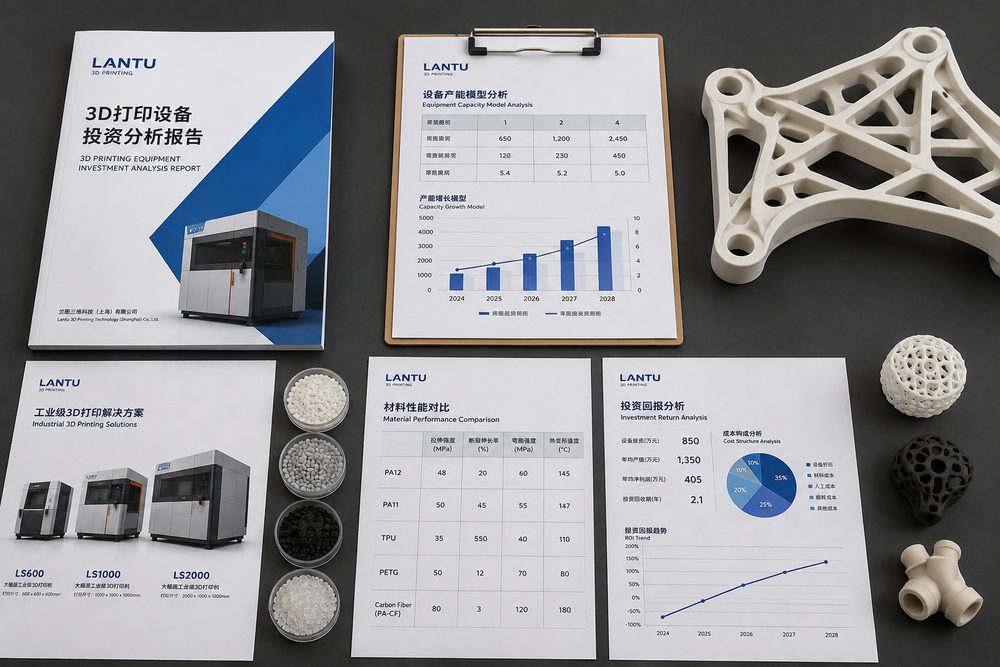
3D Printing Equipment Investment Decisions: An Evaluation Method from Capacity Modeling to Cash Flow Payback
Buying a 3D printing system is not just about comparing machine price and build size. You also need to evaluate order structure, material systems, post-processing capability, labor costs, maintenance risks, and the cash flow payback period. This article provides an enterprise-focused framework for equipment investment decisions to help determine when in-house capacity makes sense and when external collaboration is the better option.
Enterprise Manufacturing
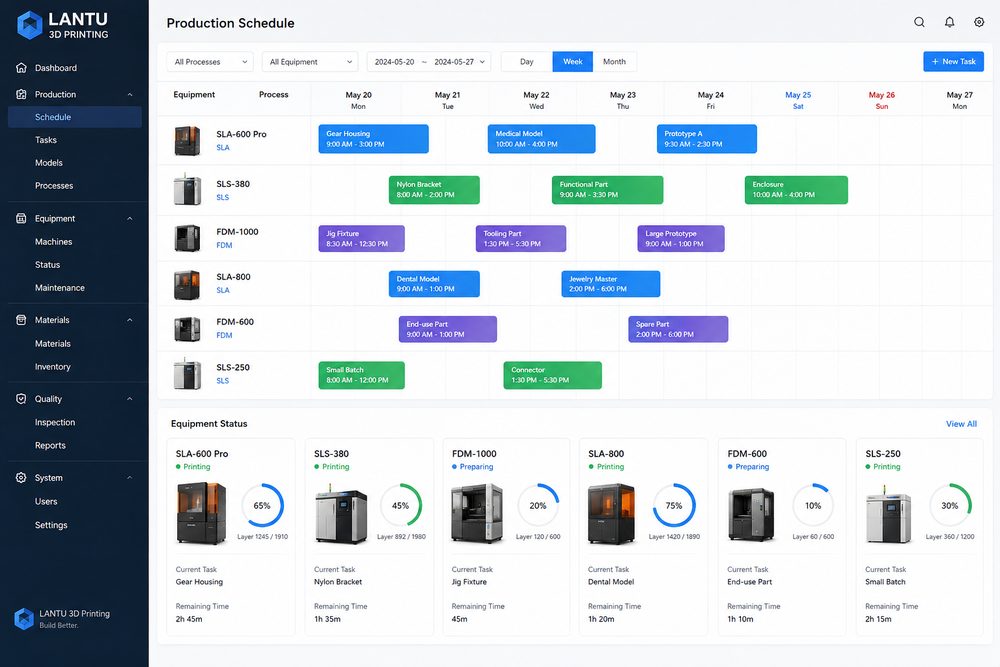
3D Printing Production Scheduling Optimization: Planning, Rush Orders, and Lead Time Commitments for Multi-Process Orders
Multi-process 3D printing orders often involve SLA, SLS, FDM, metal printing, CNC, and post-processing. Lead time commitments cannot be based on print time alone. This article explains how a 3D printing service platform can build a stable production scheduling system through capacity modeling, bottleneck identification, rush-order rules, post-processing queues, and exception feedback.
production scheduling

Enterprise Manufacturing
Packaging and Shipping Solutions for 3D Printed Parts: Protective Design from Fragile Prototypes to Small-Batch Delivery
The last mile from factory to customer site often determines whether earlier investments in design, materials, and post-processing truly turn into delivered value. This article breaks down packaging tiers, shipping validation, labeling traceability, and incoming inspection methods for fragile prototypes, small-batch functional parts, and complex geometries, helping businesses build an actionable protection plan for 3D printed deliveries.
3D printing services
news
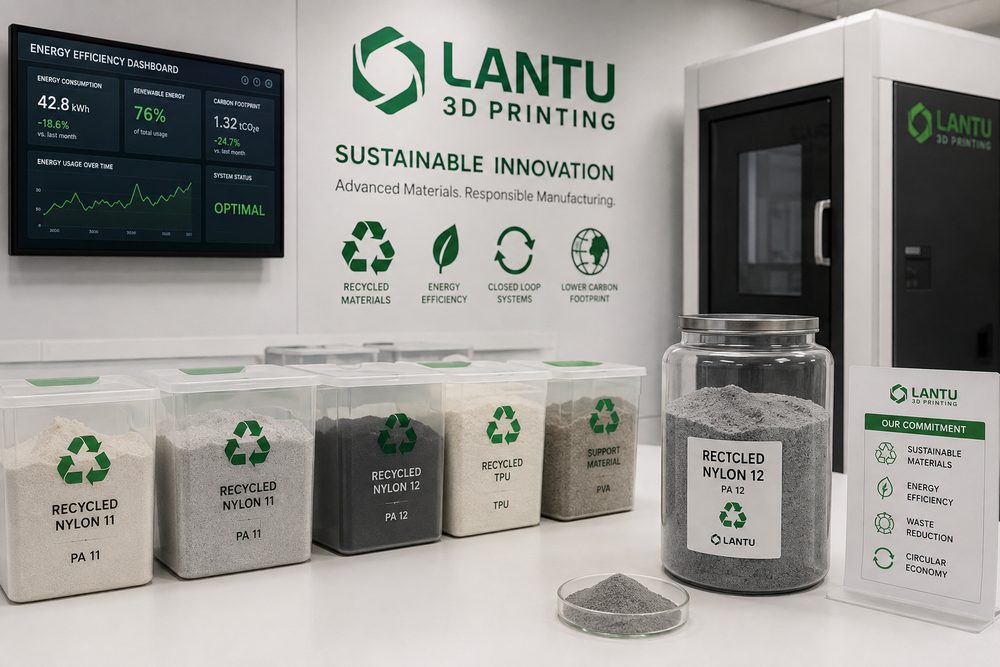
How to Build Sustainable 3D Printing Services: Engineering Practices for Material Utilization, Energy Use, and Remanufacturing
Sustainable 3D printing is not just an environmental slogan, but an engineering system that runs through design, materials, scheduling, post-processing, packaging, and remanufacturing. This article examines how 3D printing services can reduce waste and environmental impact while maintaining quality, focusing on material utilization, print failure rates, energy management, powder recycling, resin waste treatment, lightweight design, and localized delivery.
news
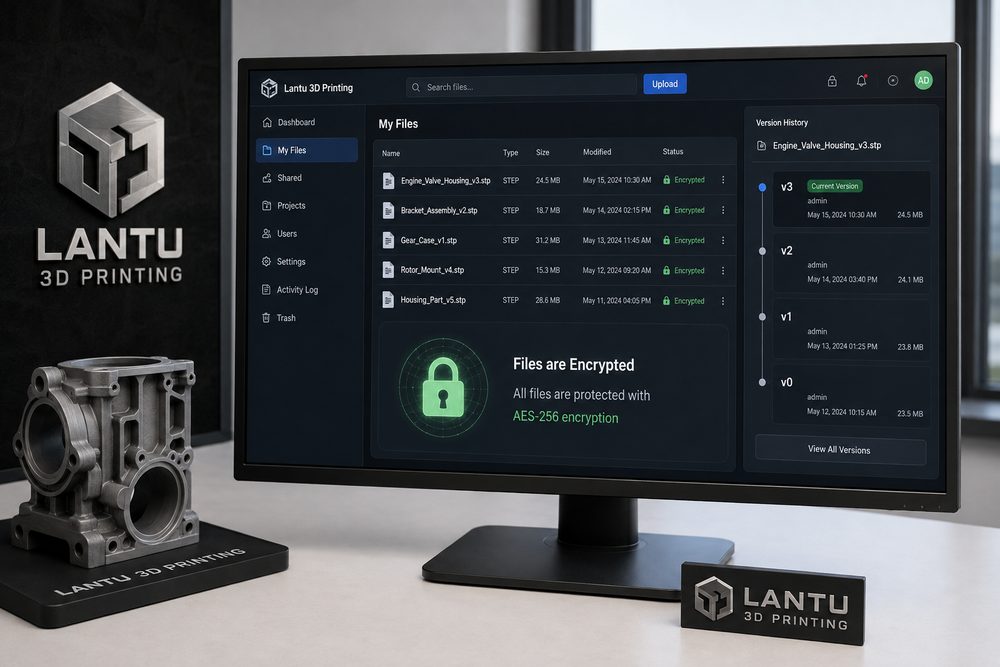
3D Printing Intellectual Property Protection: Security Boundaries for Model Files, Process Data, and Delivery Records
3D printing projects often involve not only visual concepts but also structural design, process parameters, and customer business information, so intellectual property protection cannot rely on a single confidentiality agreement. This article explains how companies can establish clear data security and ownership management mechanisms when using 3D printing services, from model file intake, permission tiers, version tracking, and process data boundaries to outsourcing coordination and delivery archiving.

news
Building a 3D Printing Standardization System: An End-to-End Method from File Specifications to Delivery Acceptance
When a 3D printing project moves from single-piece prototyping to multi-batch delivery, the real factor affecting stability is often not a single machine, but whether design files, material batches, process parameters, inspection records, and customer confirmation methods are governed by a unified standard. This article breaks down a practical 3D printing standardization system—from file naming, DFAM reviews, material process windows, first-article approval, in-process sampling, to delivery archiving—to help companies reduce rework, communication overhead, and quality traceability costs.
Service Process
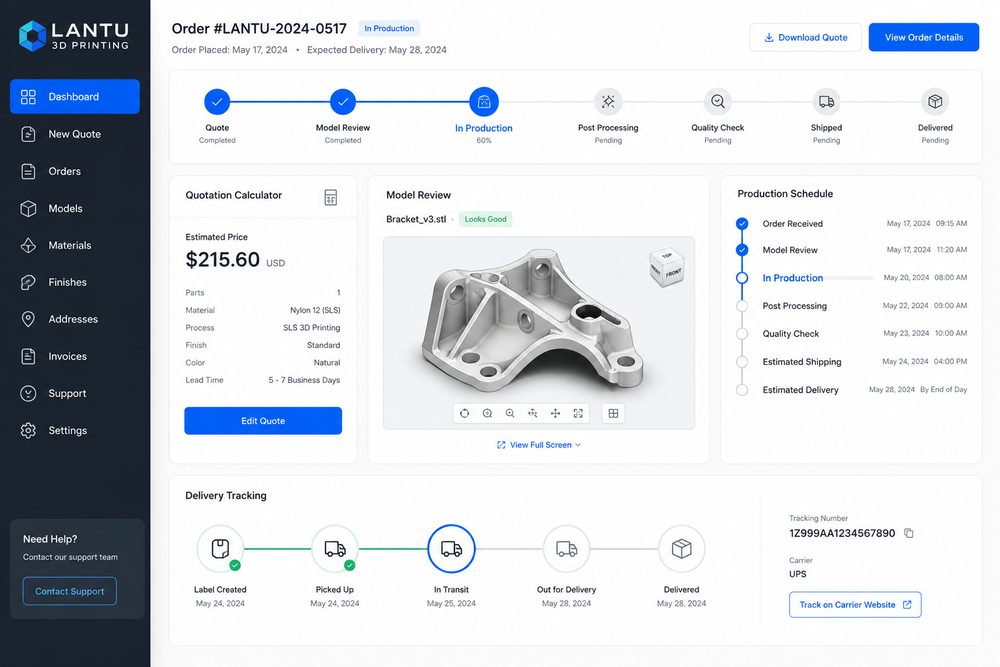
From Quote to Delivery: How a Digital Closed Loop for 3D Printing Service Orders Reduces Communication Costs
3D printing service orders involve the model, material, process, lead time, post-processing, and acceptance criteria. When information is not transparent, communication becomes repetitive and inefficient. This article explains how lantu3D reduces communication costs and improves delivery certainty through five stages: quoting, technical review, production scheduling, progress notifications, and delivery feedback.
Start From Here
Have a model, drawing, or only an idea?
Submit your requirement and our engineers will recommend a better design and manufacturing path based on use, size, quantity, material, tolerance and lead time.