
No model yet, material choice and wall thickness are explained from a practical angle.
Knowledge Center
Blueprint News
lantu3D reviews wall thickness, structure, materials, process, quantity and finishing before quotation.
01Guides
02Materials
03Customer View
Content should help customer decisions
lantu3D articles focus on materials, processes, cost, modeling and manufacturability so customers understand key decisions before submitting a request.
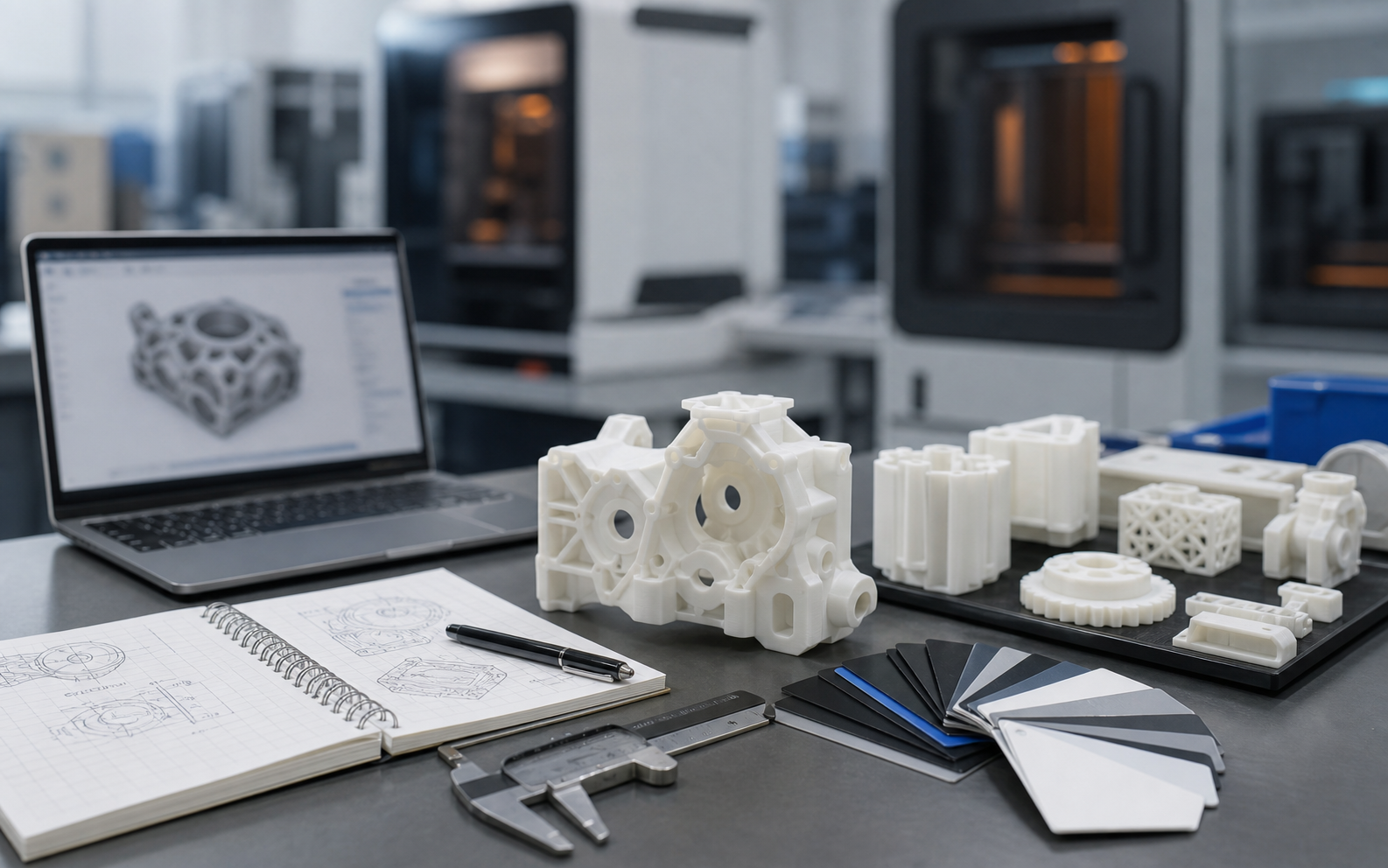
Prototype, fixture, custom part, small batch and cost-control topics for business users.
lantu3D is positioned as blueprint realization and lifecycle management, not just a print shop.
Service Process
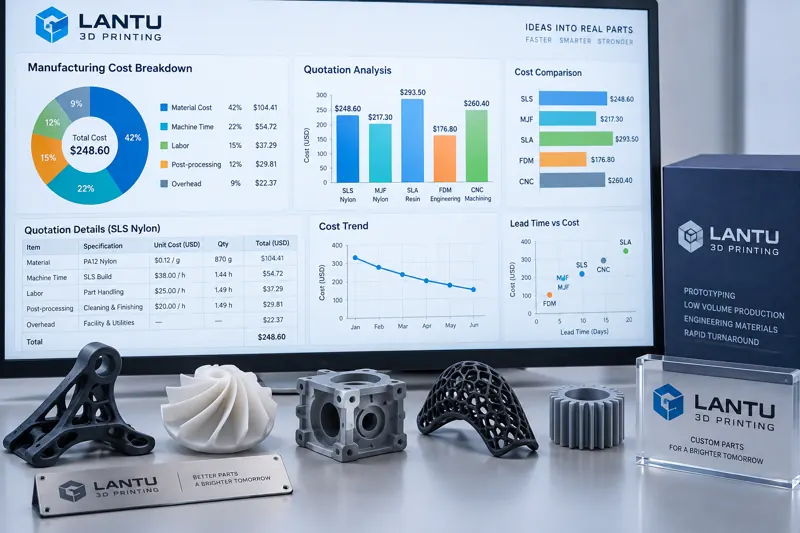
Transparency in 3D Printing Quotes: How Enterprise Clients Understand Cost Components and Delivery Boundaries
When purchasing 3D printing services, enterprise clients often assume quote differences are simply a matter of unit price. In reality, total cost is made up of materials, machine time, model preparation, post-processing, inspection, delivery risk, and project management. This article helps enterprise buyers understand quoting logic, avoid mistakes caused by chasing the lowest price, and build a reusable inquiry standard.
Service Process
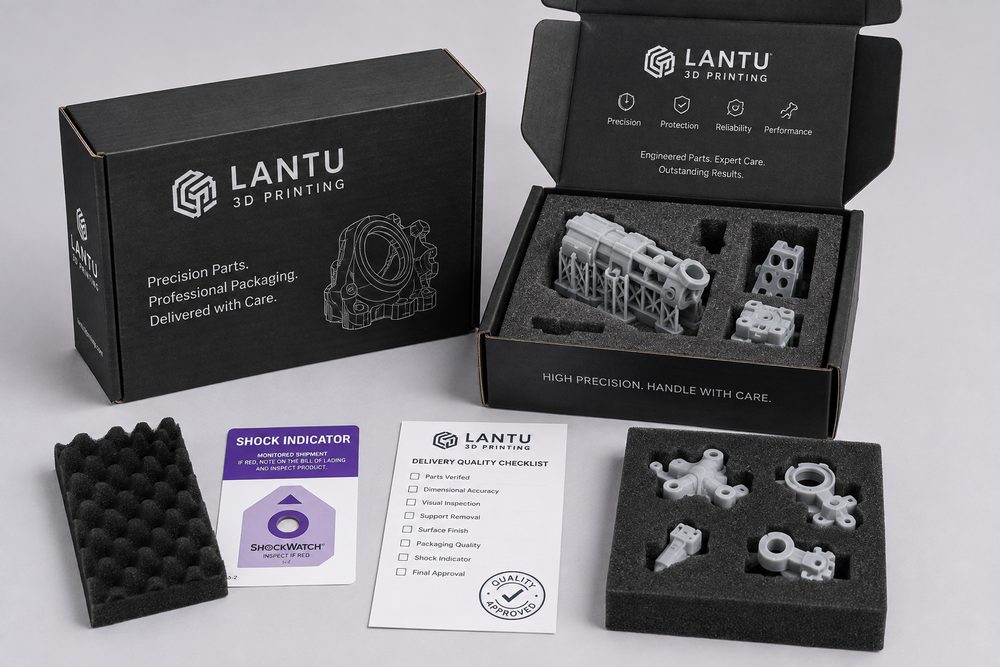
How Packaging and Transportation Affect 3D Printing Delivery Quality: Protection Solutions for Brittle Resin Parts and Precision Models
Even after leaving the production site, 3D-printed parts can still be damaged by vibration, compression, humidity, and static electricity. This article explains the key practices for layered packaging, shock-resistant fixation, labeling and tracking, and incoming inspection for brittle resin parts, precision display models, and low-volume components.
Service Process
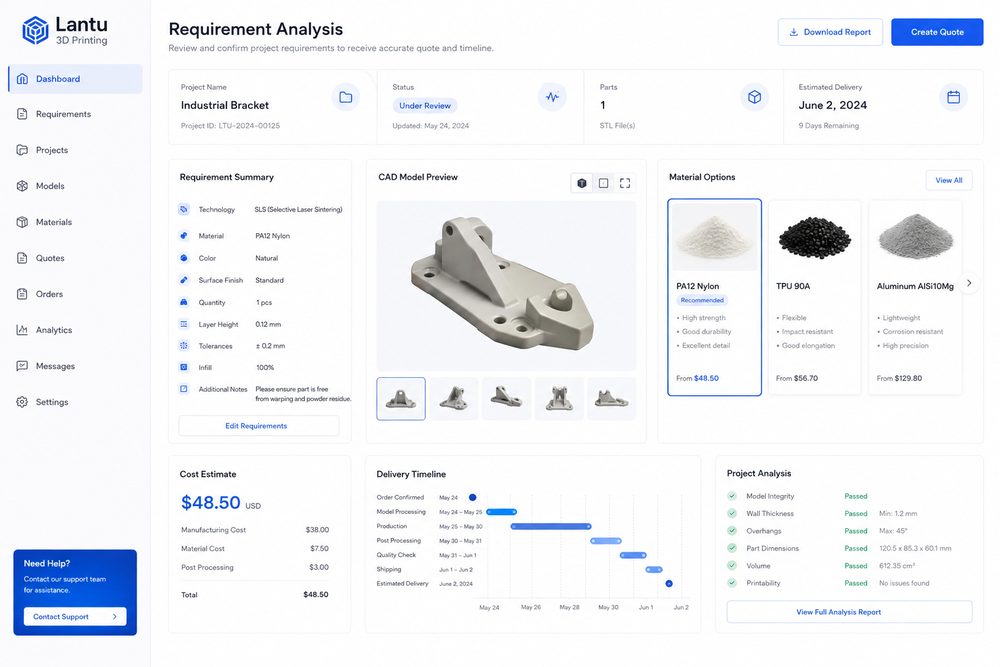
The Role of Customer Requirement Analysis in 3D Printing Projects: How to Turn an Idea into a Deliverable Solution
3D printing project failures are often caused not by equipment issues, but by incomplete requirement understanding. This article explains how to break down a customer’s brief idea into a quotable, manufacturable, inspectable, and deliverable engineering solution by clarifying the use case, performance targets, appearance grade, production volume, budget limits, and acceptance method, reducing back-and-forth communication and delivery disputes.
Project Communication
Service Process
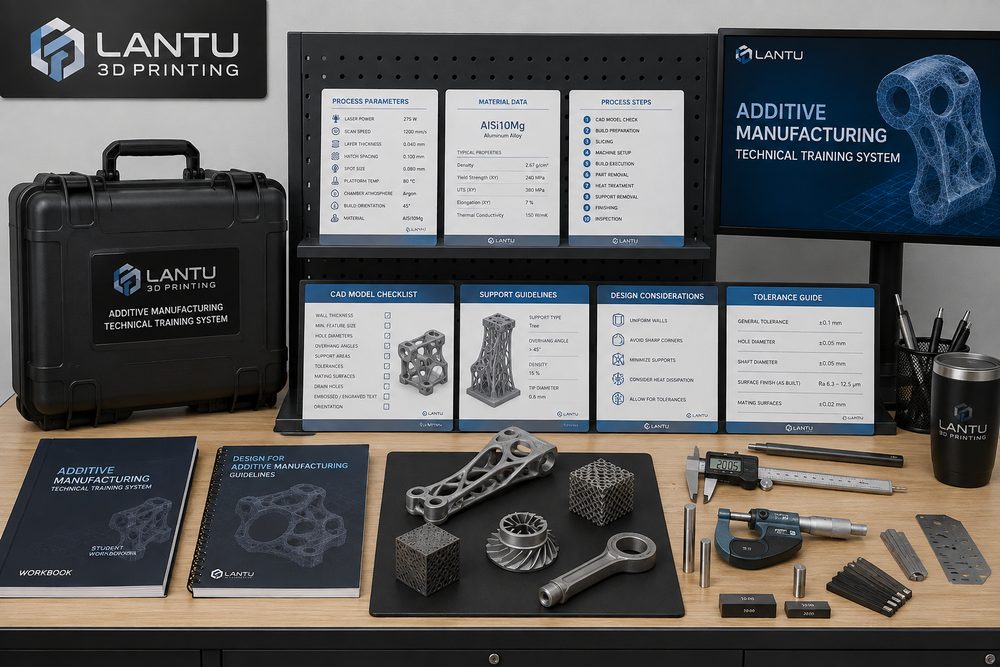
3D Printing Talent Training System: Building Role Competencies from Modeling Standards to Delivery Acceptance
Stable delivery in 3D printing projects depends not only on equipment and materials, but also on cross-functional collaboration. This article breaks down a talent training system across five stages—modeling, process planning, post-processing, quality inspection, and project management—and explains how standard operating procedures, parameter case libraries, and acceptance checklists can reduce rework and help new team members take on complex projects through controlled workflows.
3D printing services
Service Process
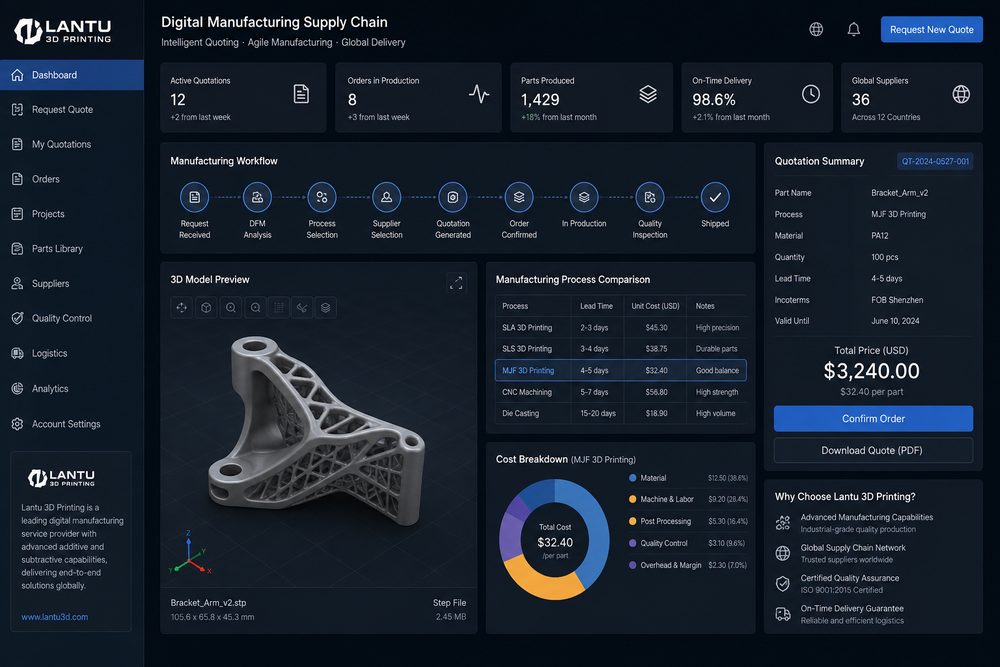
How Digital Supply Chains Make 3D Printing Quotes and Delivery More Transparent
A digital supply chain connects requirement confirmation, model review, quoting, production scheduling, quality inspection, and logistics into a traceable workflow. This article explains how 3D printing platforms improve quote transparency and delivery stability through data collaboration.
Service Process
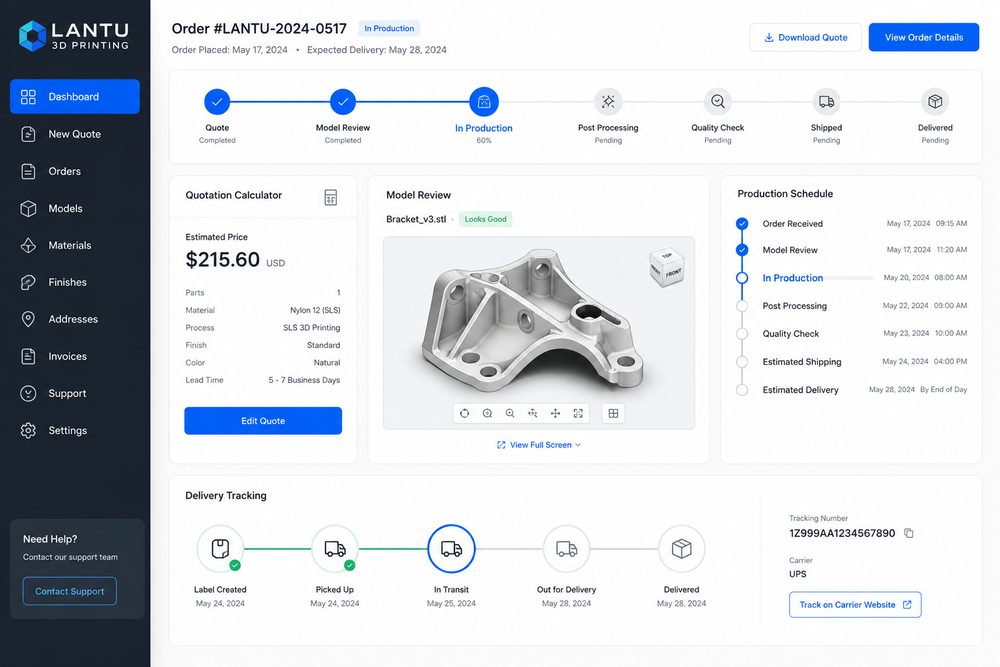
From Quote to Delivery: How a Digital Closed Loop for 3D Printing Service Orders Reduces Communication Costs
3D printing service orders involve the model, material, process, lead time, post-processing, and acceptance criteria. When information is not transparent, communication becomes repetitive and inefficient. This article explains how lantu3D reduces communication costs and improves delivery certainty through five stages: quoting, technical review, production scheduling, progress notifications, and delivery feedback.
Service Process
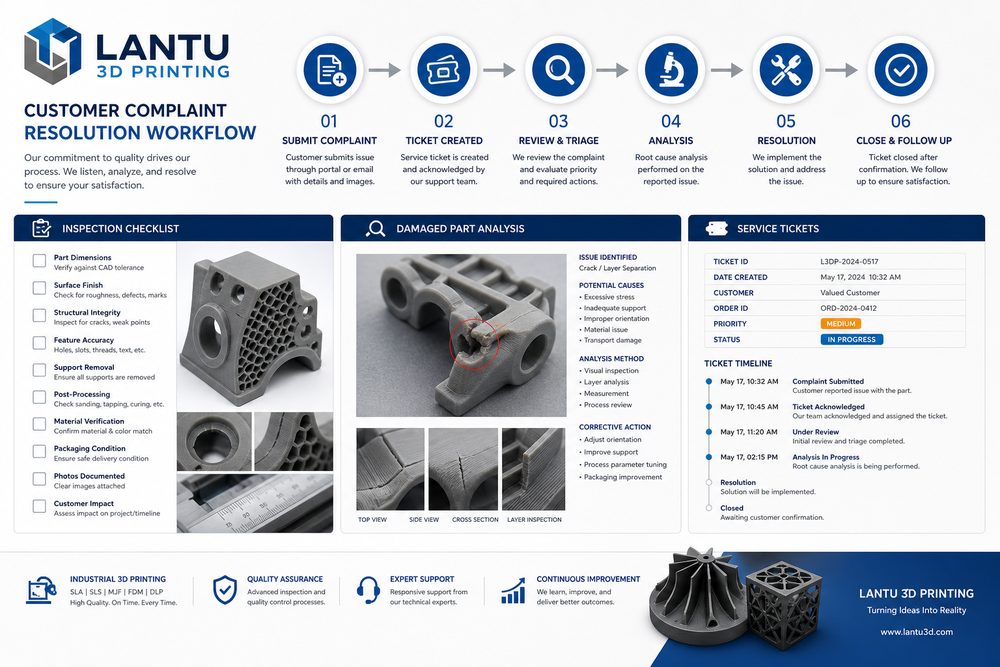
3D Printing Customer Complaint Handling Process: Turn After-Sales Issues into Repeat Orders
3D printing complaints often involve design, process, production, post-processing, and logistics. This article proposes a five-step mechanism of classification, response, review, resolution, and prevention to help service teams close the after-sales loop with engineering data and turn problems into repeat-order opportunities.
3D printing services
Service Process
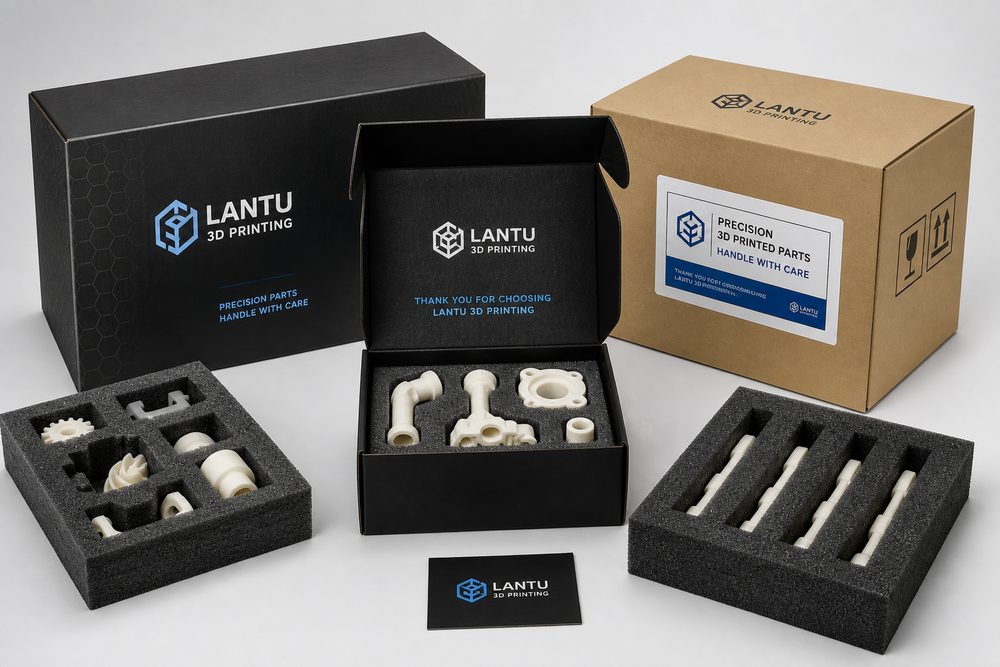
Don't Let the Last Mile Ruin Your Project: A Guide to 3D Printing Packaging and Shipping Management
3D printed parts often feature thin walls, many details, and complex surface finishing, so packaging and shipping management directly affect the delivery experience. This article explains how to reduce transit damage and after-sales disputes from five aspects: part classification, protective structures, labeling traceability, temperature and humidity control, and arrival inspection.
Service Process
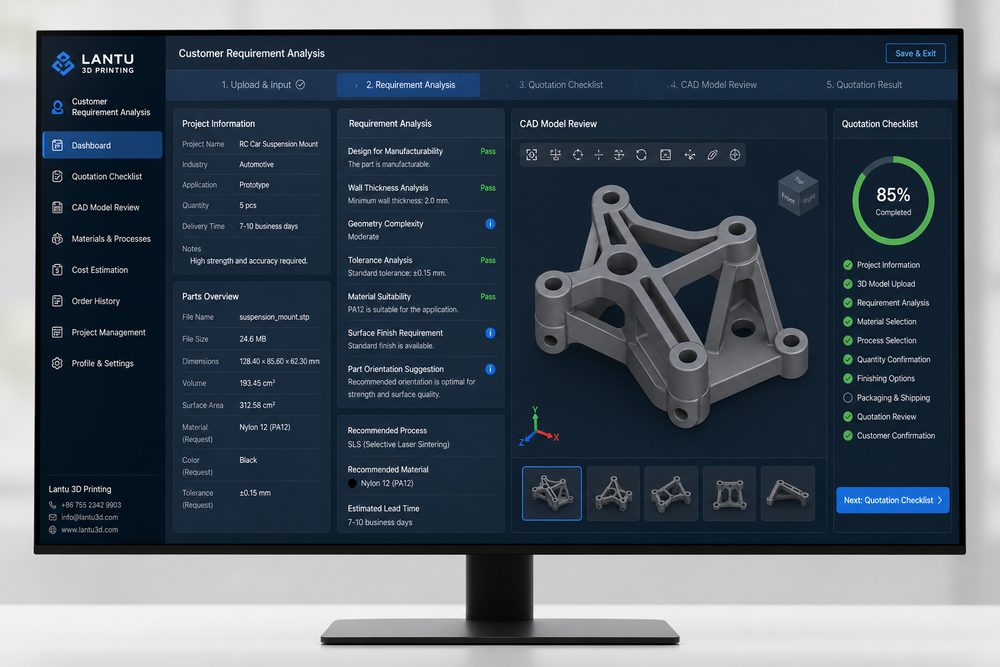
Asking the Right Questions, Avoiding Detours: A Practical Guide to Analyzing 3D Printing Customer Requirements
3D printing project failures often start with requirements that were never clearly defined. This article builds an actionable customer requirements analysis framework around use case, quantity, material, accuracy, appearance, assembly, and delivery cycle.
Service Process
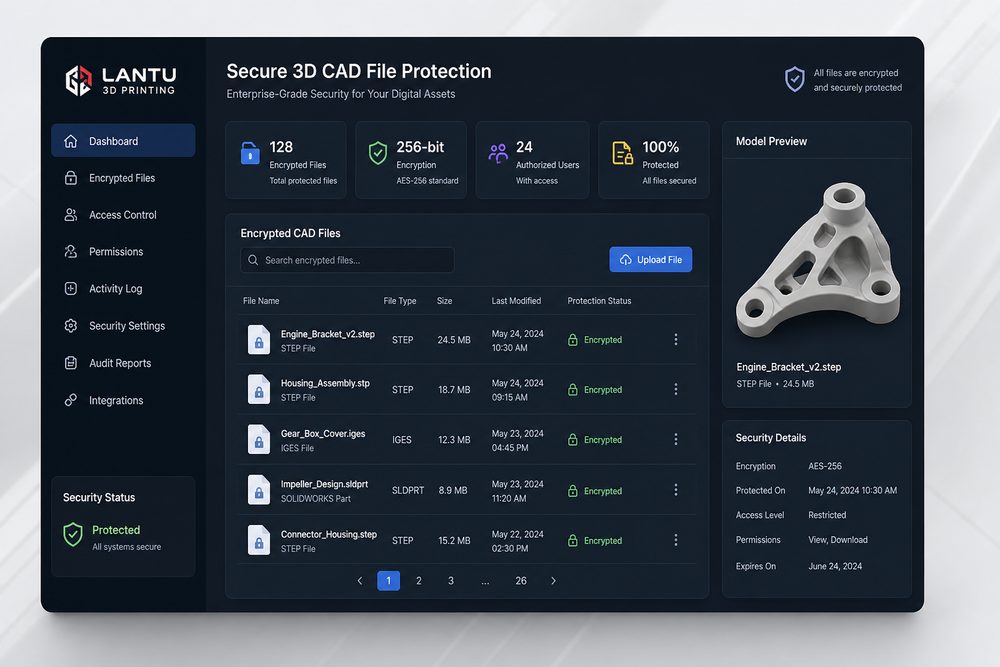
Model Files, Process Parameters, and Deliverables: How to Protect Intellectual Property in 3D Printing
3D printing projects involve multiple types of knowledge assets, including models, drawings, parameters, samples, and customer requirements. This article discusses IP protection methods from authorization boundaries and file management to access control and delivery records.
Service Process
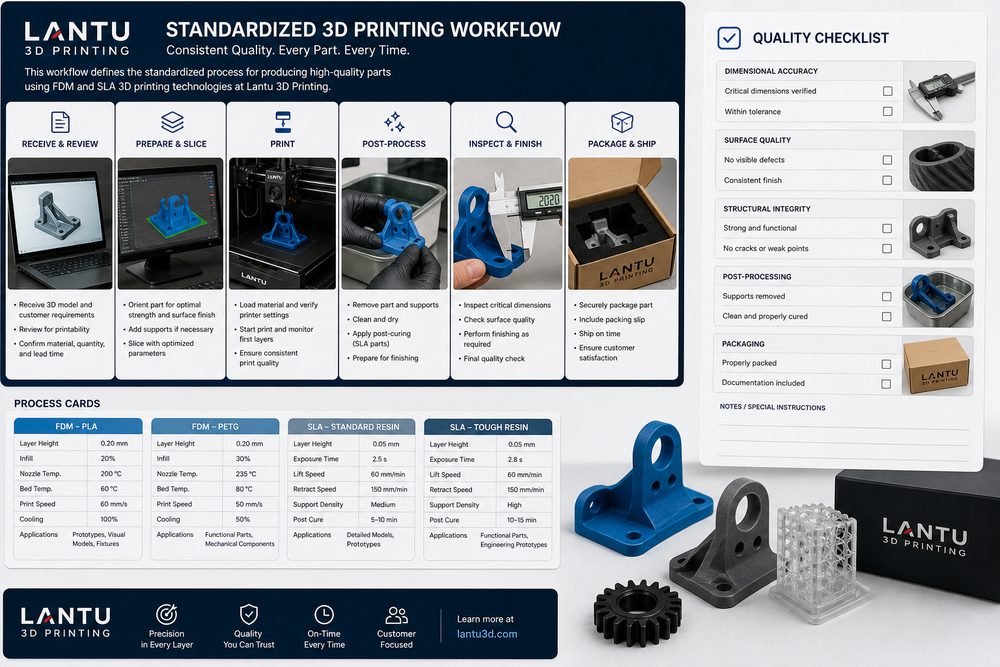
From Experience-Based Production to Standardized Delivery: A Guide to Building a 3D Printing Standardization System
Standardization is the foundation for scaling 3D printing services. This article explains how to build a standardization system suited to your business across document specifications, process parameters, quality inspection, project delivery, and review mechanisms.
Service Process
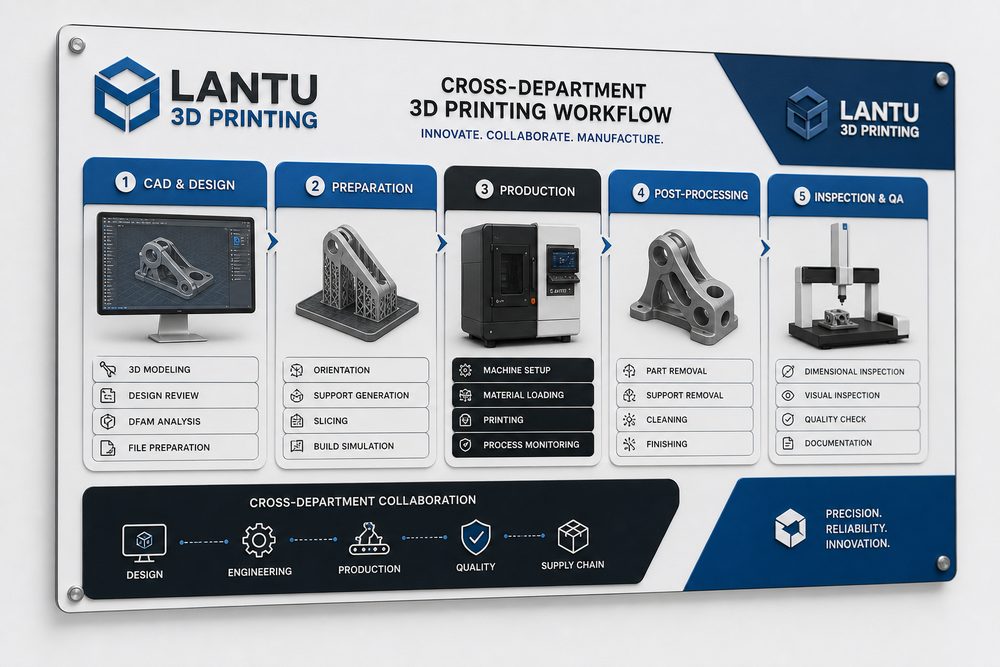
From Design to Delivery Without Bottlenecks: Key Design Principles for Cross-Functional Coordination in 3D Printing
3D printing projects typically span sales, design, engineering, production, post-processing, quality inspection, and logistics. This article explains how to build an effective cross-functional collaboration mechanism from the perspectives of requirement intake, version management, milestone reviews, exception escalation, and data sharing to reduce rework and communication costs.
Start From Here
Have a model, drawing, or only an idea?
Submit your requirement and our engineers will recommend a better design and manufacturing path based on use, size, quantity, material, tolerance and lead time.