Introduction: Cross-Functional Coordination in 3D Printing Is Moving from Experience-Based Management to Data-Driven Operations
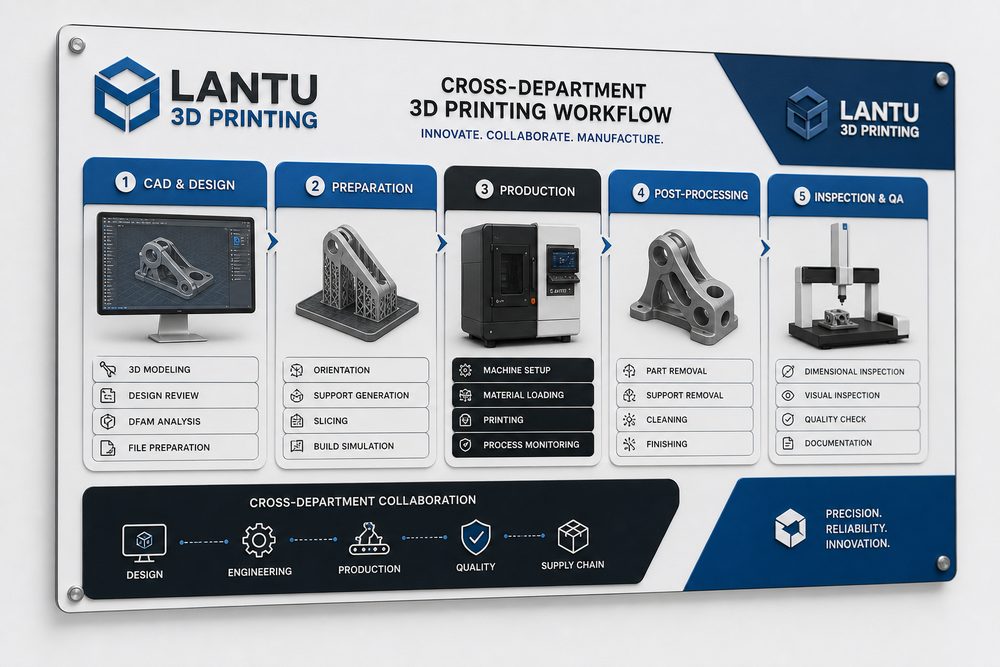
A 3D printing order often passes through multiple departments from the customer inquiry stage to final delivery. Sales interprets the requirements, design or engineering reviews the model, production schedules the equipment, post-processing handles sanding and painting, quality inspection confirms standards, and logistics takes care of packaging and shipping. If information breaks down at any point, errors can occur.
1. Establish Quantifiable Business Scenarios and Boundary Conditions
The starting point of a collaboration mechanism is a unified requirement interface. When sales receives a request, it should use a standard form to record the intended use, quantity, material preferences, dimensional requirements, surface finish, assembly relationships, lead time, and acceptance method. For projects described only at the concept level, engineers should be involved in the preliminary review.
2. Break Down Risks and Delivery Responsibilities Through Process Milestones
Version control is one of the most error-prone areas. Every model revision should generate a version number, a change log, and a confirmation timestamp. Files should not be replaced directly in chat records without leaving a trace. Before production begins, the version must be frozen, and any customer-requested revision should trigger an impact assessment.
3. Embed Parameters, Data, and Acceptance Criteria into the System
Milestone reviews turn collaboration from passive communication into active confirmation. It is recommended to set four key checkpoints: process review before quotation, file confirmation before production, appearance confirmation before post-processing, and quality confirmation before shipment. Each checkpoint should have clear inputs and outputs.
4. Continuous Optimization: From Single-Order Review to Organizational Capability Building
Digital tools can reduce collaboration costs, but only when the process is clearly defined. Whether using an ERP system, a project management platform, or a lightweight spreadsheet, order status, responsible owners, file versions, process parameters, quality inspection results, and logistics information should all be visible.
Conclusion
The goal of cross-functional collaboration is to keep complex customized projects moving steadily even with multiple participants involved. By standardizing requirements, controlling versions, reviewing milestones, escalating exceptions, and sharing data, 3D printing service providers can significantly reduce rework and misunderstandings.
Submit a model, drawing, image or written notes. Engineers will review material, process, finishing and delivery based on actual use.