
No model yet, material choice and wall thickness are explained from a practical angle.
Knowledge Center
Blueprint News
lantu3D reviews wall thickness, structure, materials, process, quantity and finishing before quotation.
01Guides
02Materials
03Customer View
Content should help customer decisions
lantu3D articles focus on materials, processes, cost, modeling and manufacturability so customers understand key decisions before submitting a request.
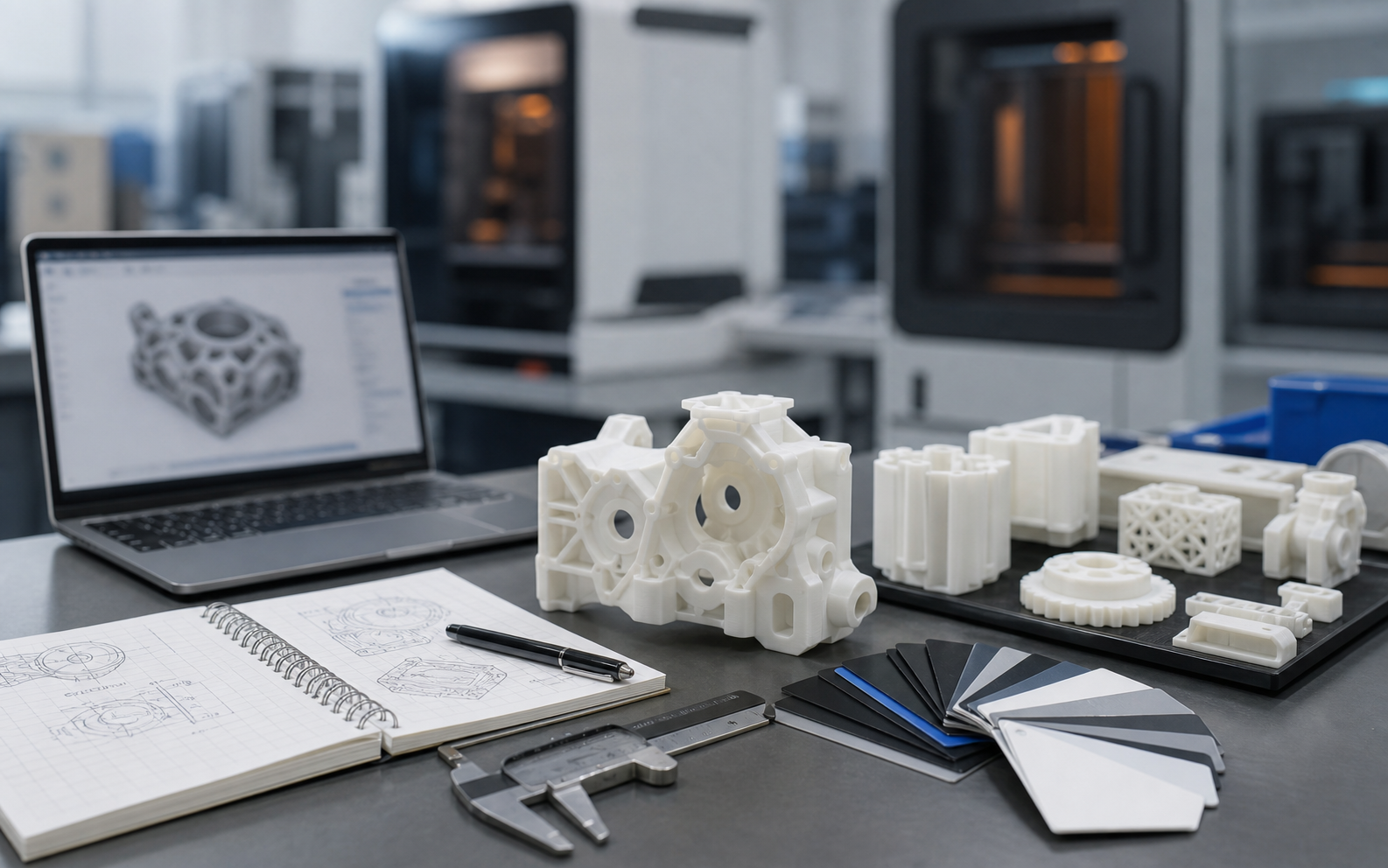
Prototype, fixture, custom part, small batch and cost-control topics for business users.
lantu3D is positioned as blueprint realization and lifecycle management, not just a print shop.

news
Knowledge Management for 3D Printing Companies: Turning Scattered Experience into Reusable Process Assets
3D printing is a manufacturing method highly dependent on experience, and process know-how is often locked in the minds of individual engineers and scattered chat records. This article systematically explains how 3D printing companies can build a knowledge management system: from the structured accumulation of process parameters, DFM guidelines, failure cases, and equipment and material data, to practical mechanisms for classification, retrieval, and reuse, turning one-off experience into reusable, auditable, and transferable process assets.

news
3D Printing Process Optimization for Conformal Cooling Molds: From Channel Design to Delivery Acceptance
In injection molding and die casting production, mold cooling time often accounts for 50%–70% of the molding cycle. Traditional straight cooling channels are limited by CNC machining, and uneven cooling can lead to product warpage and longer cycles. This article systematically explains the optimization path for 3D printing conformal cooling molds: from conformal cooling channel design principles, SLM mold steel selection and process parameters, to stress-relief post-processing, endoscopic and CT inspection acceptance. It also presents quantified engineering value and implementation recommendations to help enterprises transform design freedom into deliverable, repeatable mass-production capability.
news
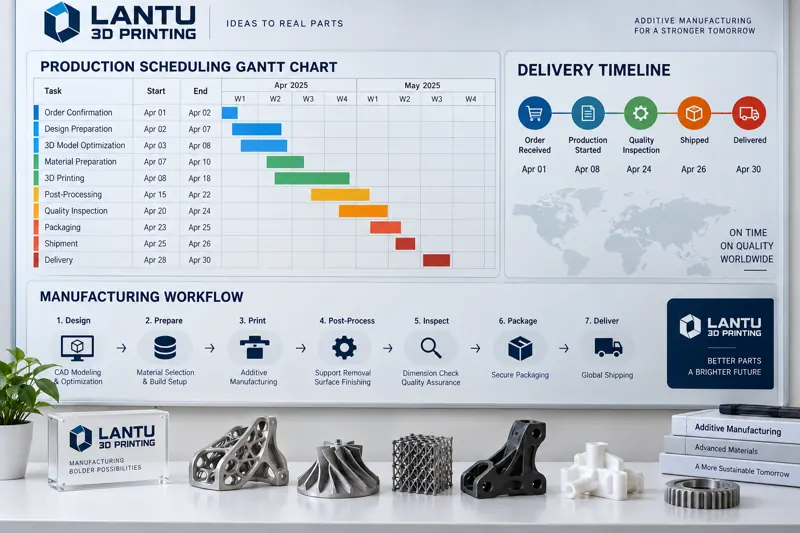
3D Printing Production Scheduling: Delivery Cadence Management from Order Priority to Batch Planning
Under an on-demand manufacturing model, 3D printing workshops often handle R&D prototyping, small-batch pilot production, and urgent replacement parts at the same time. Mixed equipment, high material changeover costs, and cross-station post-processing make traditional scheduling ineffective. This article systematically explains order priority evaluation models, same-material batch scheduling, capacity load and bottleneck identification, delivery cadence and WIP control, and digital scheduling tools to help service providers improve equipment utilization and on-time delivery rates.
news
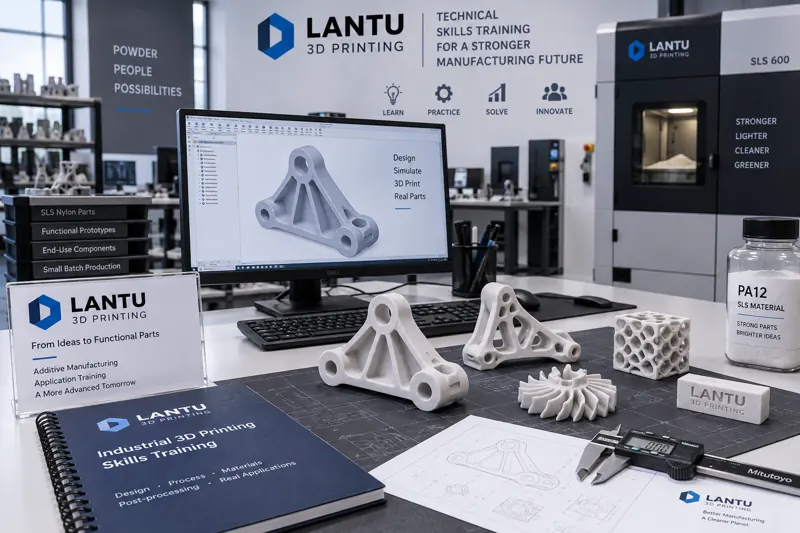
Building a 3D Printing Talent Competency Model and Training System: An End-to-End Development Path from Design to Delivery
The 3D printing industry does not lack equipment; it lacks versatile talent who understand design, materials, processes, and post-processing. This article proposes a talent development system covering competency models, layered practical training, role certification, and production-line integration, helping companies turn “people who can use software” into “people who can deliver qualified parts.”
news
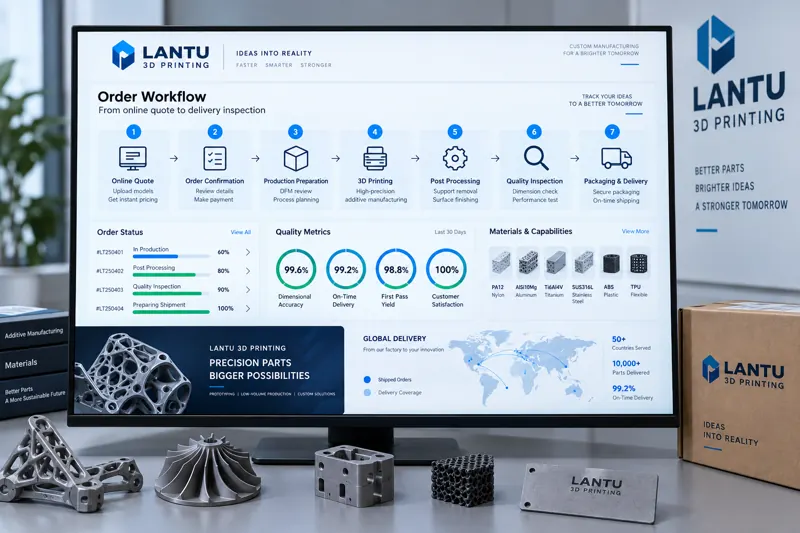
Digitizing the 3D Printing Service Process: Reconstructing the End-to-End Experience from Online Quotation to Delivery Acceptance
Traditional 3D printing services rely on phone calls, emails, and Excel spreadsheets, resulting in long quotation cycles, opaque progress, and vague acceptance standards. Centered on lantu3D’s end-to-end digital practice, this article breaks down the full-chain reconstruction method from online inquiry, automatic quotation, order review, and production scheduling to delivery acceptance, providing actionable parameters, tools, and acceptance checklists to help enterprise customers compress the average delivery cycle for a custom part from 7 days to within 48 hours.
news
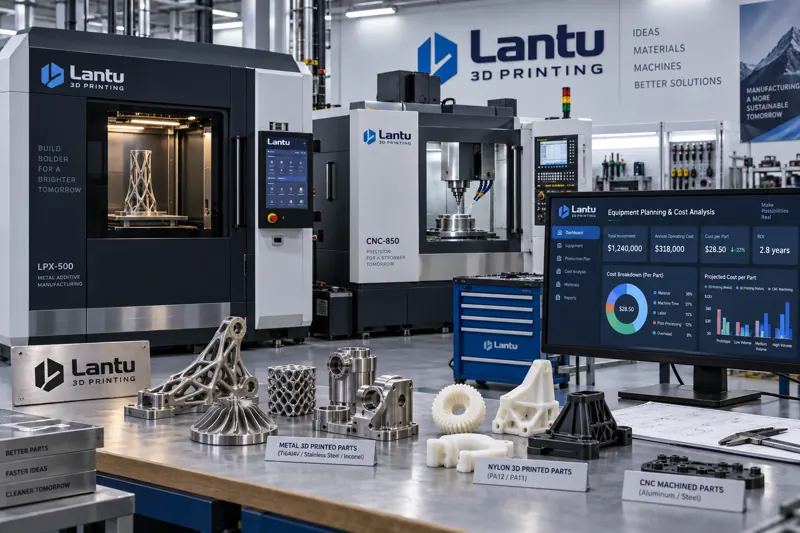
3D Printing Equipment Investment Decisions: A Selection Methodology from Capacity Demand to TCO Return
Equipment investment decisions can determine the survival of a 3D printing business. Based on lantu3D Printing’s experience serving thousands of companies, this article presents a systematic selection methodology covering capacity calculation, process route matching, TCO modeling, payback period, and utilization validation, helping companies spend equipment budgets where they matter most.

news
3D Printing Intellectual Property Protection: An End-to-End Approach from Design Ownership Verification to Delivery Anti-Counterfeiting
When core assets are compressed into a single model file, 3D printing turns intellectual property into an end-to-end engineering challenge. This article outlines three major risks—digital copying, distributed manufacturing, and reverse engineering—clarifies four types of rights including copyright, patents, trademarks, and trade secrets, and provides an actionable prevention checklist covering watermarking and evidence preservation in design, contractual traceability in manufacturing, and physical anti-counterfeiting at delivery.
news
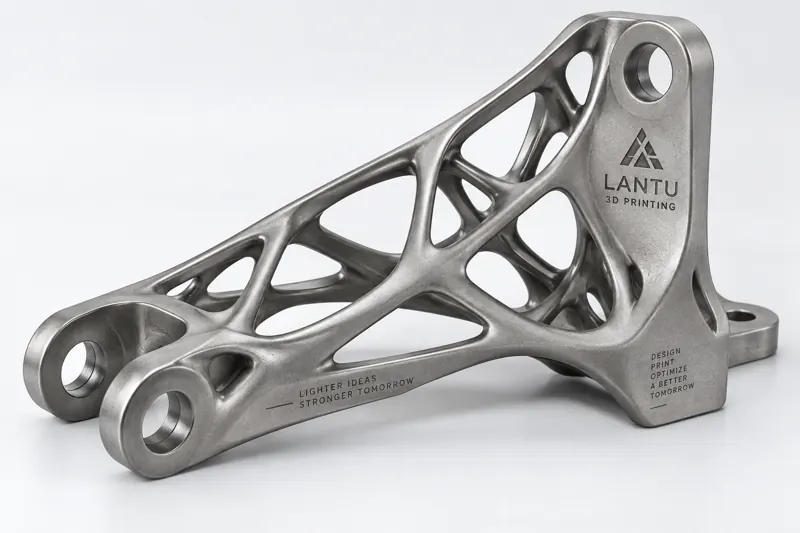
Topology Optimization for Lightweight Design: A Complete Path from Simulation-Driven Engineering to 3D Printing Implementation
As structural components enter an era where weight is traded against performance, traditional weight-reduction methods often reach their limits. By combining topology optimization with the geometric freedom of 3D printing, parts can grow material-efficient shapes along load-bearing paths. This article breaks down the implementation path for topology-optimized lightweight design, from simulation principles and manufacturability reconstruction to SLM/SLS process parameters, and provides quantitative design boundaries for materials, wall thicknesses, and lattice structures.

Service Process
Transparency in 3D Printing Quotes: How Enterprise Clients Understand Cost Components and Delivery Boundaries
When purchasing 3D printing services, enterprise clients often assume quote differences are simply a matter of unit price. In reality, total cost is made up of materials, machine time, model preparation, post-processing, inspection, delivery risk, and project management. This article helps enterprise buyers understand quoting logic, avoid mistakes caused by chasing the lowest price, and build a reusable inquiry standard.
Materials and Processes
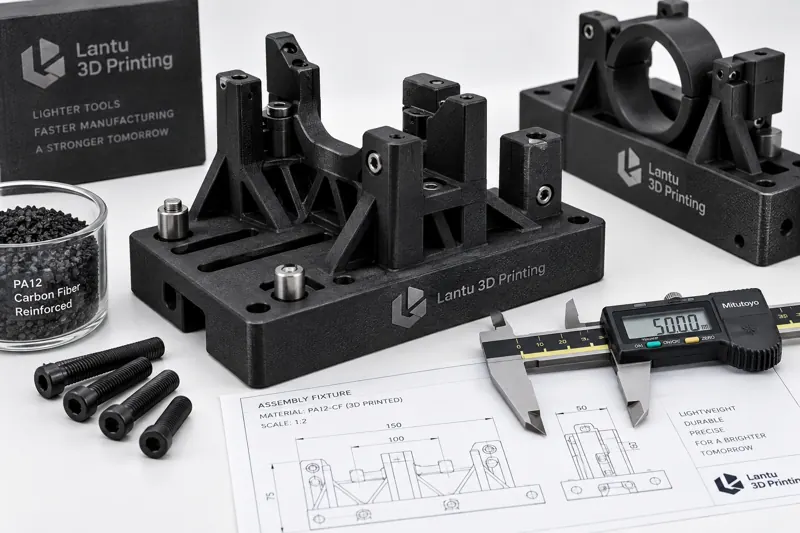
Applications of High-Performance Composite Materials in 3D Printing Fixtures: An Engineering Path from Lightweighting to Durability
For automotive, electronics, and low-volume assembly scenarios, composite-material 3D-printed fixtures are replacing some machined aluminum fixtures. This article explains how to achieve a measurable balance between weight, stiffness, heat resistance, and lead time across five stages: material selection, structural design, process window, post-processing, and service-life validation.

Enterprise Manufacturing
How Production Scheduling Can Optimize 3D Printing Lead Times: Coordinated Planning for Equipment, Materials, and Post-Processing
3D printing lead times depend on more than print time alone. File review, material batching, machine loading, cooling or curing, post-processing, and quality checks all affect delivery. This article outlines scheduling methods for on-demand manufacturing platforms to reduce waiting, rush jobs, and rework with visual planning.
production scheduling

Service Process
How Packaging and Transportation Affect 3D Printing Delivery Quality: Protection Solutions for Brittle Resin Parts and Precision Models
Even after leaving the production site, 3D-printed parts can still be damaged by vibration, compression, humidity, and static electricity. This article explains the key practices for layered packaging, shock-resistant fixation, labeling and tracking, and incoming inspection for brittle resin parts, precision display models, and low-volume components.
Start From Here
Have a model, drawing, or only an idea?
Submit your requirement and our engineers will recommend a better design and manufacturing path based on use, size, quantity, material, tolerance and lead time.