No model yet, material choice and wall thickness are explained from a practical angle.
Knowledge Center
Blueprint News
lantu3D reviews wall thickness, structure, materials, process, quantity and finishing before quotation.
01Guides
02Materials
03Customer View
Content should help customer decisions
lantu3D articles focus on materials, processes, cost, modeling and manufacturability so customers understand key decisions before submitting a request.
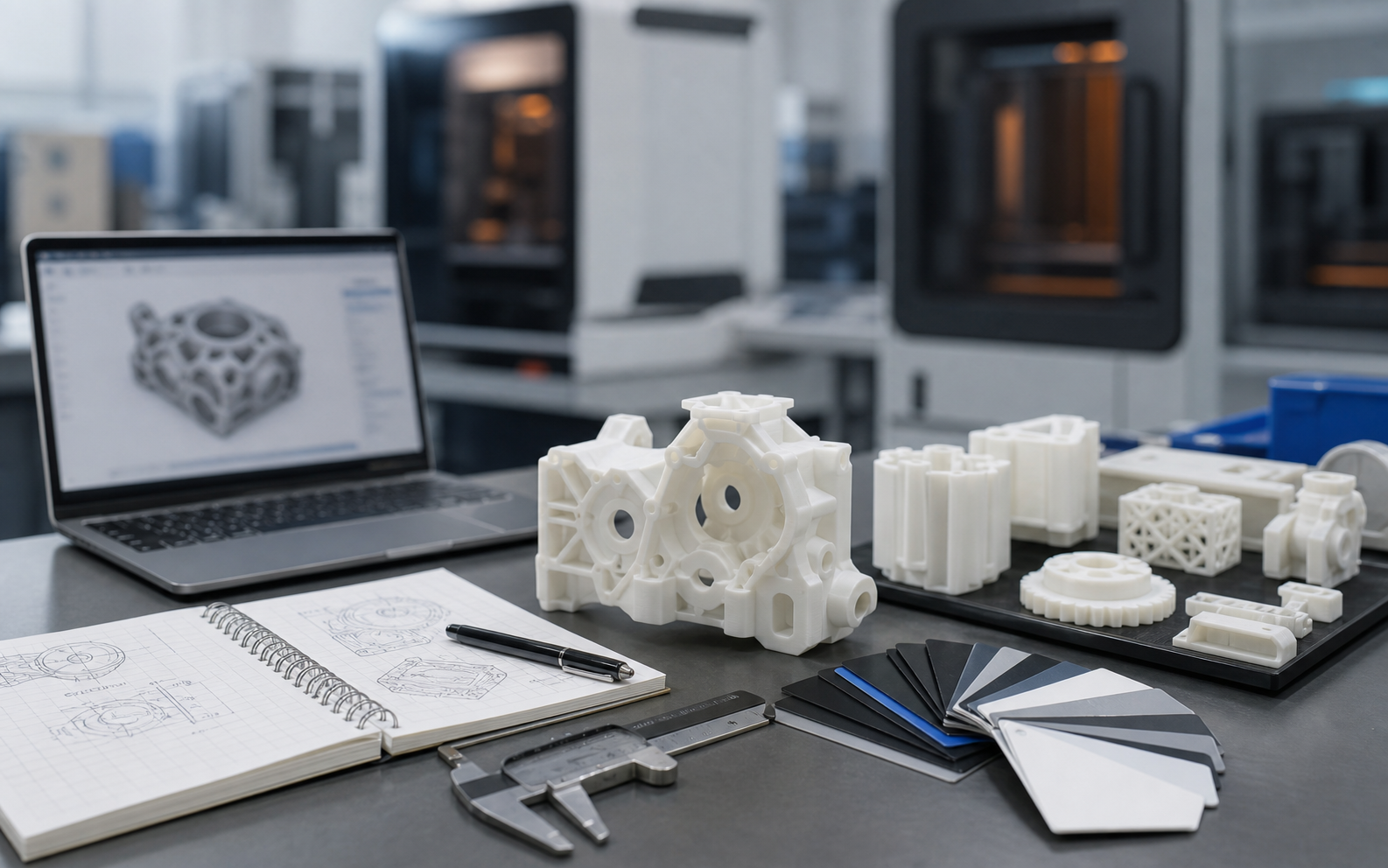
Prototype, fixture, custom part, small batch and cost-control topics for business users.
lantu3D is positioned as blueprint realization and lifecycle management, not just a print shop.
Enterprise Manufacturing
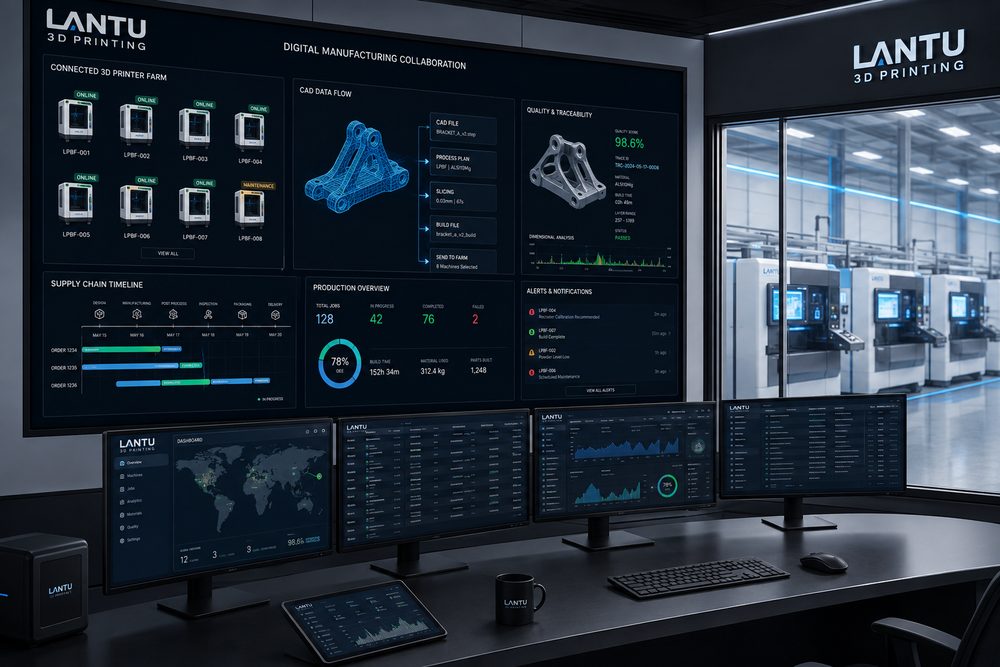
3D Printing Industry Trends Watch: From One-off Prototyping to Collaborative Digital Manufacturing
The 3D printing industry is moving beyond rapid prototyping and toward a digital manufacturing stage that coordinates design, materials, processes, quality, and supply chains. This article examines trends such as small-batch production, materials engineering, quality traceability, online quoting, and distributed capacity, explaining how service platforms improve delivery reliability through data-driven workflows.
3D printing services
Service Process
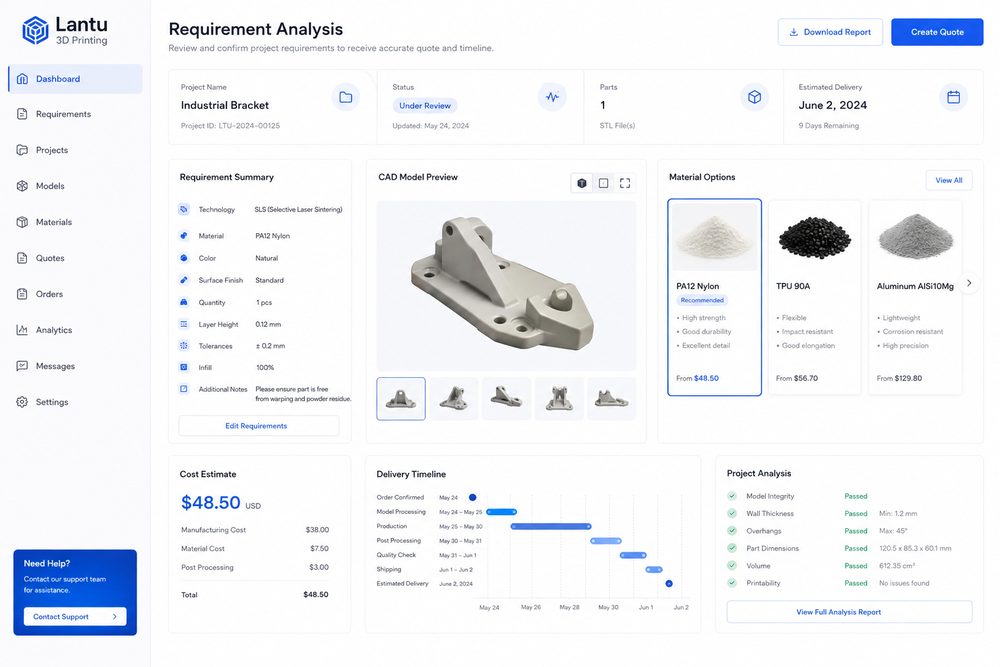
The Role of Customer Requirement Analysis in 3D Printing Projects: How to Turn an Idea into a Deliverable Solution
3D printing project failures are often caused not by equipment issues, but by incomplete requirement understanding. This article explains how to break down a customer’s brief idea into a quotable, manufacturable, inspectable, and deliverable engineering solution by clarifying the use case, performance targets, appearance grade, production volume, budget limits, and acceptance method, reducing back-and-forth communication and delivery disputes.
Project Communication
3D Printing Services
Service Process
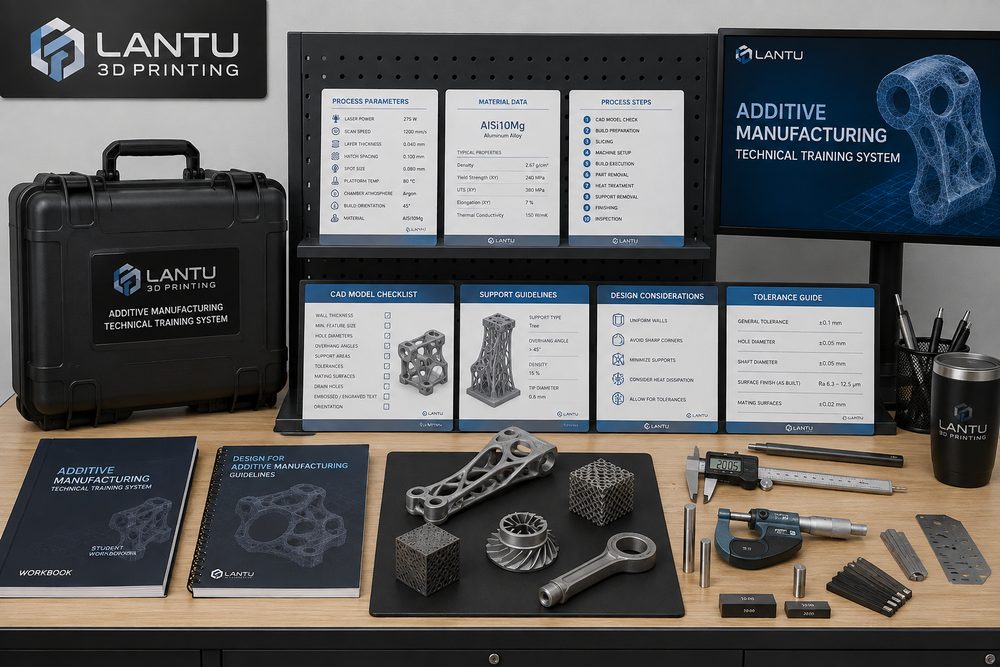
3D Printing Talent Training System: Building Role Competencies from Modeling Standards to Delivery Acceptance
Stable delivery in 3D printing projects depends not only on equipment and materials, but also on cross-functional collaboration. This article breaks down a talent training system across five stages—modeling, process planning, post-processing, quality inspection, and project management—and explains how standard operating procedures, parameter case libraries, and acceptance checklists can reduce rework and help new team members take on complex projects through controlled workflows.
3D printing services

Enterprise Manufacturing
Packaging and Shipping Solutions for 3D Printed Parts: Protective Design from Fragile Prototypes to Small-Batch Delivery
The last mile from factory to customer site often determines whether earlier investments in design, materials, and post-processing truly turn into delivered value. This article breaks down packaging tiers, shipping validation, labeling traceability, and incoming inspection methods for fragile prototypes, small-batch functional parts, and complex geometries, helping businesses build an actionable protection plan for 3D printed deliveries.
3D printing services

Service Workflow
Implementing Quality Traceability in 3D Printing Services: From File Versions to Shipment Records
Quality issues in 3D printing delivery are often hard to trace: was it the wrong model version, a material batch change, equipment parameter drift, or deviation caused by post-processing? This article introduces a traceability method suitable for service manufacturing, so every part has a record from file intake to shipment.
3D Printing Services
Service Process
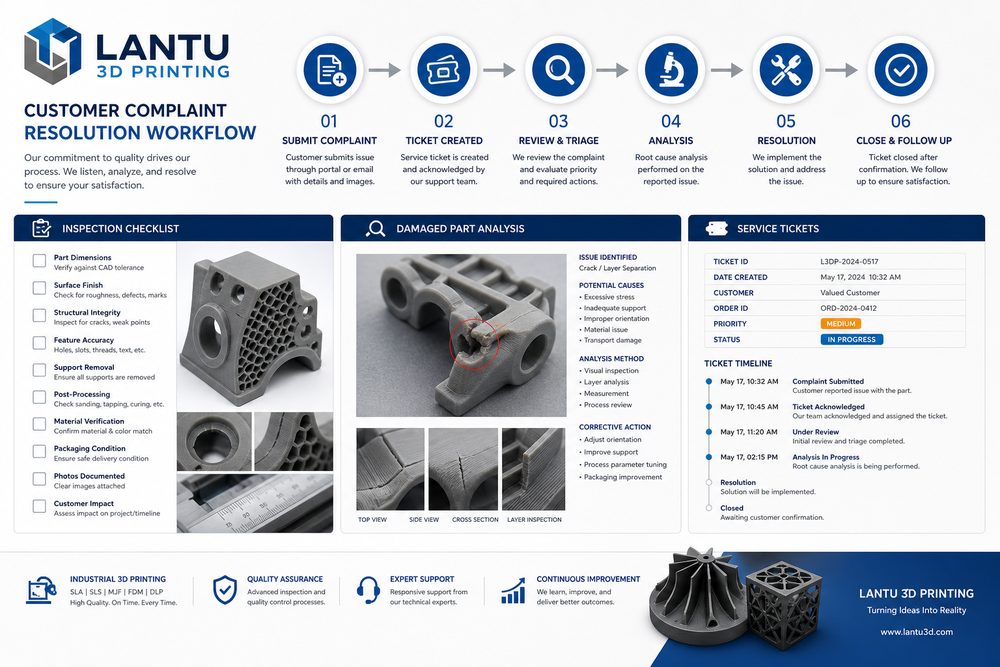
3D Printing Customer Complaint Handling Process: Turn After-Sales Issues into Repeat Orders
3D printing complaints often involve design, process, production, post-processing, and logistics. This article proposes a five-step mechanism of classification, response, review, resolution, and prevention to help service teams close the after-sales loop with engineering data and turn problems into repeat-order opportunities.
3D printing services

Service Workflow
Last-Mile Delivery: How 3D Printing Packaging and Shipping Management Can Avoid Damage, Deformation, and Unclear Liability
The quality of 3D printing delivery depends not only on printing and post-processing; packaging and transport also shape the customer experience. This article explains how to build a packaging and shipping management system suited to 3D printed parts, covering part brittleness, surface protection, batch identification, moisture and pressure resistance, transport responsibility, and delivery inspection.
3D printing services
Service Process
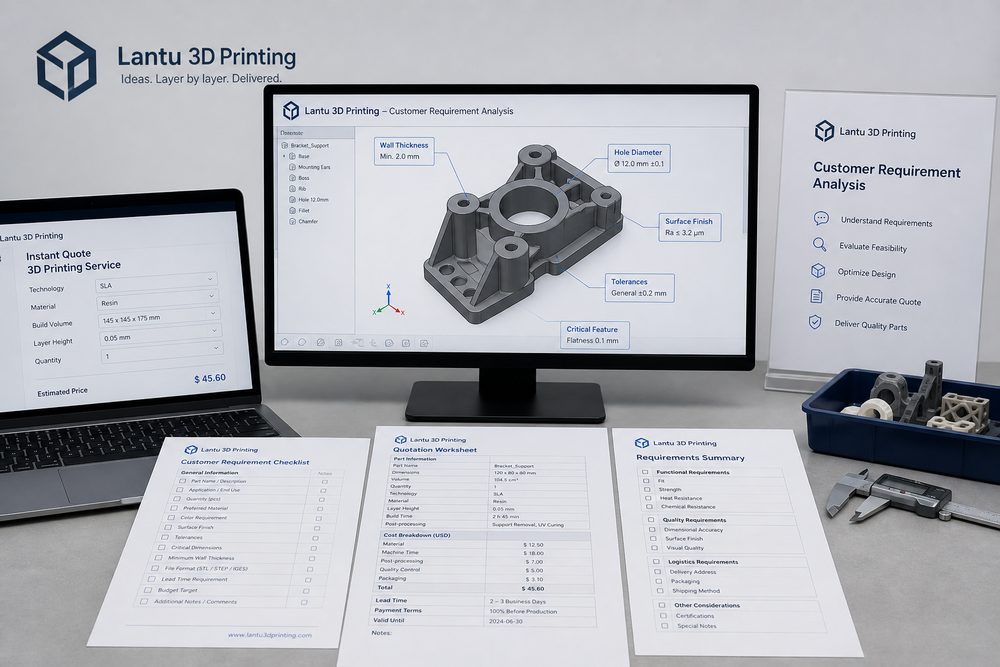
After the Customer Says “Just Print This for Me”: Seven Key Questions for 3D Printing Requirement Analysis
3D printing requirement analysis should not rely on the model file alone. Use case, loads, appearance, accuracy, material, quantity, lead time, and acceptance criteria all affect the solution. This article uses seven key questions to help service teams turn vague requests into project definitions that can be quoted, produced, and delivered.
Project Communication
3D Printing Services
Start From Here
Have a model, drawing, or only an idea?
Submit your requirement and our engineers will recommend a better design and manufacturing path based on use, size, quantity, material, tolerance and lead time.