No model yet, material choice and wall thickness are explained from a practical angle.
Knowledge Center
Blueprint News
lantu3D reviews wall thickness, structure, materials, process, quantity and finishing before quotation.
01Guides
02Materials
03Customer View
Content should help customer decisions
lantu3D articles focus on materials, processes, cost, modeling and manufacturability so customers understand key decisions before submitting a request.
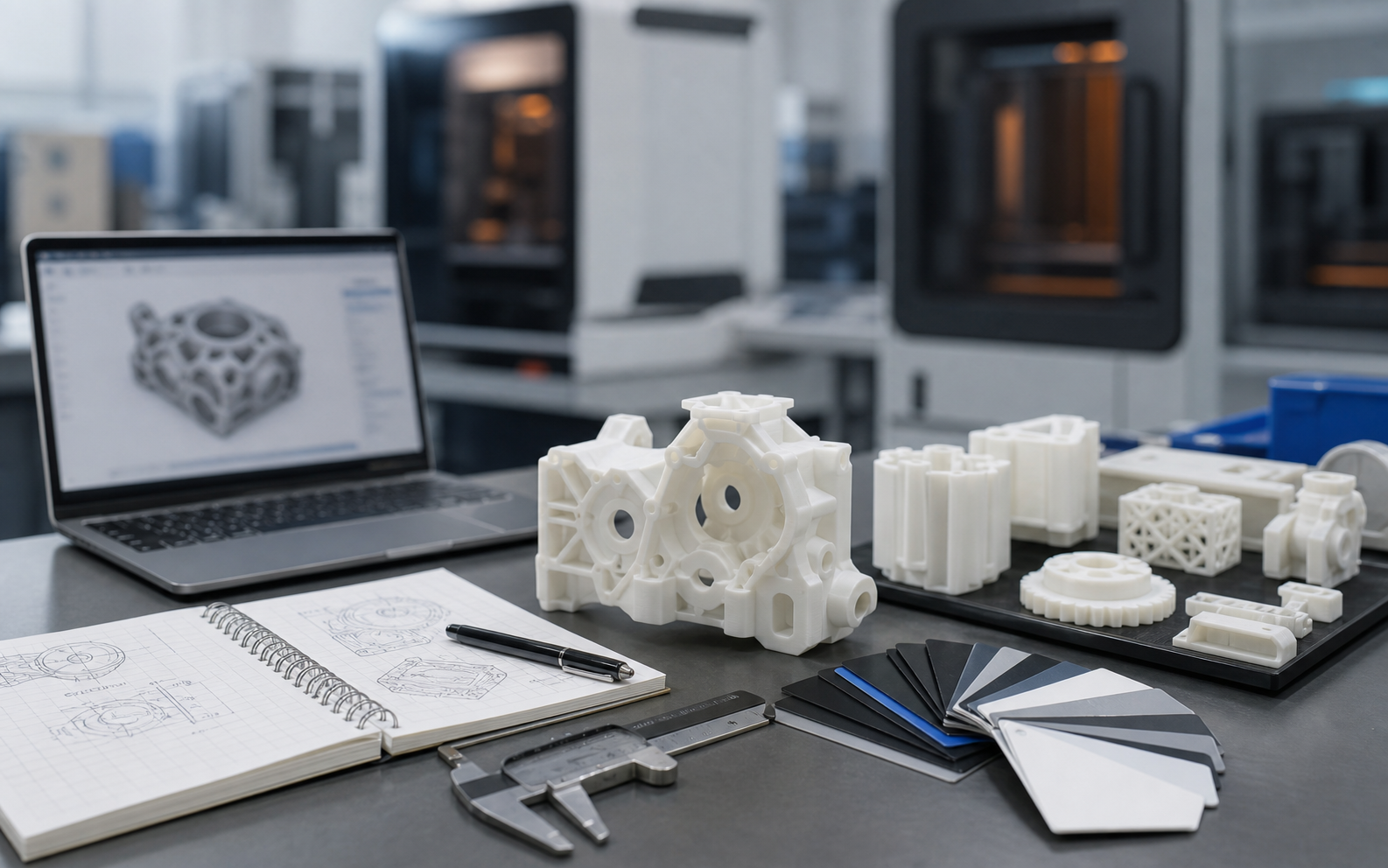
Prototype, fixture, custom part, small batch and cost-control topics for business users.
lantu3D is positioned as blueprint realization and lifecycle management, not just a print shop.
Enterprise Manufacturing
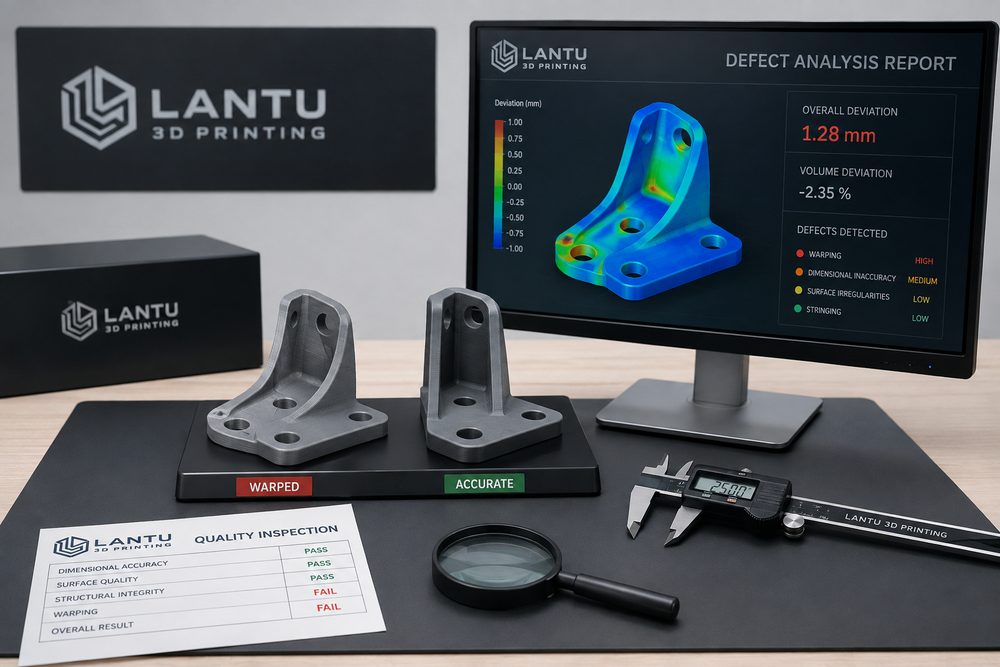
3D Printing Defect Analysis Methods: Systematic Troubleshooting for Warping, Cracking, and Dimensional Deviation
3D printing defects should be traced through a chain of evidence across materials, models, equipment, parameters, environment, and post-processing. This article systematically examines common causes of warping, cracking, interlayer delamination, surface particles, and dimensional deviation, and provides a closed-loop method from temporary fixes to long-term prevention to help projects move from experience-based judgment to stable control.

Service Workflow
Implementing Quality Traceability in 3D Printing Services: From File Versions to Shipment Records
Quality issues in 3D printing delivery are often hard to trace: was it the wrong model version, a material batch change, equipment parameter drift, or deviation caused by post-processing? This article introduces a traceability method suitable for service manufacturing, so every part has a record from file intake to shipment.
Enterprise Manufacturing
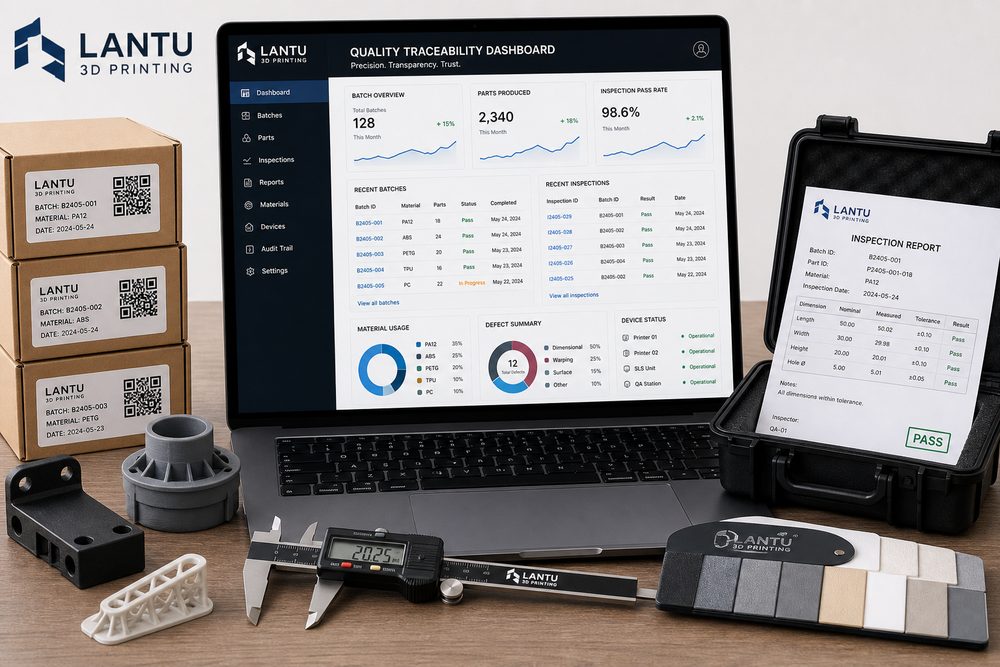
How to Build a 3D Printing Quality Traceability System: End-to-End Management from File Versions to Delivery Batches
Small-batch 3D printing jobs are more prone to version mix-ups, unclear material lots, and post-processing variation. This article breaks traceability into five stages—files, process, equipment, inspection, and packaging—to help companies build a delivery chain that is searchable, reviewable, and reusable.
quality traceability
quality control

Enterprise Manufacturing
Every Part Can Be Traced to Its Source: A Guide to Building a 3D Printing Quality Traceability System
A quality traceability system lets 3D-printed parts be traced across models, materials, equipment, parameters, post-processing, and inspection results. This article explains the core fields, process nodes, and digital methods to help companies reduce quality disputes and improve confidence in batch delivery.
quality traceability
additive manufacturing

Enterprise Manufacturing
Every Part Is Traceable: Key Points for Building a 3D Printing Quality Traceability System
This article explores 3D printing quality traceability systems and, drawing on lantu3D Printing’s project experience across the full journey from design blueprint to physical delivery, examines common management tensions among orders, processes, quality, delivery, and cost. It also provides actionable workflows, data indicators, and implementation checklists to help industry practitioners upgrade 3D printing from a one-off prototyping capability into a repeatable, traceable, and continuously optimizable manufacturing service.
quality traceability
Start From Here
Have a model, drawing, or only an idea?
Submit your requirement and our engineers will recommend a better design and manufacturing path based on use, size, quantity, material, tolerance and lead time.