Introduction: 3D Printing Quality Traceability Is Moving from Experience-Based Management to Data-Driven Operations
Quality issues in 3D printing are rarely caused by a single factor. Dimensional deviations may come from model compensation, build orientation, material batch variation, or post-processing shrinkage; surface defects may be related to supports, cleaning, sandblasting, or painting. Without a traceability system, problem-solving relies only on memory after an issue occurs.
1. Define Quantifiable Business Scenarios and Boundary Conditions
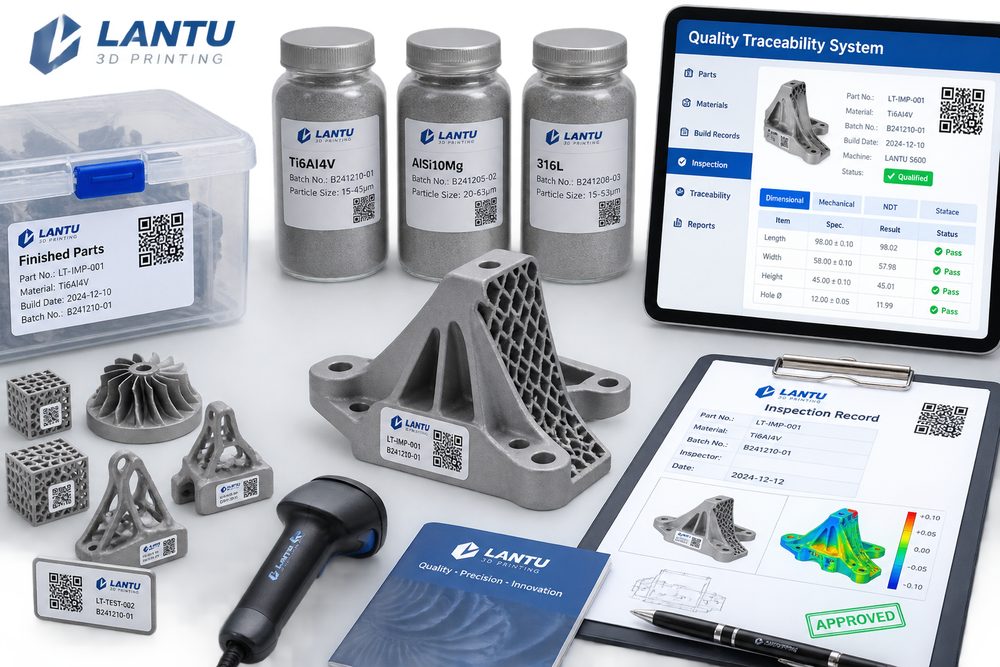
The first step in traceability is to bind every part to a unique identifier. Order numbers, part numbers, model versions, batch numbers, and quantities should run through the entire workflow. For small-batch orders, tray labels, work-order QR codes, or packaging labels can be used; for high-value parts, a small identifier can be added to a non-functional surface.
2. Break Down Risks and Delivery Responsibility by Process Node
The next step is to record key process data. Before printing, record the material batch number, machine ID, slicing software version, layer thickness, build orientation, support strategy, and estimated build time. During printing, record start and end times, abnormal alarms, and environmental information. After printing, record parameters for cleaning, curing, powder removal, heat treatment, and other post-processing steps.
3. Consolidate Parameters, Data, and Acceptance Criteria in the System
Inspection data is the evidence that closes the traceability loop. Key dimensions, appearance grade, assembly tests, and sampling ratios should be clearly defined. Measurement results are best linked to the drawing or a 3D scan report, and photos should capture both defect locations and the overall condition.
4. Continuous Improvement: From Single-Order Review to Organizational Capability
Building a traceability system does not have to start with a complex MES. Companies can begin with standardized work orders, spreadsheets, QR-code folders, and inspection templates, then gradually connect device data and APIs. The key is consistent field definitions, clear responsibility, and timely recording.
Conclusion
Quality traceability is the infrastructure that enables 3D printing to evolve from flexible manufacturing into trustworthy manufacturing. It makes issues easier to locate, processes easier to verify, and experience easier to reuse, while also giving customers greater confidence in the invisible steps behind customized production.
Submit a model, drawing, image or written notes. Engineers will review material, process, finishing and delivery based on actual use.