No model yet, material choice and wall thickness are explained from a practical angle.
Knowledge Center
Blueprint News
lantu3D reviews wall thickness, structure, materials, process, quantity and finishing before quotation.
01Guides
02Materials
03Customer View
Content should help customer decisions
lantu3D articles focus on materials, processes, cost, modeling and manufacturability so customers understand key decisions before submitting a request.
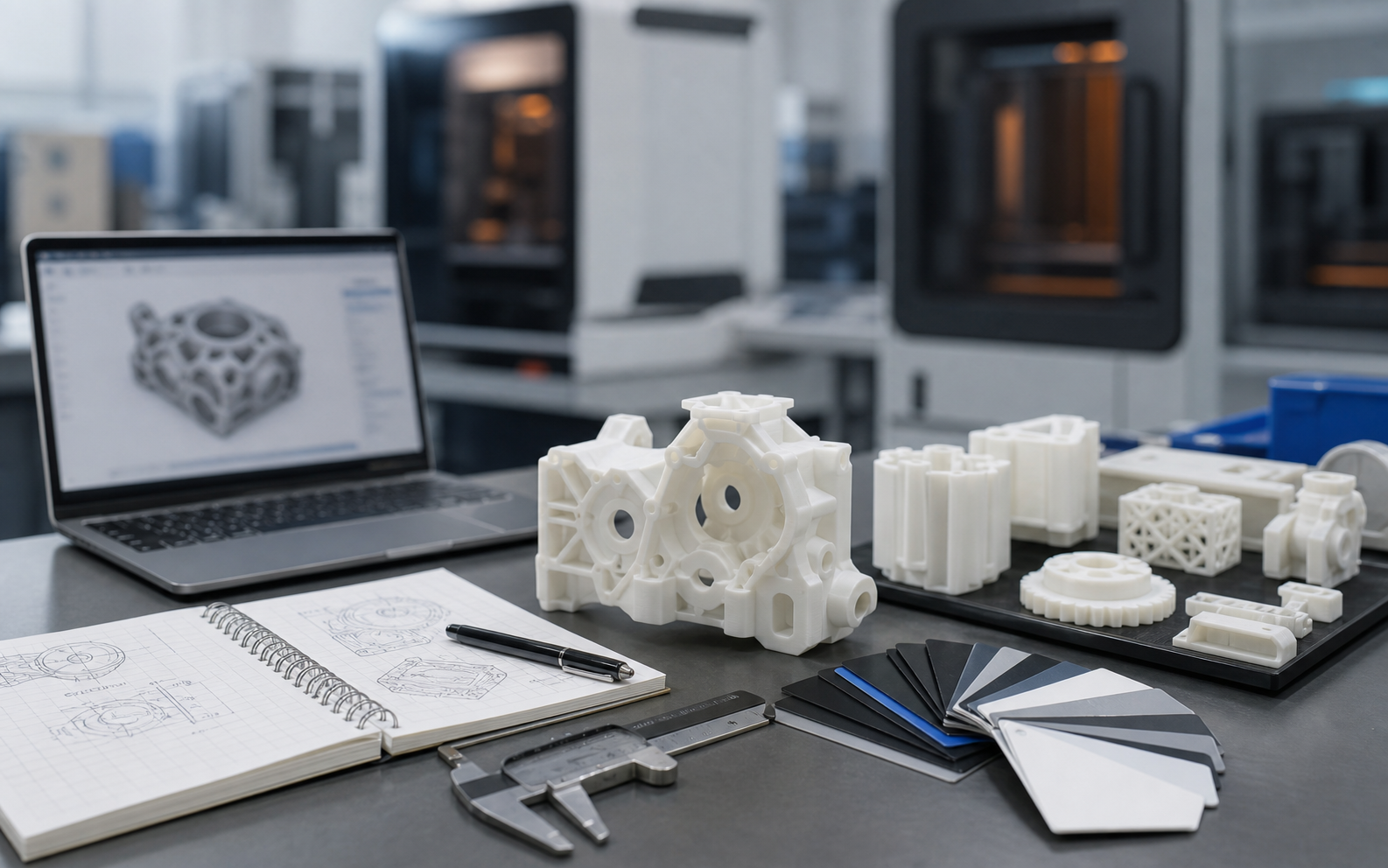
Prototype, fixture, custom part, small batch and cost-control topics for business users.
lantu3D is positioned as blueprint realization and lifecycle management, not just a print shop.
Service Process
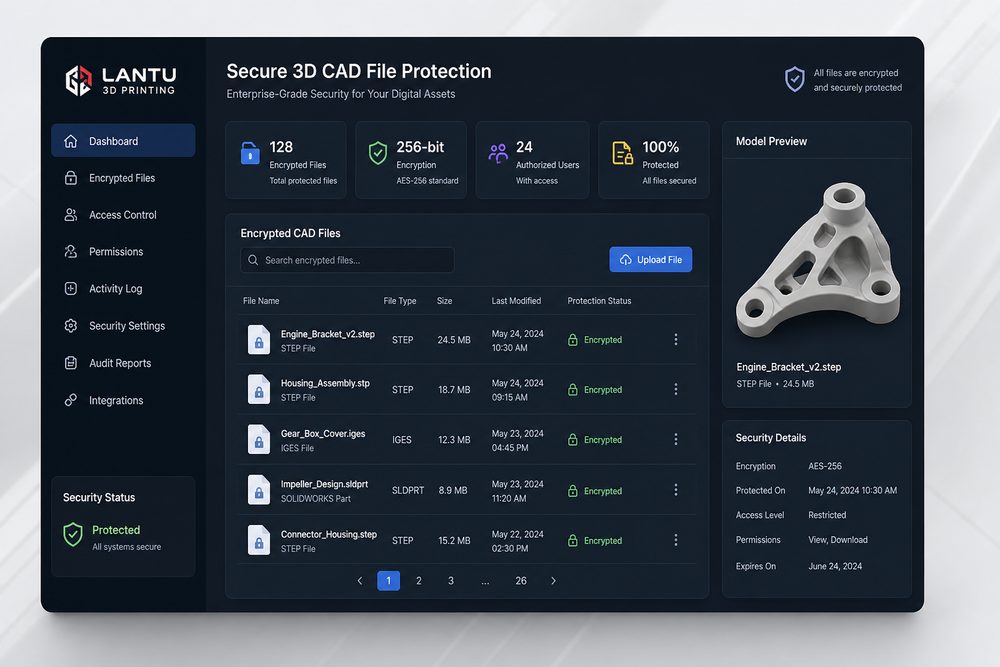
Model Files, Process Parameters, and Deliverables: How to Protect Intellectual Property in 3D Printing
3D printing projects involve multiple types of knowledge assets, including models, drawings, parameters, samples, and customer requirements. This article discusses IP protection methods from authorization boundaries and file management to access control and delivery records.
Project Management
Service Process
From Design to Delivery Without Bottlenecks: Key Design Principles for Cross-Functional Coordination in 3D Printing
3D printing projects typically span sales, design, engineering, production, post-processing, quality inspection, and logistics. This article explains how to build an effective cross-functional collaboration mechanism from the perspectives of requirement intake, version management, milestone reviews, exception escalation, and data sharing to reduce rework and communication costs.
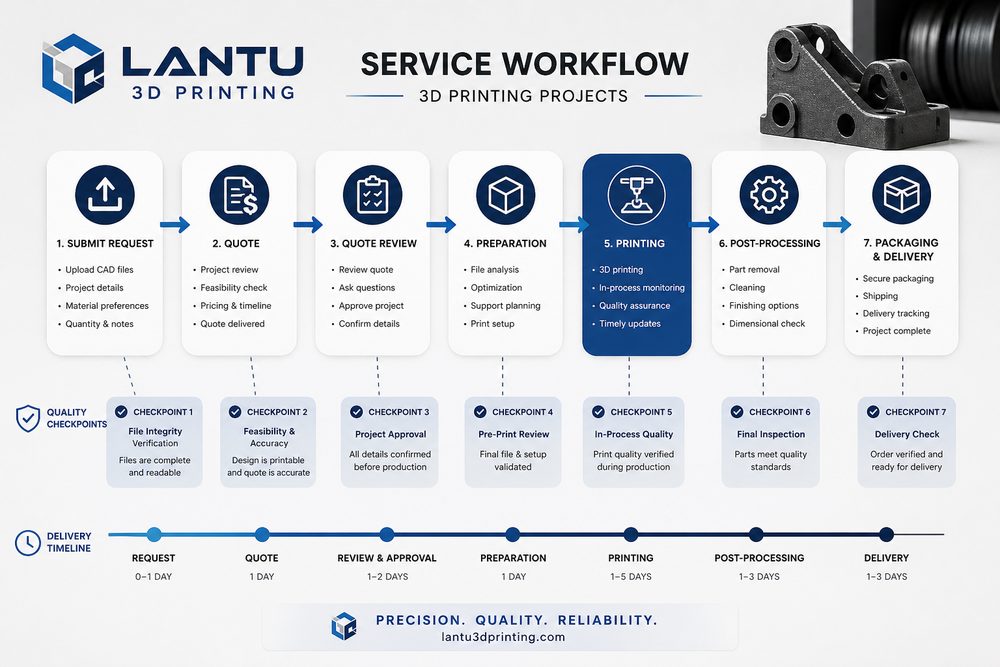
Service Workflow
Optimizing 3D Printing Service Workflows: Closed-Loop Management from Requirement Clarification to Delivery Review
3D printing services should avoid the risk of quoting based only on a file. A closed-loop process spanning requirement clarification, design review, process quoting, and delivery review is essential. This article offers workflow optimization methods for service platforms to improve customer satisfaction and project success rates.
Project Management
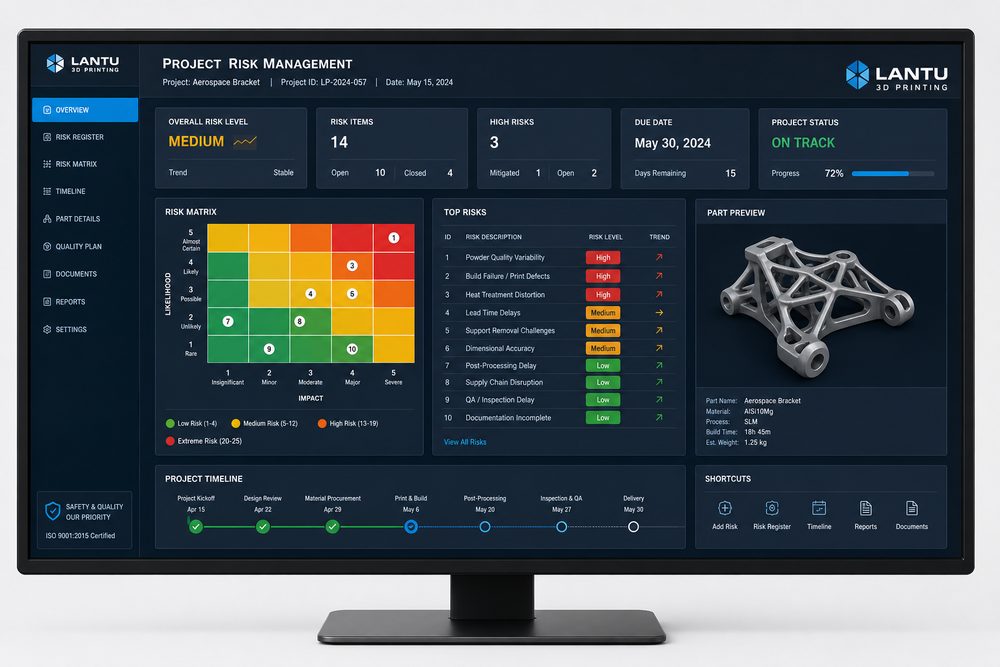
Enterprise Manufacturing
Tight Deadlines, Complex Structures, Rapidly Changing Requirements: A Practical Risk Management Framework for 3D Printing Projects
Risks in 3D printing projects come from unclear requirements, model defects, material mismatches, machine fluctuations, post-processing uncertainty, and differences in customer acceptance. This article provides a framework for identifying, assessing, controlling, and reviewing risks to help service teams improve delivery stability.
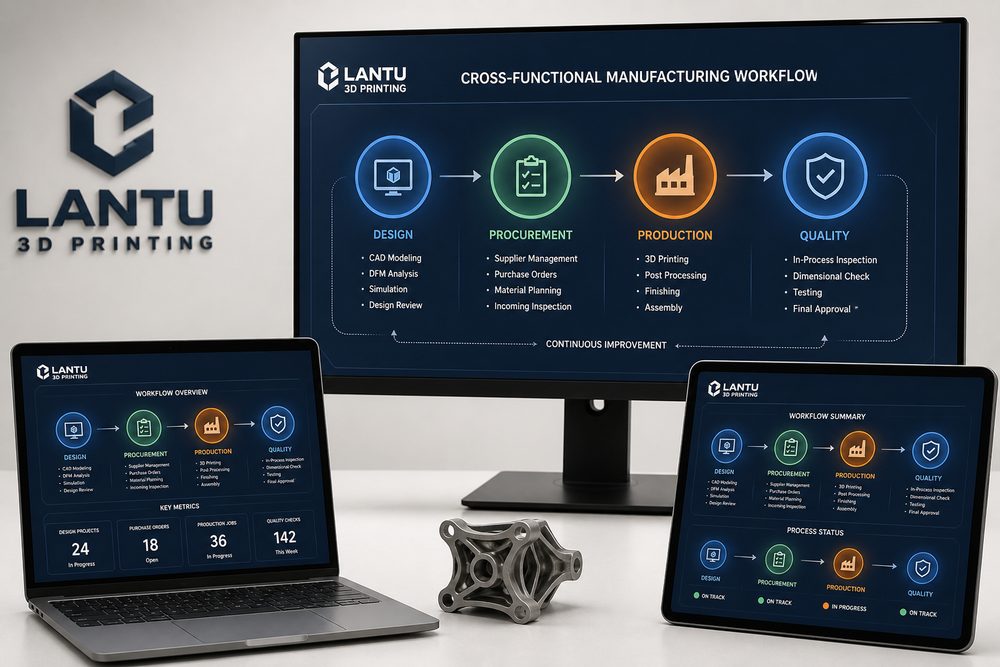
Service Process
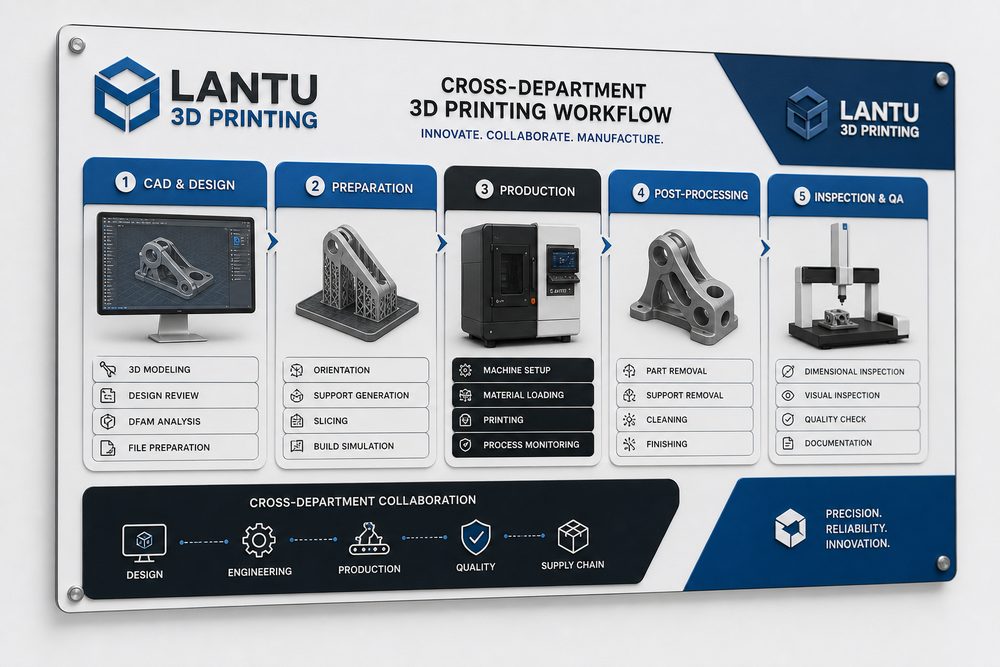
How to Synchronize Design, Procurement, Production, and Quality Inspection: An Analysis of Cross-Department Collaboration in 3D Printing
This article explores a cross-department collaboration mechanism for 3D printing. Drawing on lantu3D Printing’s project experience across the full process from design blueprint to physical delivery, it analyzes common management conflicts among orders, processes, quality, delivery, and cost, and provides actionable workflows, data indicators, and implementation checklists to help industry practitioners upgrade 3D printing from a one-off prototyping capability into a repeatable, traceable, and continuously optimized manufacturing service capability.
Start From Here
Have a model, drawing, or only an idea?
Submit your requirement and our engineers will recommend a better design and manufacturing path based on use, size, quantity, material, tolerance and lead time.