No model yet, material choice and wall thickness are explained from a practical angle.
Knowledge Center
Blueprint News
lantu3D reviews wall thickness, structure, materials, process, quantity and finishing before quotation.
01Guides
02Materials
03Customer View
Content should help customer decisions
lantu3D articles focus on materials, processes, cost, modeling and manufacturability so customers understand key decisions before submitting a request.
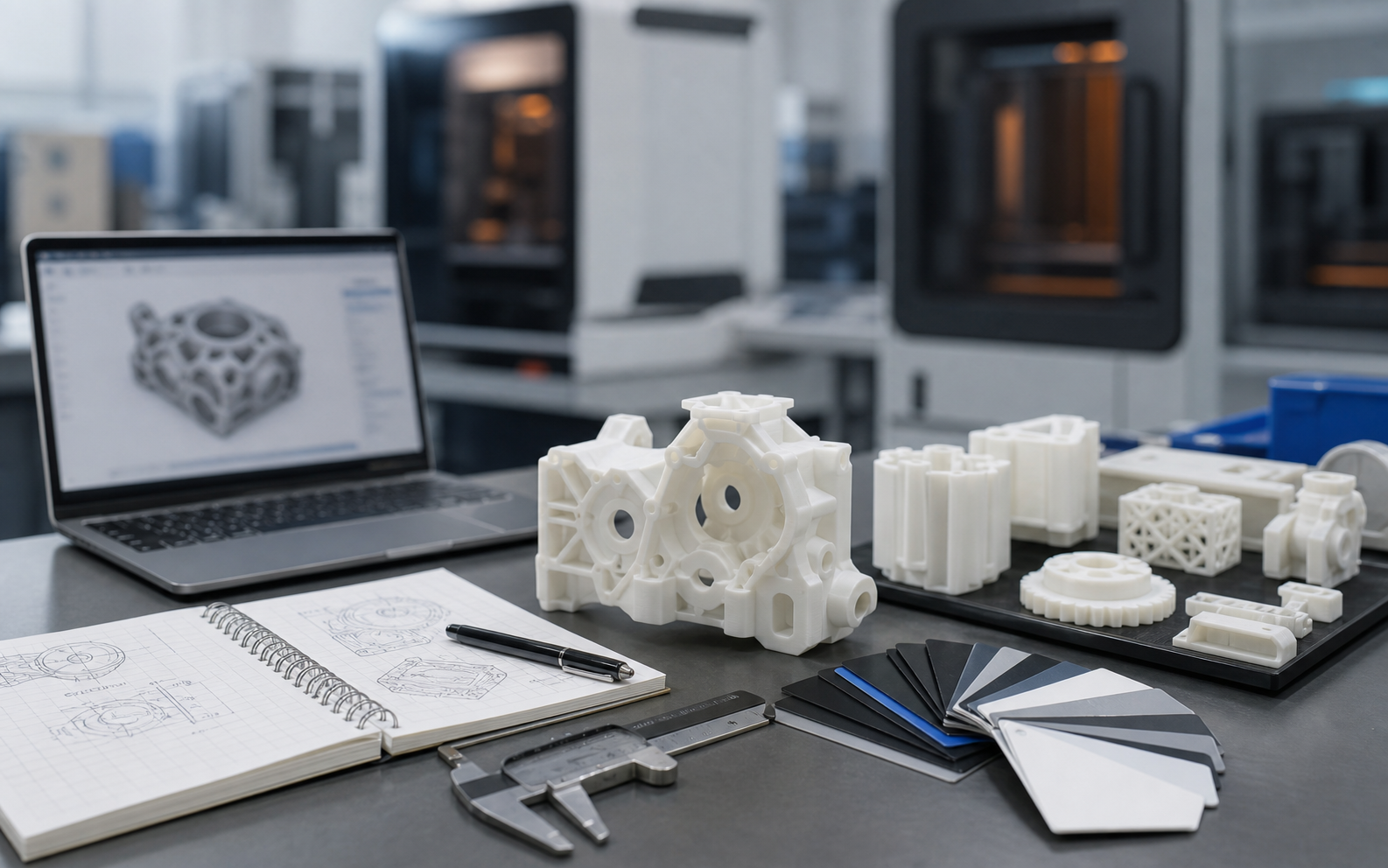
Prototype, fixture, custom part, small batch and cost-control topics for business users.
lantu3D is positioned as blueprint realization and lifecycle management, not just a print shop.
Service Process
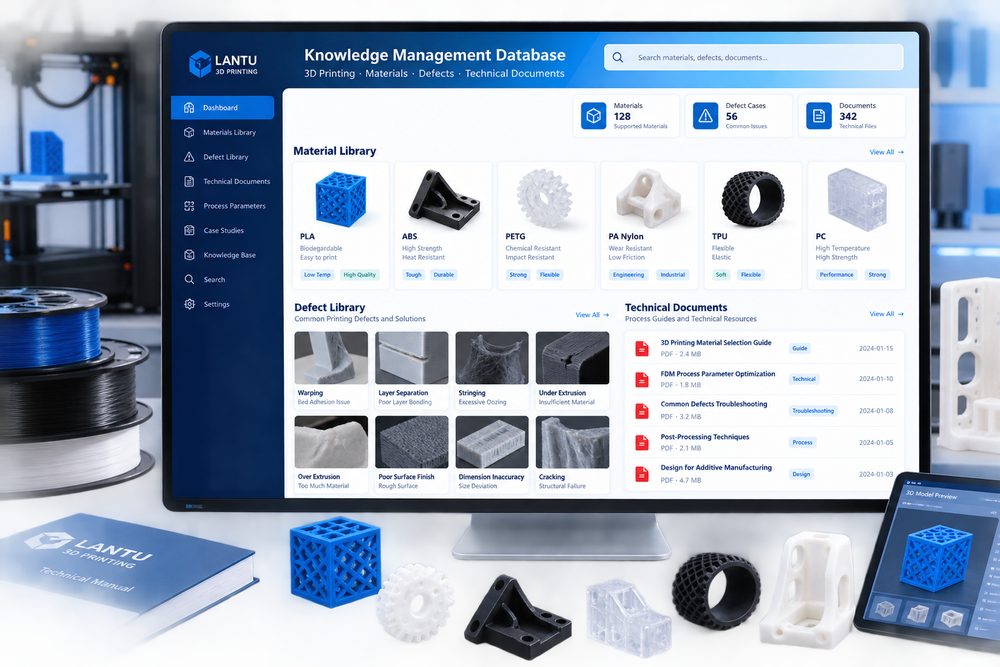
How to Build a 3D Printing Knowledge Management System So Experience Is No Longer Trapped in Senior Technicians’ Heads
3D printing projects rely heavily on experience, but if that experience is not captured, it is difficult to replicate and scale. This article explains how to build a practical 3D printing knowledge management system from material parameter libraries, design rules, defect case studies, project reviews, and search mechanisms.
Service Process
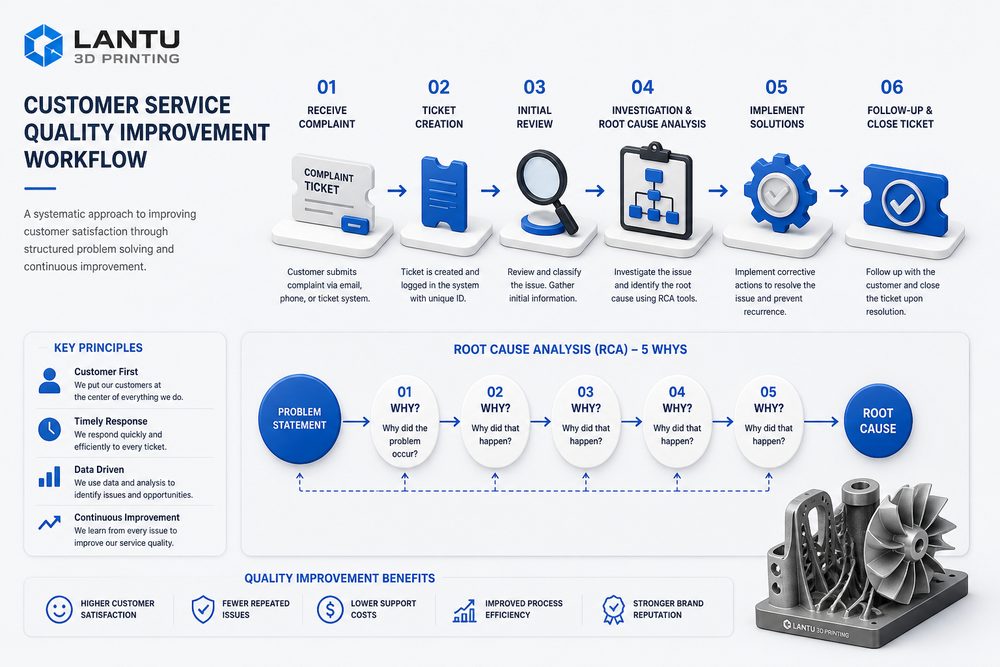
Customer Complaints Are Not the End: A Closed-Loop Complaint Handling Mechanism for 3D Printing Services
Custom 3D printing services involve multiple variables across design, process, materials, and logistics, so complaint handling must move beyond emotional responses to fact-based verification and a closed-loop improvement process. This article explains complaint classification, evidence collection, responsibility assessment, solution options, and preventive mechanisms.
Service Process
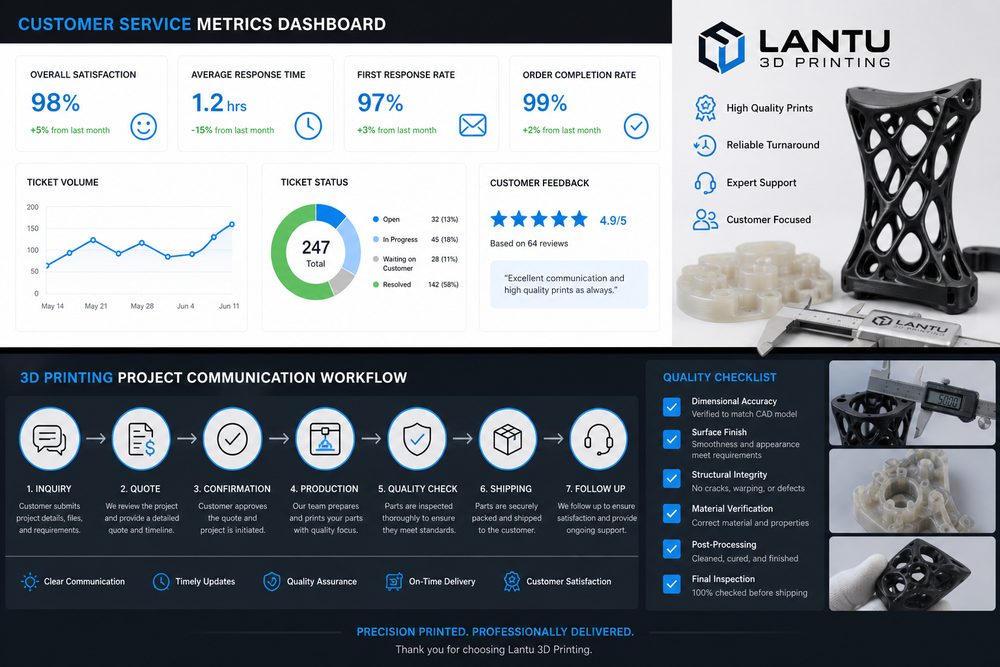
Improving Customer Satisfaction: Five Key Communication Milestones in 3D Printing Projects
Customer satisfaction in 3D printing depends not only on the part itself, but also on requirement confirmation, design review, exception feedback, delivery acceptance, and post-delivery review. This article outlines five key communication milestones to help service platforms reduce misunderstandings and build customer trust.
Project Communication
Service Process
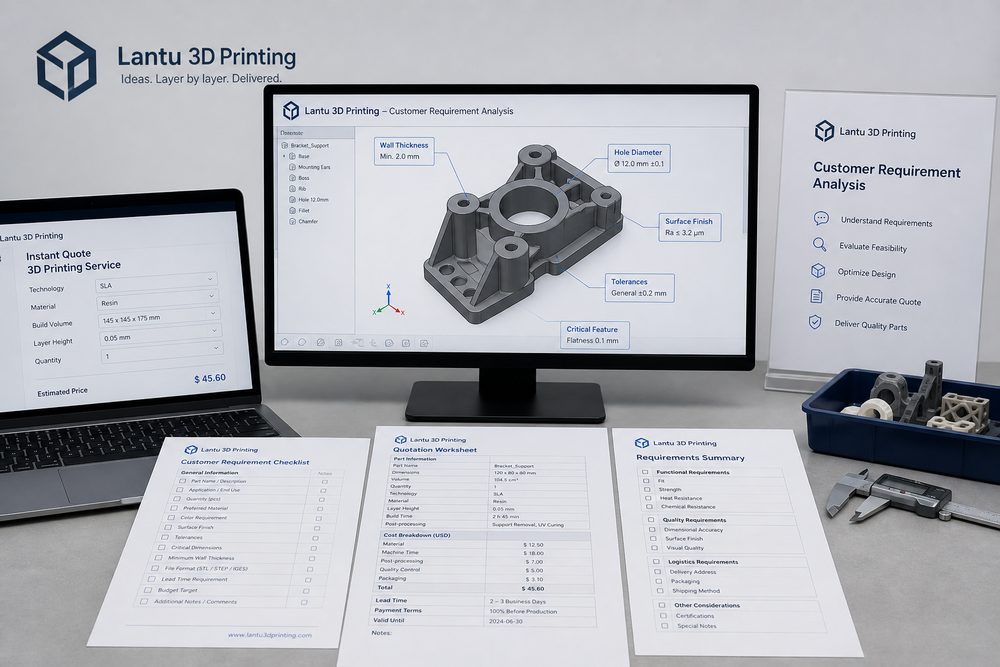
After the Customer Says “Just Print This for Me”: Seven Key Questions for 3D Printing Requirement Analysis
3D printing requirement analysis should not rely on the model file alone. Use case, loads, appearance, accuracy, material, quantity, lead time, and acceptance criteria all affect the solution. This article uses seven key questions to help service teams turn vague requests into project definitions that can be quoted, produced, and delivered.
Project Communication
Service Process
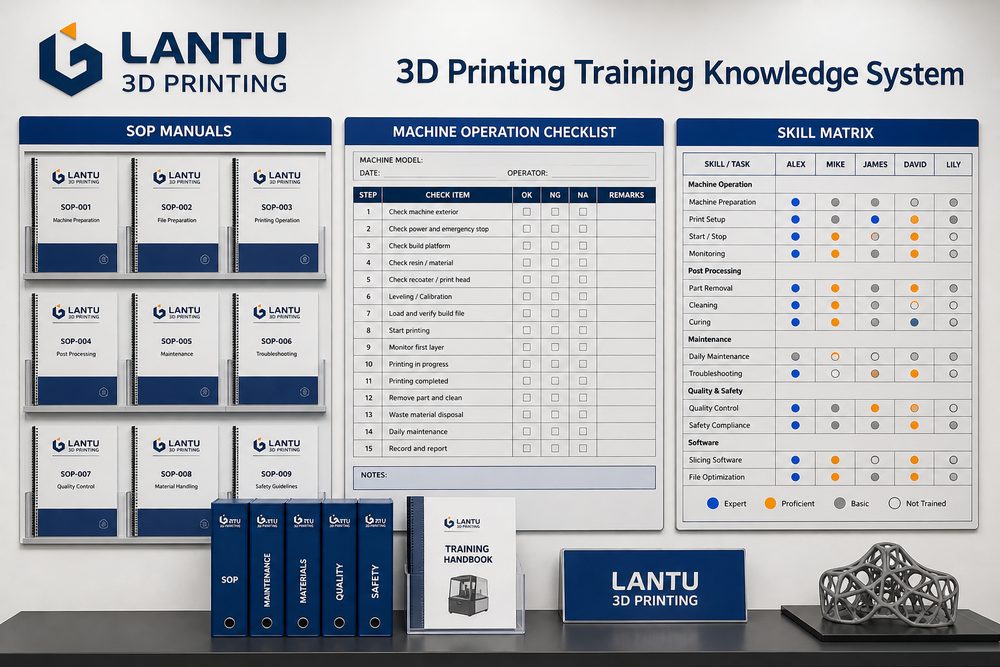
More Than Operating Machines: A Guide to 3D Printing Talent Training and Team Capability Building
A mature 3D printing team requires coordination across design, materials, processes, equipment, post-processing, quality inspection, and project management—not just operators who can start the machine. This article proposes a role competency model, training path, knowledge retention methods, and cross-department collaboration approaches to help companies build sustainable teams.
Service Process
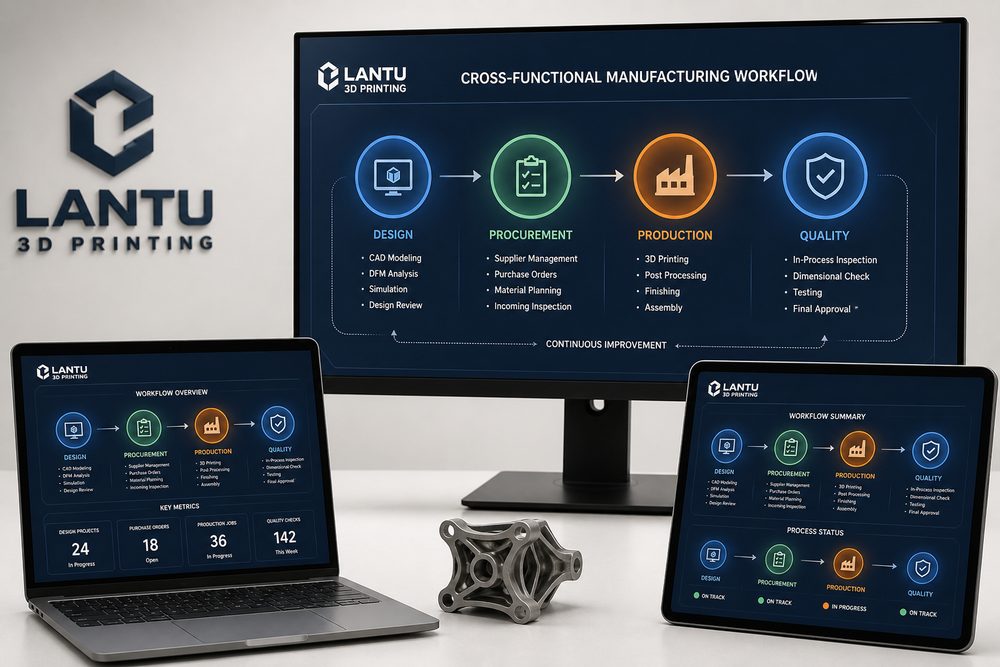
How to Synchronize Design, Procurement, Production, and Quality Inspection: An Analysis of Cross-Department Collaboration in 3D Printing
This article explores a cross-department collaboration mechanism for 3D printing. Drawing on lantu3D Printing’s project experience across the full process from design blueprint to physical delivery, it analyzes common management conflicts among orders, processes, quality, delivery, and cost, and provides actionable workflows, data indicators, and implementation checklists to help industry practitioners upgrade 3D printing from a one-off prototyping capability into a repeatable, traceable, and continuously optimized manufacturing service capability.

Service Process
Experience Shouldn't Live Only in Engineers' Heads: How to Build a 3D Printing Knowledge Management System
This article explores how to build a 3D printing knowledge management system by drawing on lantu3D Printing's project experience across the full journey from design blueprint to physical delivery. It examines common management conflicts between orders, process, quality, delivery, and cost, and provides actionable workflows, data metrics, and implementation checklists to help the industry upgrade 3D printing from one-off prototyping into a repeatable, traceable, and continuously optimized manufacturing service capability.
Service Process
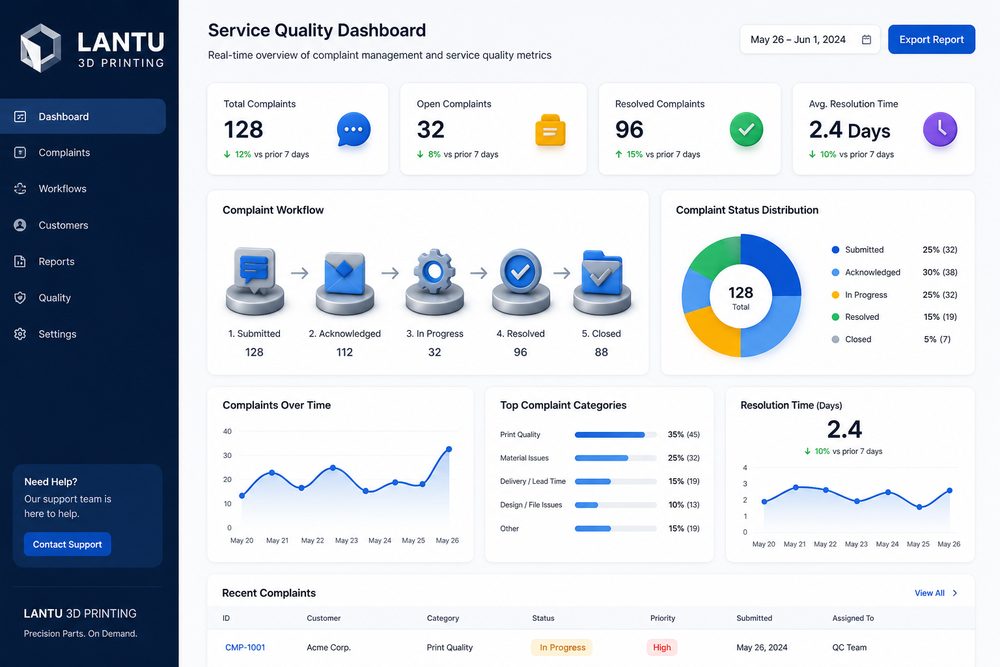
Turning Complaints into Improvement Opportunities: How to Design a 3D Printing Customer Complaint Handling Mechanism
This article focuses on the customer complaint handling mechanism in 3D printing. Drawing on lantu3D Printing's project experience across the full journey from design blueprint to physical delivery, it examines common management tensions among orders, process, quality, delivery, and cost, and provides actionable workflows, data metrics, and implementation checklists to help industry practitioners upgrade 3D printing from a one-off prototyping capability into a reproducible, traceable, and continuously optimized manufacturing service capability.

Service Process
How Precision Parts Reach Customers Safely: A Guide to 3D Printing Packaging and Shipping Management
This article focuses on 3D printing packaging and shipping management, drawing on lantu3D Printing’s project experience from design blueprints to physical delivery. It examines the common management tensions between orders, process, quality, delivery, and cost, and provides actionable workflows, data metrics, and implementation checklists to help industry practitioners upgrade 3D printing from a one-off prototyping capability into a replicable, traceable, and continuously optimized manufacturing service.
Service Process
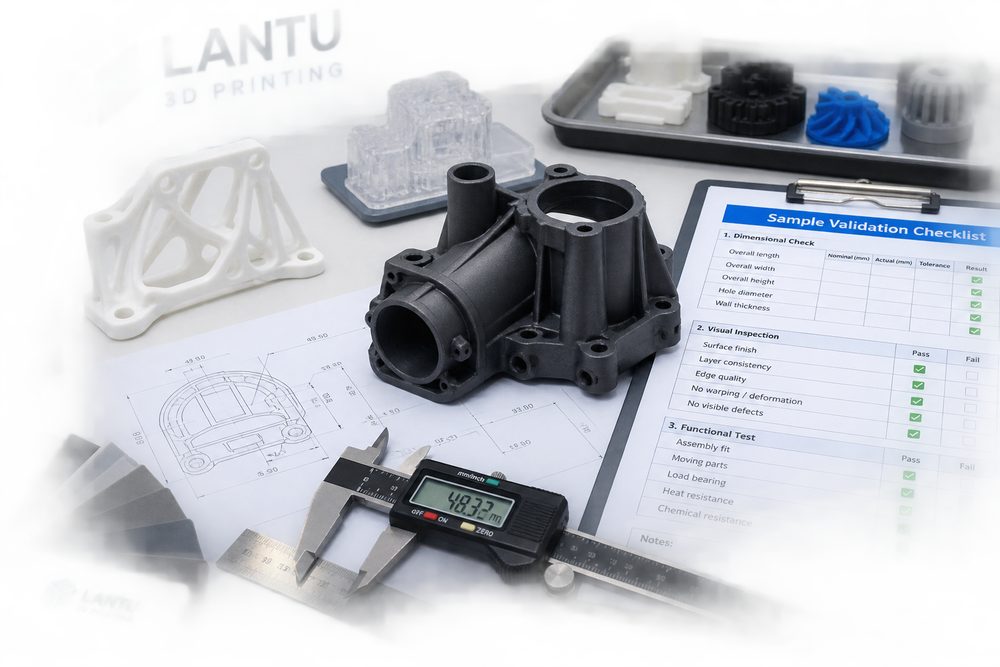
Sample Validation Is Not Just a Form: Key Steps in 3D Printing from First Article Approval to Engineering Closure
This article focuses on the 3D printing sample validation process. Drawing on lantu3D Printing's project experience from design blueprint to finished delivery, it examines common management conflicts among orders, process, quality, delivery, and cost, and provides actionable workflows, data metrics, and implementation checklists to help industry practitioners upgrade 3D printing from a one-off prototyping capability into a repeatable, traceable, and continuously improvable manufacturing service capability.
sample validation
engineering validation
Start From Here
Have a model, drawing, or only an idea?
Submit your requirement and our engineers will recommend a better design and manufacturing path based on use, size, quantity, material, tolerance and lead time.