No model yet, material choice and wall thickness are explained from a practical angle.
Knowledge Center
Blueprint News
lantu3D reviews wall thickness, structure, materials, process, quantity and finishing before quotation.
01Guides
02Materials
03Customer View
Content should help customer decisions
lantu3D articles focus on materials, processes, cost, modeling and manufacturability so customers understand key decisions before submitting a request.
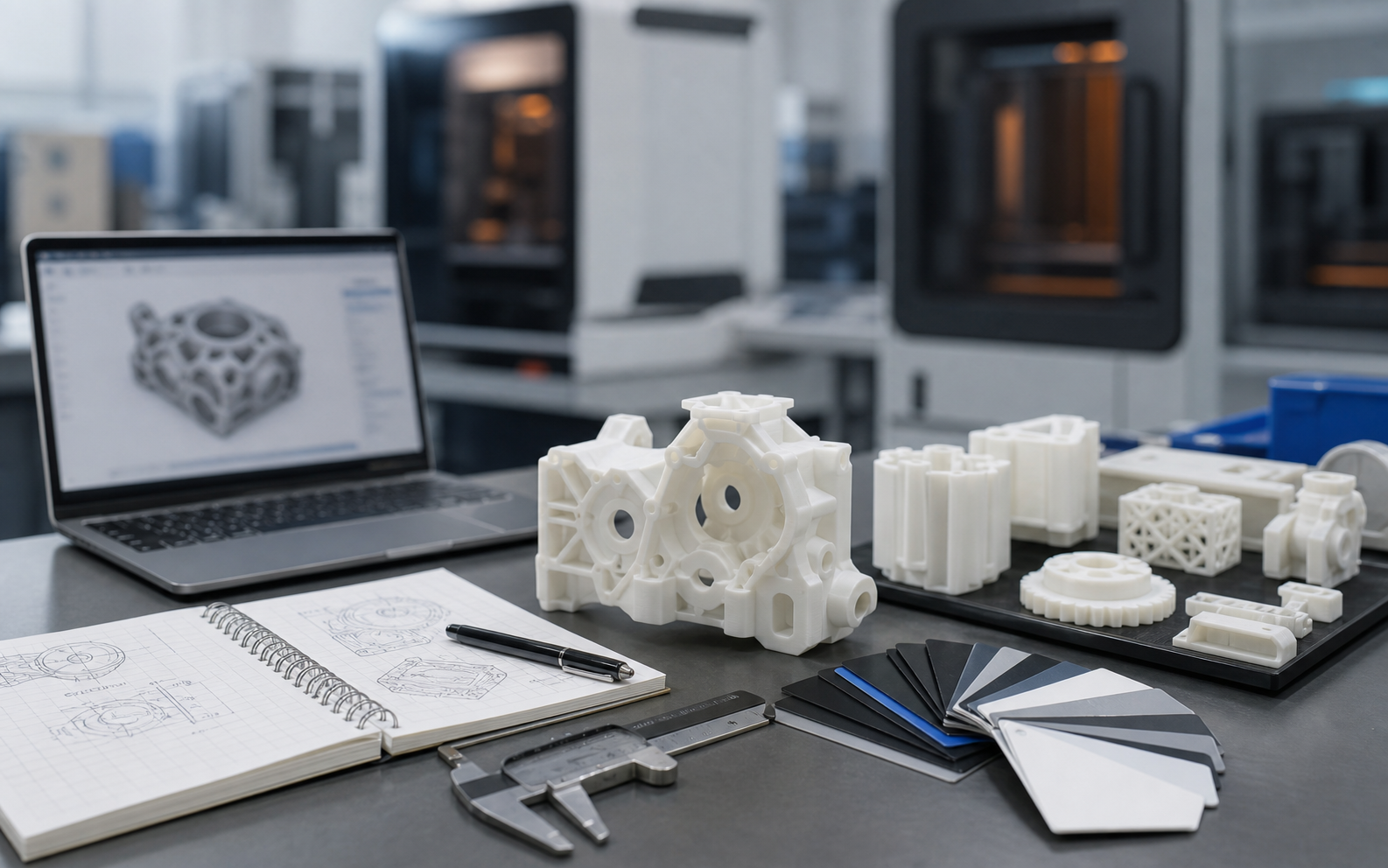
Prototype, fixture, custom part, small batch and cost-control topics for business users.
lantu3D is positioned as blueprint realization and lifecycle management, not just a print shop.
Design Guide
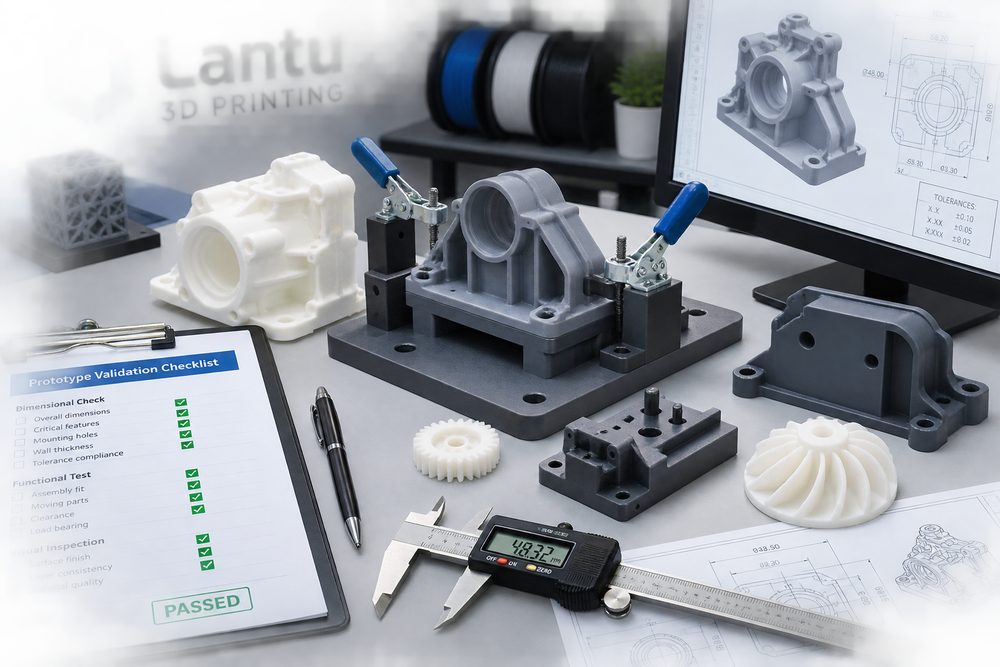
How to Build a Sample Validation Process: A Checklist for Dimensions, Assembly, and Functional Testing of 3D Printed Prototypes
Sample validation is not just a visual check. It uses dimensions, assembly fit, loads, environmental conditions, and real usage scenarios to expose design risks early. This article provides a validation workflow for 3D printed prototypes, data recording methods, and a rework feedback loop to help R&D teams reduce repeated prototyping.
sample validation
Design Guide
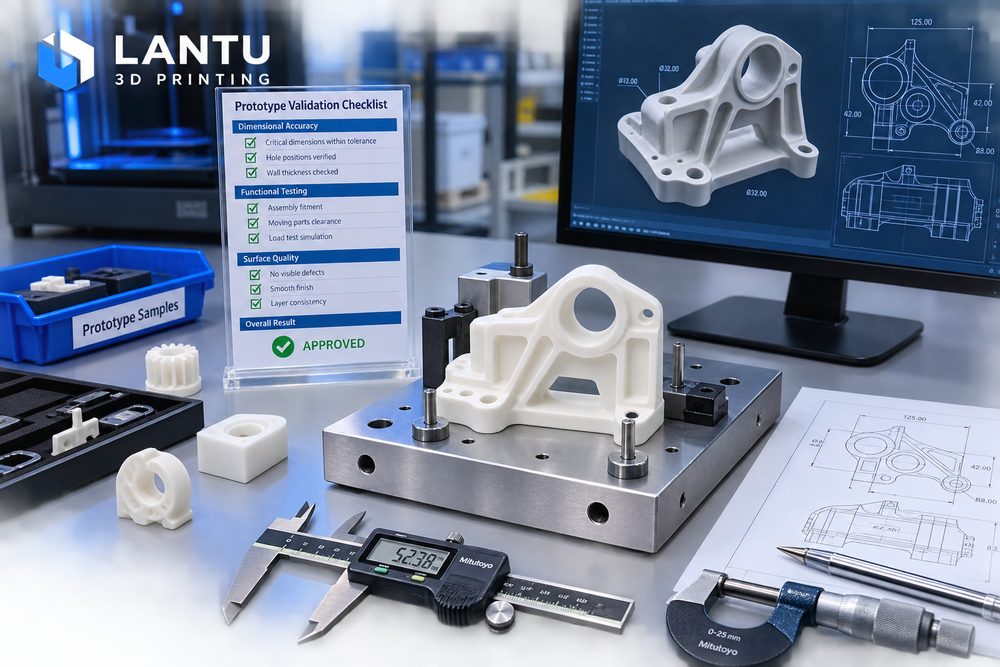
Sample Validation Process: Closed-Loop Management for 3D Printed Prototypes from Appearance Approval to Functional Testing
3D printed sample validation should not stop at whether a part merely looks right. It should form a closed loop from design goals, material selection, appearance inspection, assembly testing, and functional verification to iteration tracking. This article outlines a process framework for R&D prototyping and pre-production validation.
sample validation
engineering validation
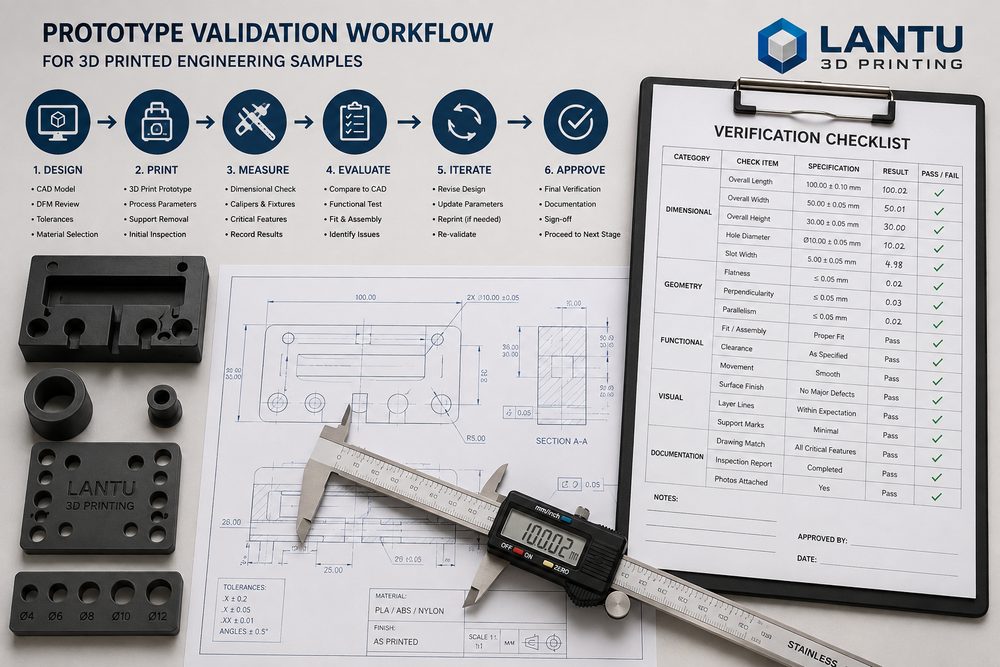
Design Guide
Validation Workflow: How 3D Printed Samples Move from Appearance Checks to Engineering Verification
If 3D printed samples are used only to “look the part,” teams can easily miss real risks in assembly, strength, heat deformation, and actual use conditions. This article provides a layered sample validation workflow to help R&D teams turn samples from display models into engineering decision tools.
sample validation
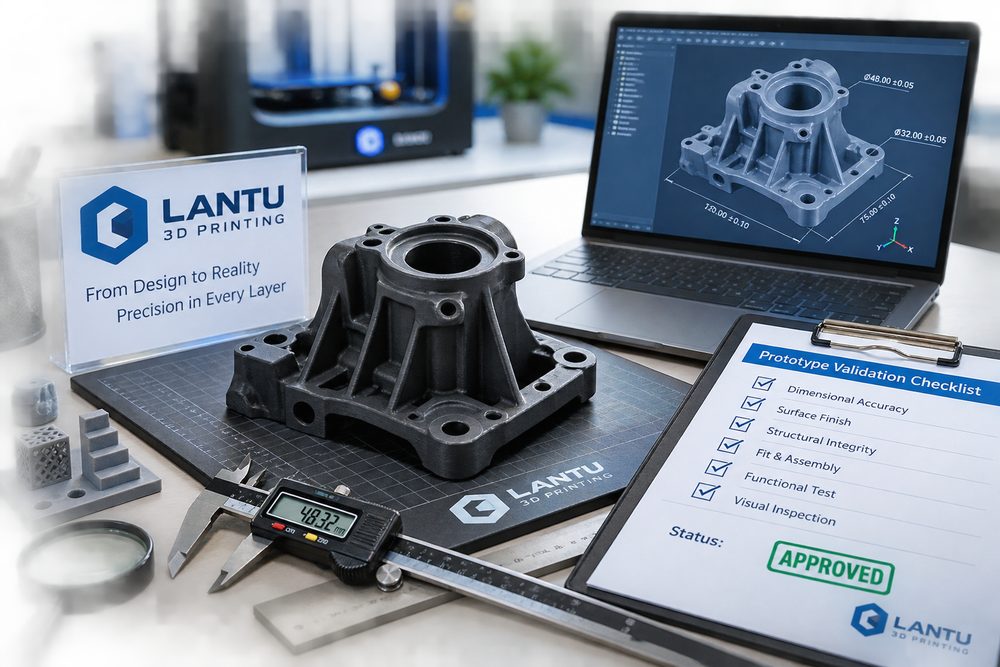
Design Guide
From Model to Reliable Prototype: Six Key Checkpoints in the 3D Printing Sample Validation Process
Sample validation is not just about checking whether a part “looks right”; it is about verifying that the design, material, process, and use case all align. This article outlines a six-step workflow—from requirement freeze and manufacturability review to first-part printing, dimensional inspection, functional testing, and design retrospection—to help companies improve the engineering reliability of 3D printed prototypes.
sample validation
engineering validation
DFAM
Start From Here
Have a model, drawing, or only an idea?
Submit your requirement and our engineers will recommend a better design and manufacturing path based on use, size, quantity, material, tolerance and lead time.