
No model yet, material choice and wall thickness are explained from a practical angle.
Knowledge Center
Blueprint News
lantu3D reviews wall thickness, structure, materials, process, quantity and finishing before quotation.
01Guides
02Materials
03Customer View
Content should help customer decisions
lantu3D articles focus on materials, processes, cost, modeling and manufacturability so customers understand key decisions before submitting a request.
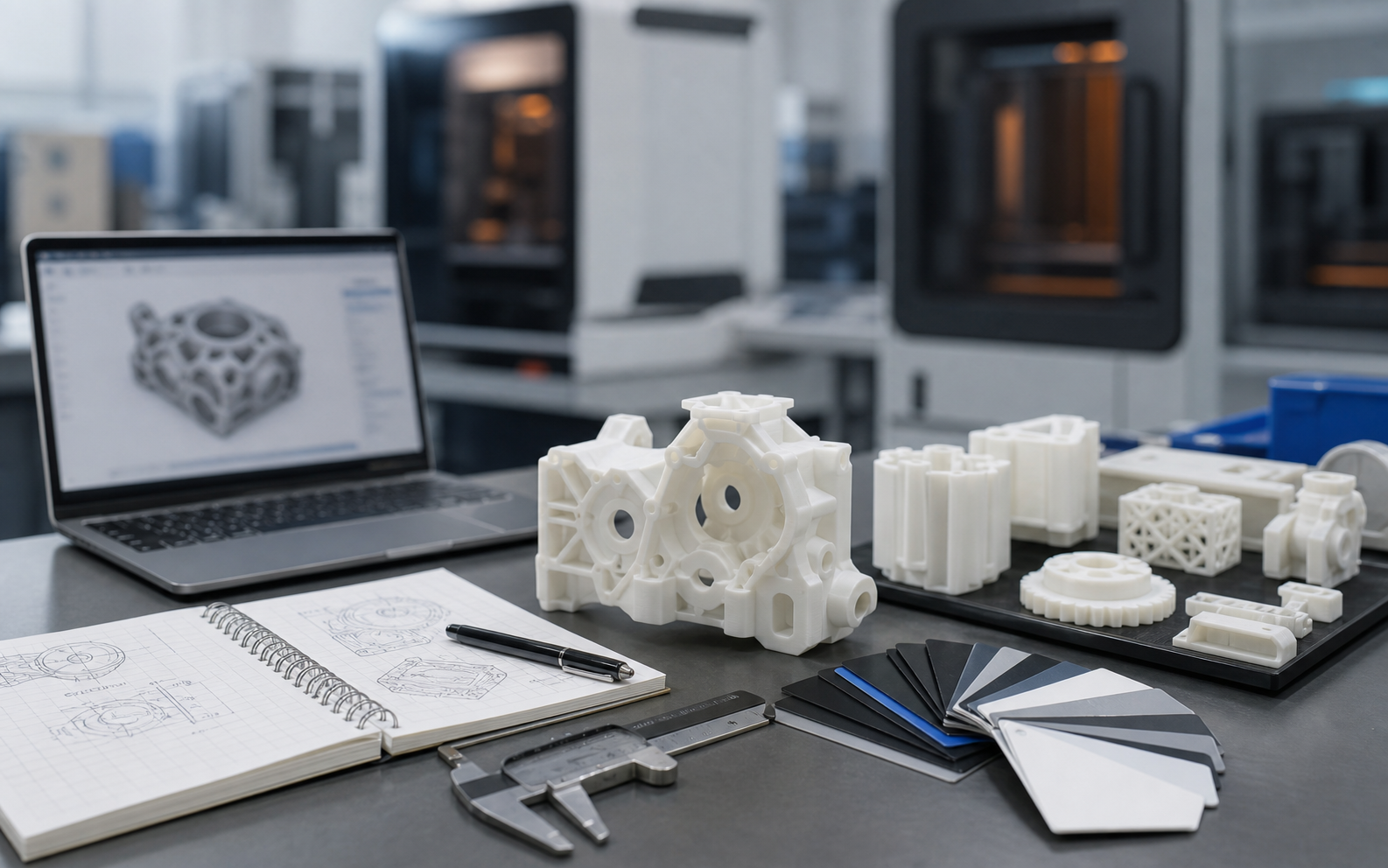
Prototype, fixture, custom part, small batch and cost-control topics for business users.
lantu3D is positioned as blueprint realization and lifecycle management, not just a print shop.
Design Guide
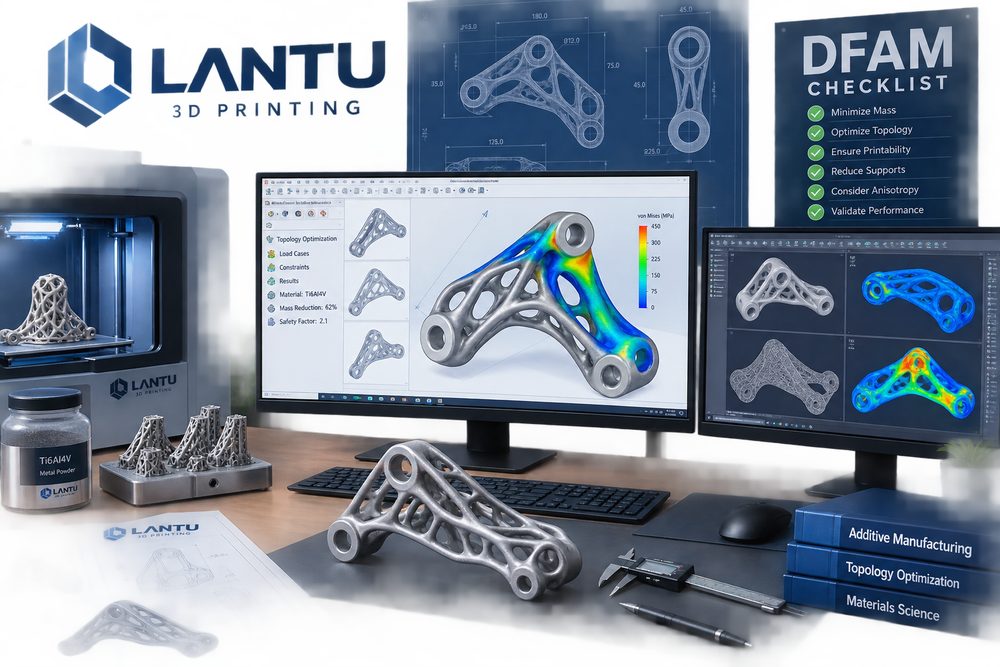
DFAM-Oriented 3D Printing Design Optimization: Key Checks from Model to Physical Part
Design optimization is the key to reducing 3D printing costs and rework rates. This article focuses on functional goals, wall thickness and clearances, lightweighting, support orientation, and model checklists, showing how lantu3D embeds DFAM reviews throughout the full process from concept to physical delivery so models are not only printable, but also reliably assemblable and verifiable.
DFAM
Design Guide
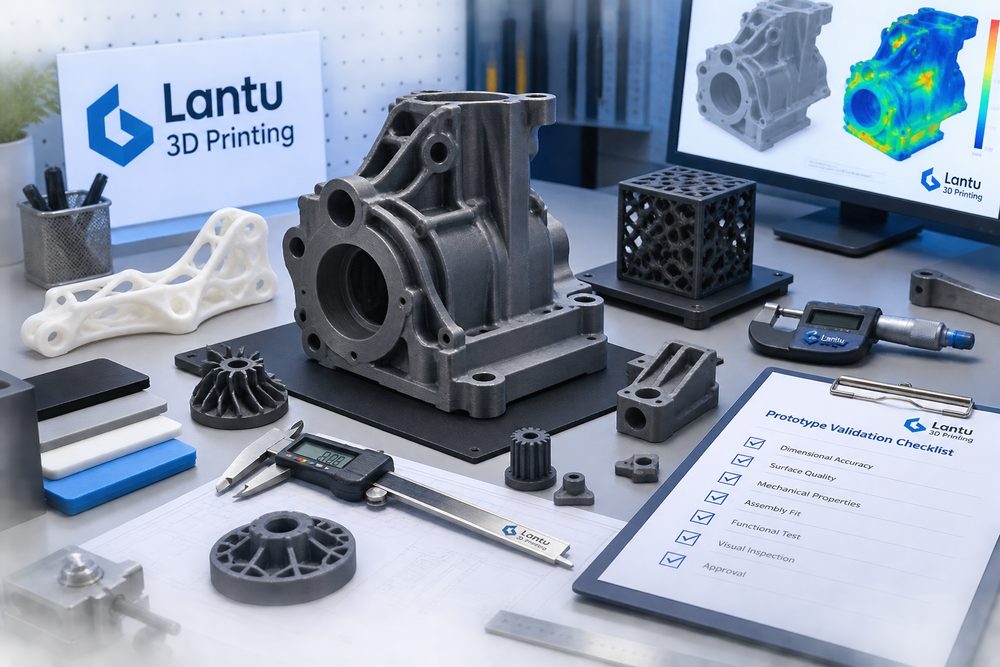
Samples Are Not the End Point: How 3D Printing Sample Validation Reduces Mass Production Risk
The goal of sample validation is not to prove that a model can be printed, but to use quantifiable testing to confirm whether the structure, material, assembly, and usage scenarios meet requirements. This article introduces the complete 3D printing sample validation process, including the validation plan, first article review, functional testing, dimensional inspection, design iteration, and production transfer.
engineering validation
DFAM
Design Guide
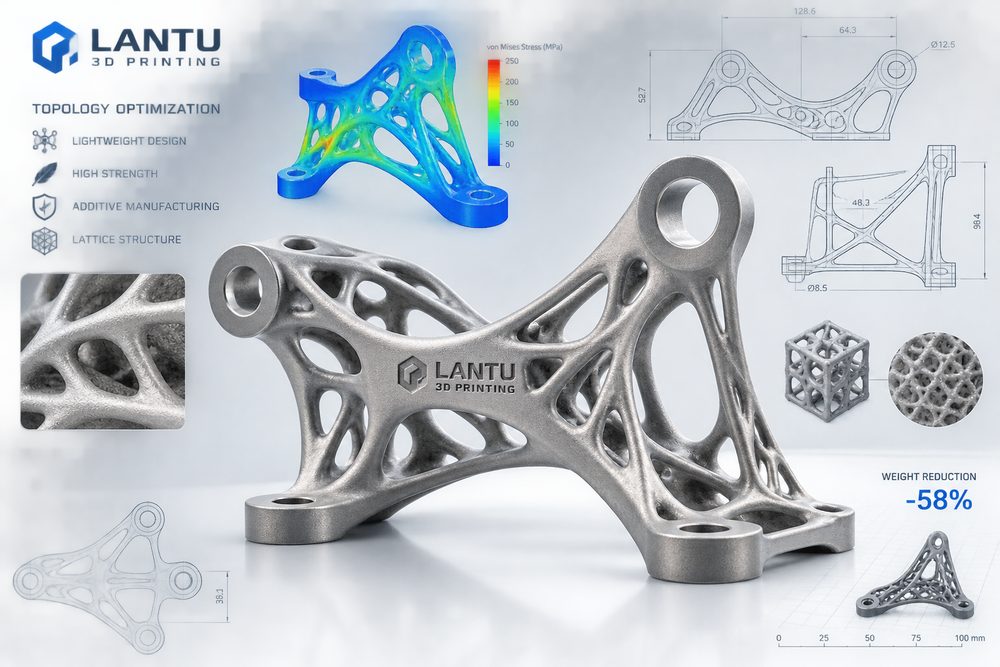
Topology Optimization and Lightweight Design: Taking 3D Printed Parts from Printable to More Practical
Topology optimization and lightweight design are key advantages that distinguish 3D printing from traditional manufacturing, but real-world implementation must balance load paths, material performance, post-processing, and inspection accessibility. This article provides a method from goal definition to verification closure.
DFAM
Design Guide
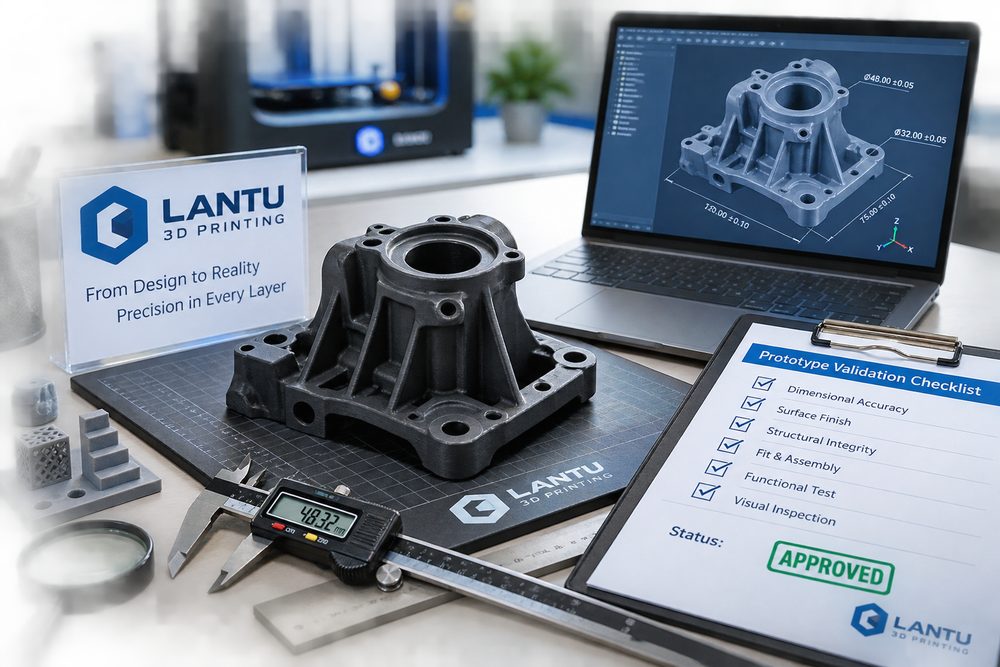
From Model to Reliable Prototype: Six Key Checkpoints in the 3D Printing Sample Validation Process
Sample validation is not just about checking whether a part “looks right”; it is about verifying that the design, material, process, and use case all align. This article outlines a six-step workflow—from requirement freeze and manufacturability review to first-part printing, dimensional inspection, functional testing, and design retrospection—to help companies improve the engineering reliability of 3D printed prototypes.
sample validation
engineering validation
DFAM
Start From Here
Have a model, drawing, or only an idea?
Submit your requirement and our engineers will recommend a better design and manufacturing path based on use, size, quantity, material, tolerance and lead time.