No model yet, material choice and wall thickness are explained from a practical angle.
Knowledge Center
Blueprint News
lantu3D reviews wall thickness, structure, materials, process, quantity and finishing before quotation.
01Guides
02Materials
03Customer View
Content should help customer decisions
lantu3D articles focus on materials, processes, cost, modeling and manufacturability so customers understand key decisions before submitting a request.
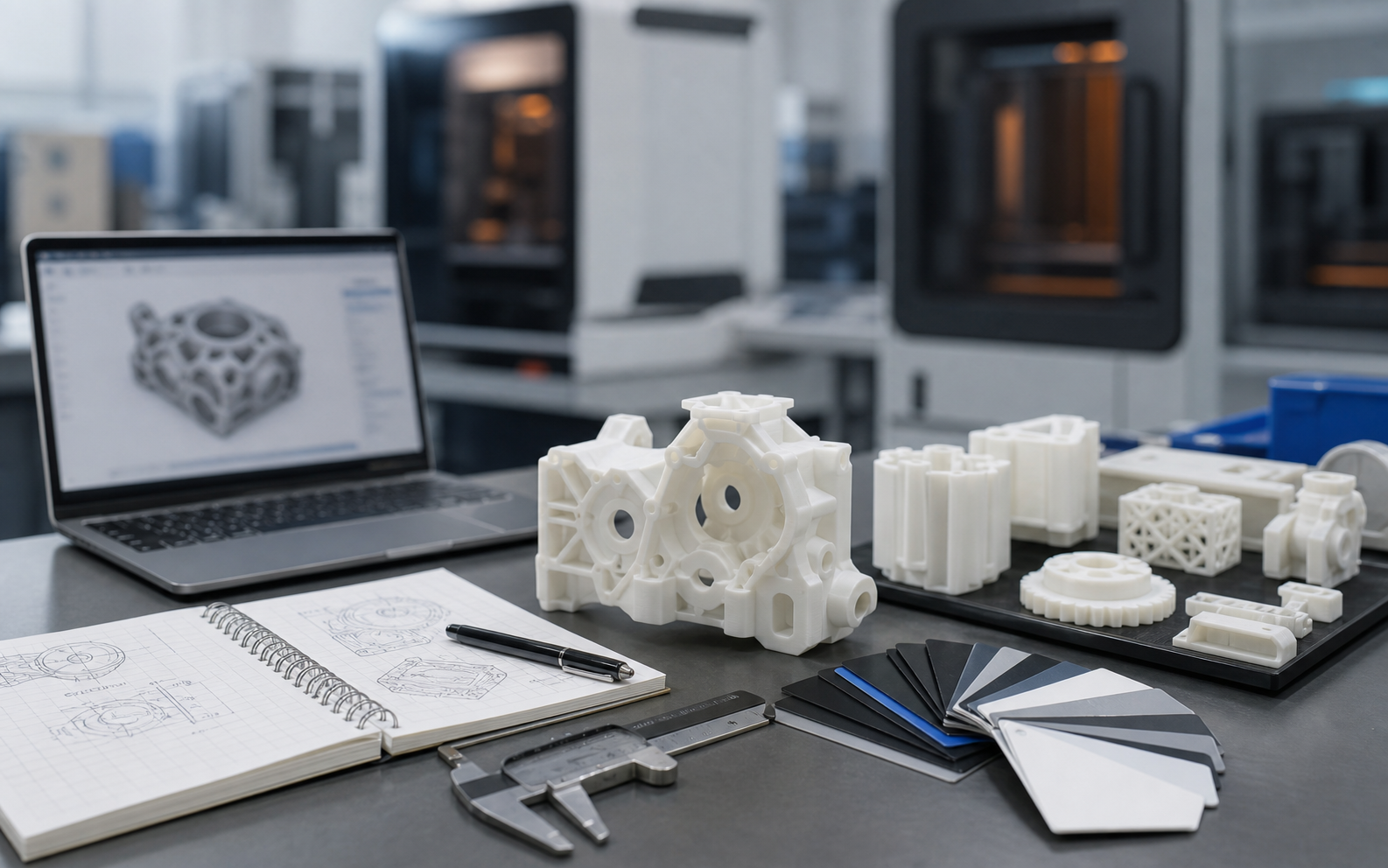
Prototype, fixture, custom part, small batch and cost-control topics for business users.
lantu3D is positioned as blueprint realization and lifecycle management, not just a print shop.
Service Process
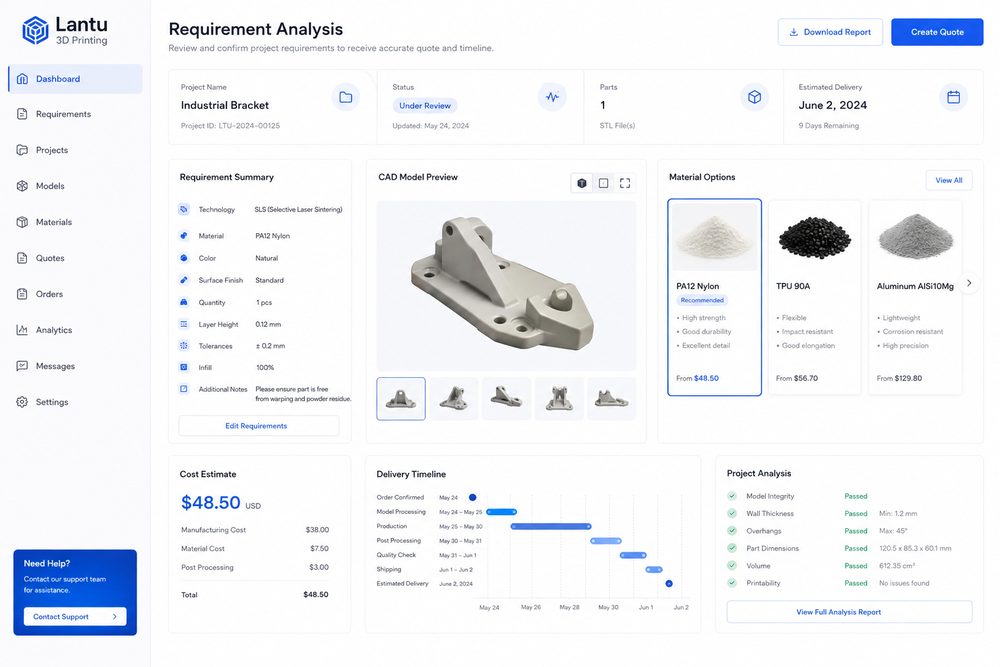
The Role of Customer Requirement Analysis in 3D Printing Projects: How to Turn an Idea into a Deliverable Solution
3D printing project failures are often caused not by equipment issues, but by incomplete requirement understanding. This article explains how to break down a customer’s brief idea into a quotable, manufacturable, inspectable, and deliverable engineering solution by clarifying the use case, performance targets, appearance grade, production volume, budget limits, and acceptance method, reducing back-and-forth communication and delivery disputes.
Project Communication
Service Process
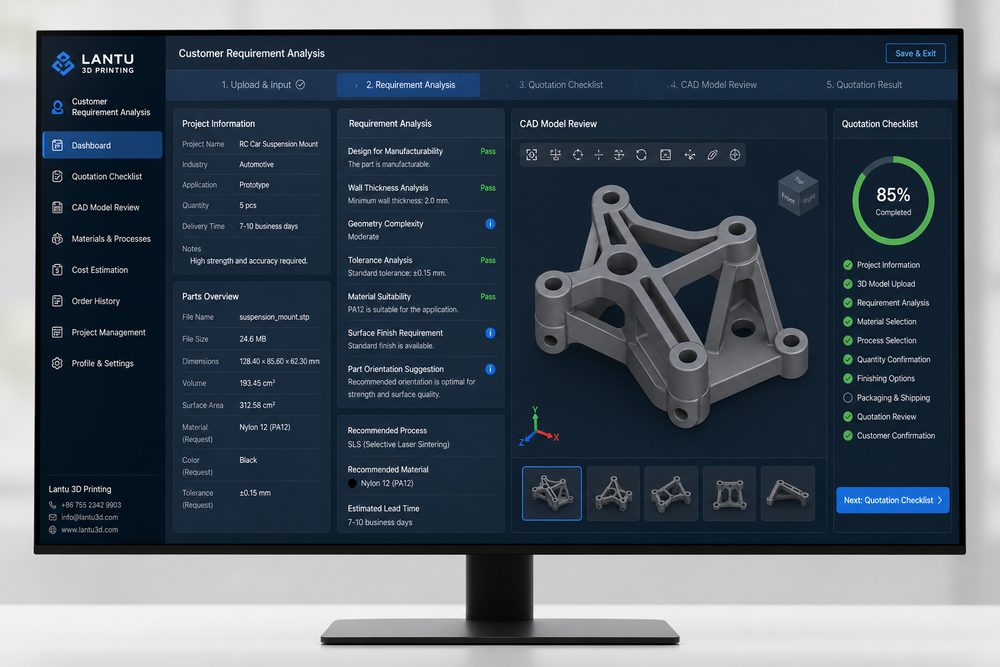
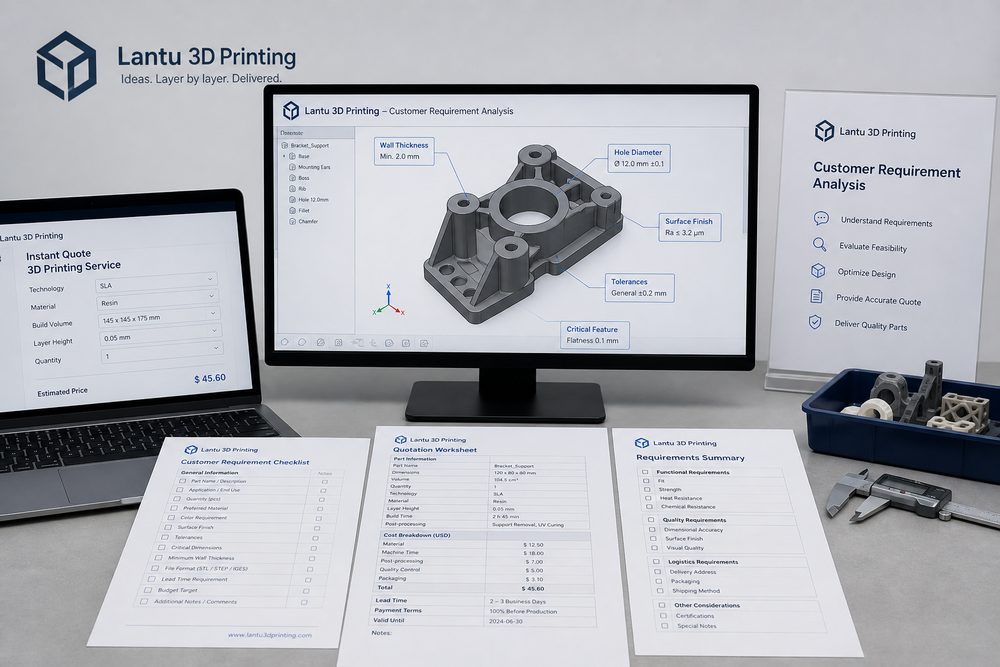
Asking the Right Questions, Avoiding Detours: A Practical Guide to Analyzing 3D Printing Customer Requirements
3D printing project failures often start with requirements that were never clearly defined. This article builds an actionable customer requirements analysis framework around use case, quantity, material, accuracy, appearance, assembly, and delivery cycle.
Service Process
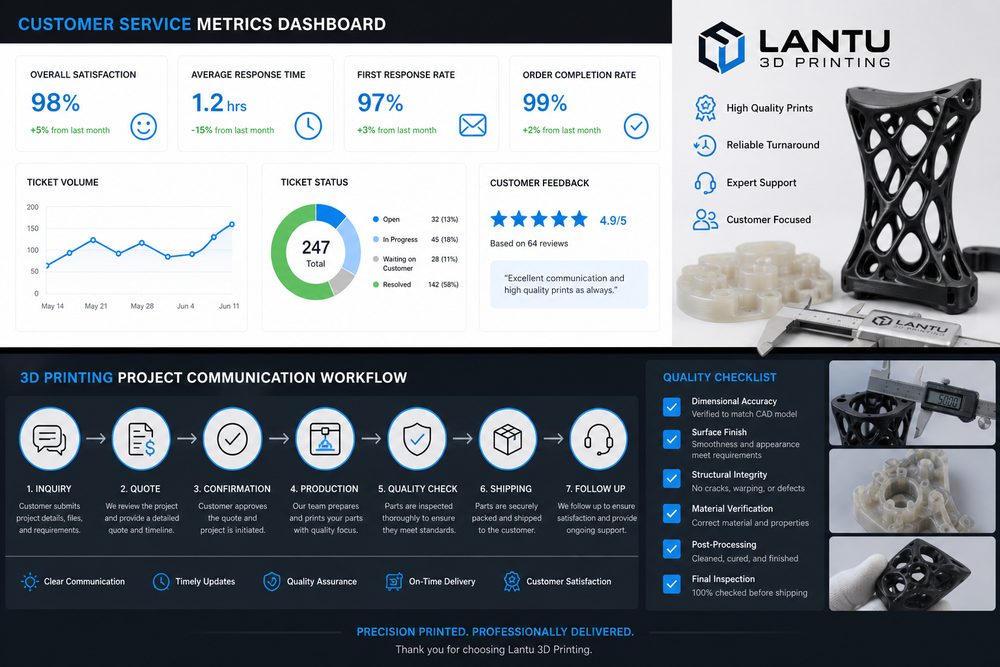
Improving Customer Satisfaction: Five Key Communication Milestones in 3D Printing Projects
Customer satisfaction in 3D printing depends not only on the part itself, but also on requirement confirmation, design review, exception feedback, delivery acceptance, and post-delivery review. This article outlines five key communication milestones to help service platforms reduce misunderstandings and build customer trust.
Project Communication
Service Process
After the Customer Says “Just Print This for Me”: Seven Key Questions for 3D Printing Requirement Analysis
3D printing requirement analysis should not rely on the model file alone. Use case, loads, appearance, accuracy, material, quantity, lead time, and acceptance criteria all affect the solution. This article uses seven key questions to help service teams turn vague requests into project definitions that can be quoted, produced, and delivered.
Project Communication
Start From Here
Have a model, drawing, or only an idea?
Submit your requirement and our engineers will recommend a better design and manufacturing path based on use, size, quantity, material, tolerance and lead time.