Inherent sources of deviation in 3D printing
To understand tolerances, you must first understand the sources of deviation. Dimensional deviation caused by Z-direction layer thickness exists in all processes. FDM is usually ±0.2mm and SLA can reach ±0.05mm. In terms of material shrinkage, ABS has the largest shrinkage due to cooling, followed by HIPS. PLA has the lowest shrinkage but is not suitable for high-precision scenes. Post-UV shrinkage of resin materials is usually compensated for by software, but actual batch-to-batch fluctuations exist.
Recommended value of fit tolerance
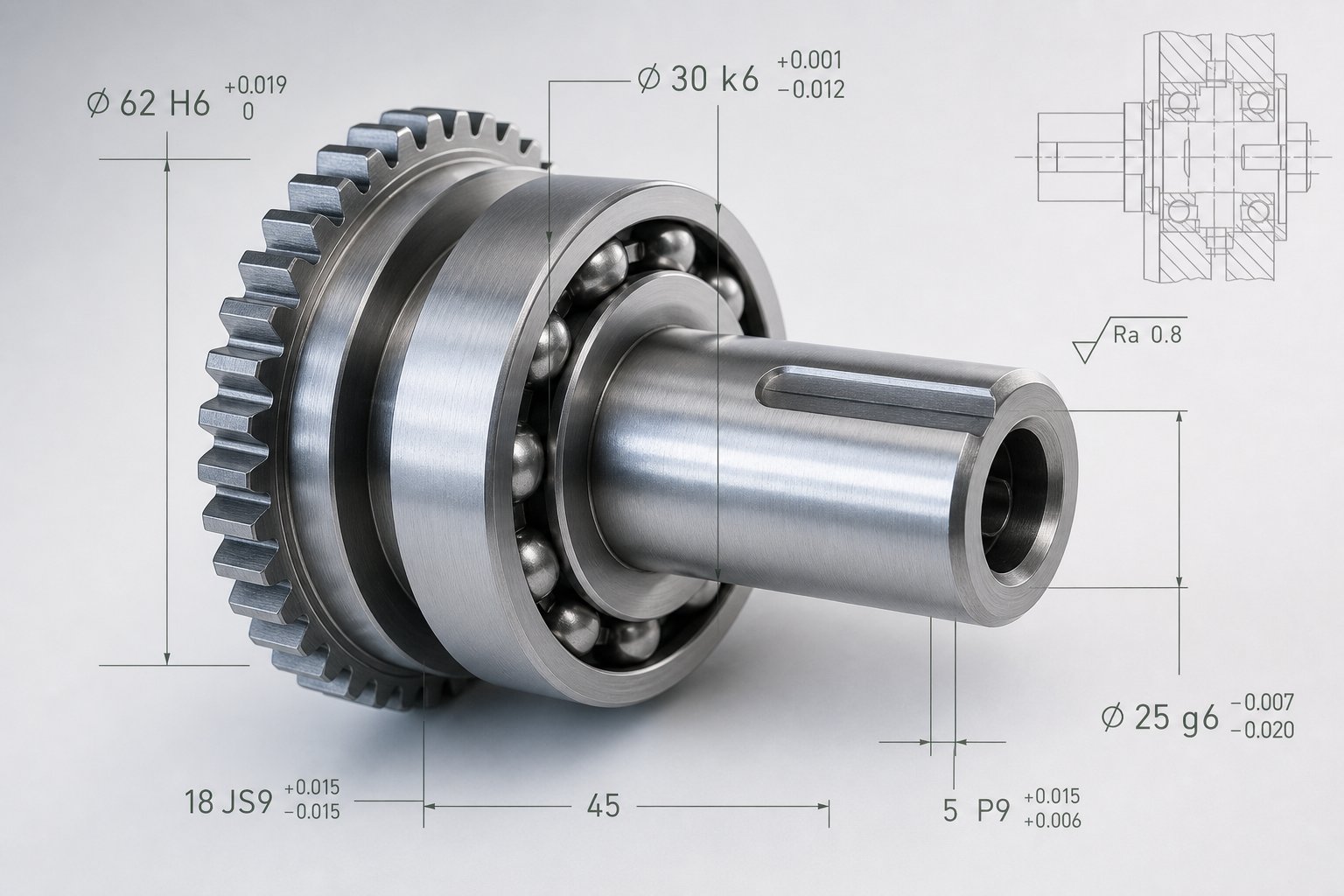
The recommended gap for sliding fit is 0.2mm (the SLA process can be reduced to 0.1mm), the transition fit is 0.05mm for positioning pin parts, and the interference fit is recommended to be adjusted from 0.1mm to 0.3mm according to the interference requirements. Due to the high shrinkage of HIPS materials, the fit tolerance should be relaxed by more than 0.05mm than the standard value. For moving parts that require repeated disassembly and assembly, it is recommended to initially print test pieces to verify the clearance before mass production.
Design specifications for assembly holes
The diameter of the printed hole is usually 0.1 to 0.3mm smaller than the CAD model (depending on the process), and enlargement compensation is required during design. Direct printing of threaded holes is often of poor quality, and wire thread inserts or threaded inserts are recommended for standard threads. For the lightweight connection from M3 to M5, the hot embedding method can be used to heat the metal threaded bushing and press it into the nylon piece to achieve reliable connection.
Submit a model, drawing, image or written notes. Engineers will review material, process, finishing and delivery based on actual use.