No model yet, material choice and wall thickness are explained from a practical angle.
Knowledge Center
Blueprint News
lantu3D reviews wall thickness, structure, materials, process, quantity and finishing before quotation.
01Guides
02Materials
03Customer View
Content should help customer decisions
lantu3D articles focus on materials, processes, cost, modeling and manufacturability so customers understand key decisions before submitting a request.
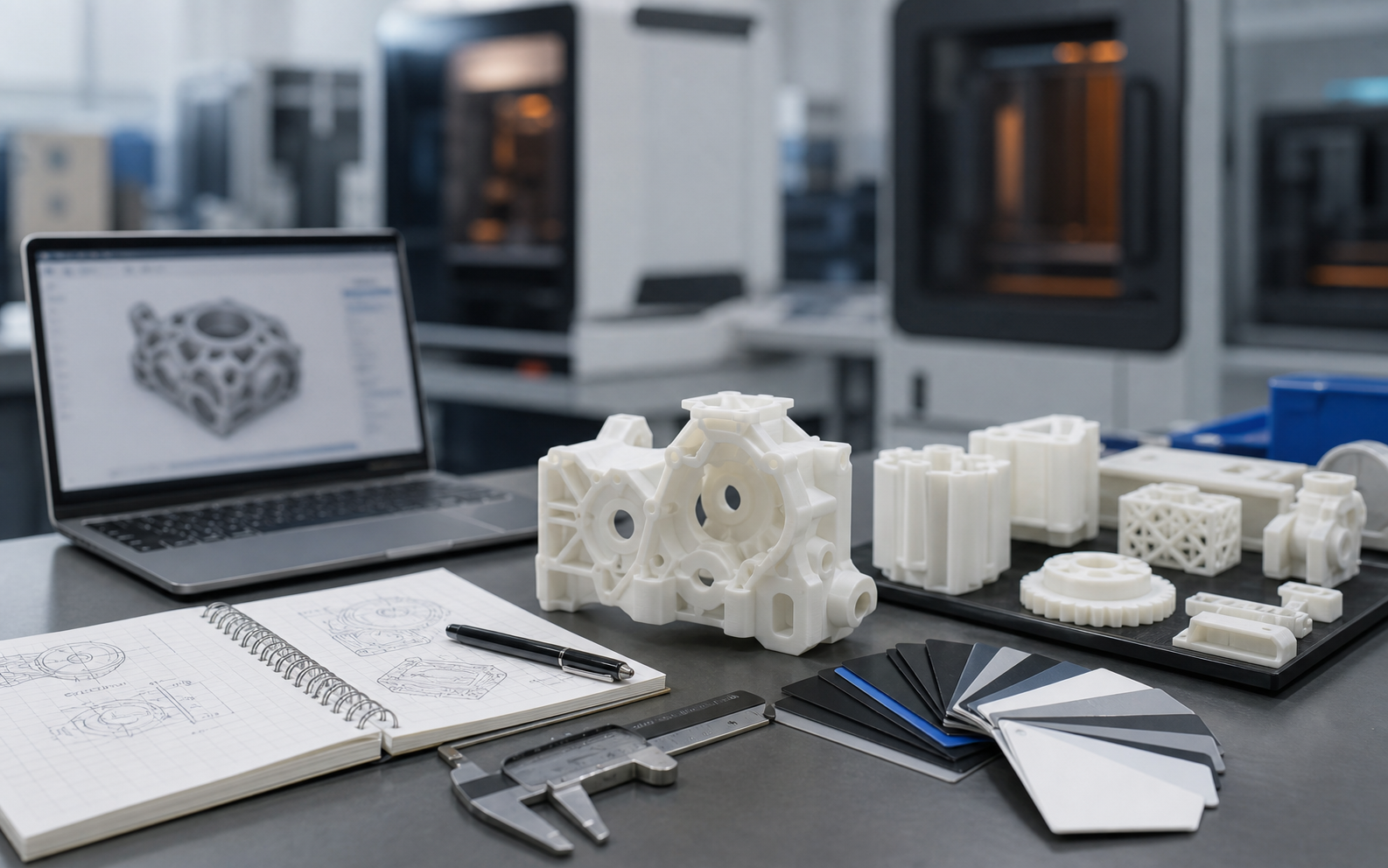
Prototype, fixture, custom part, small batch and cost-control topics for business users.
lantu3D is positioned as blueprint realization and lifecycle management, not just a print shop.
Design Guide
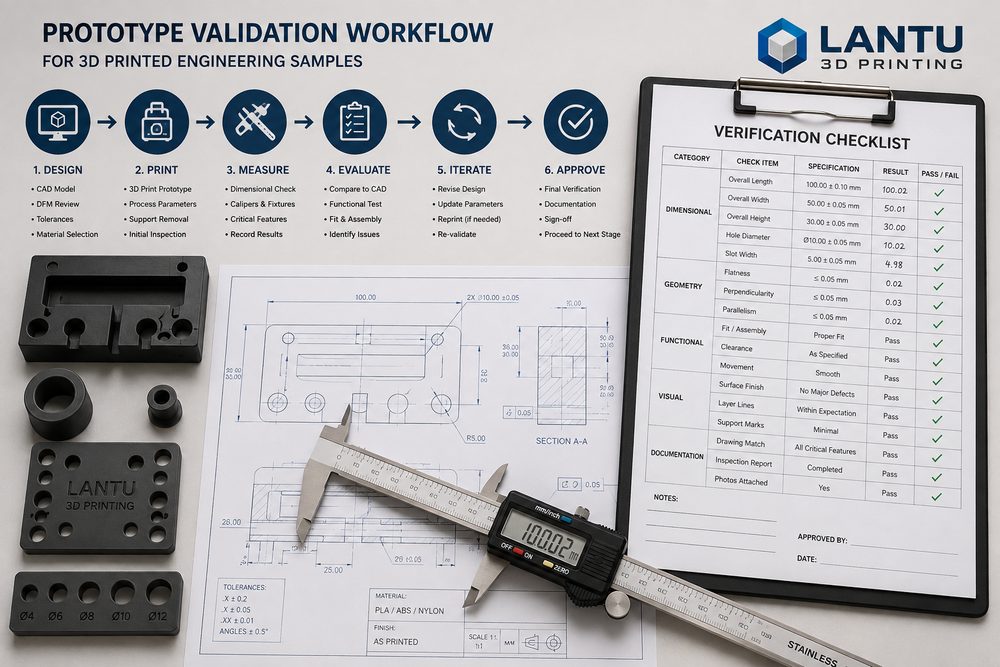
Validation Workflow: How 3D Printed Samples Move from Appearance Checks to Engineering Verification
If 3D printed samples are used only to “look the part,” teams can easily miss real risks in assembly, strength, heat deformation, and actual use conditions. This article provides a layered sample validation workflow to help R&D teams turn samples from display models into engineering decision tools.
sample validation
Enterprise Manufacturing
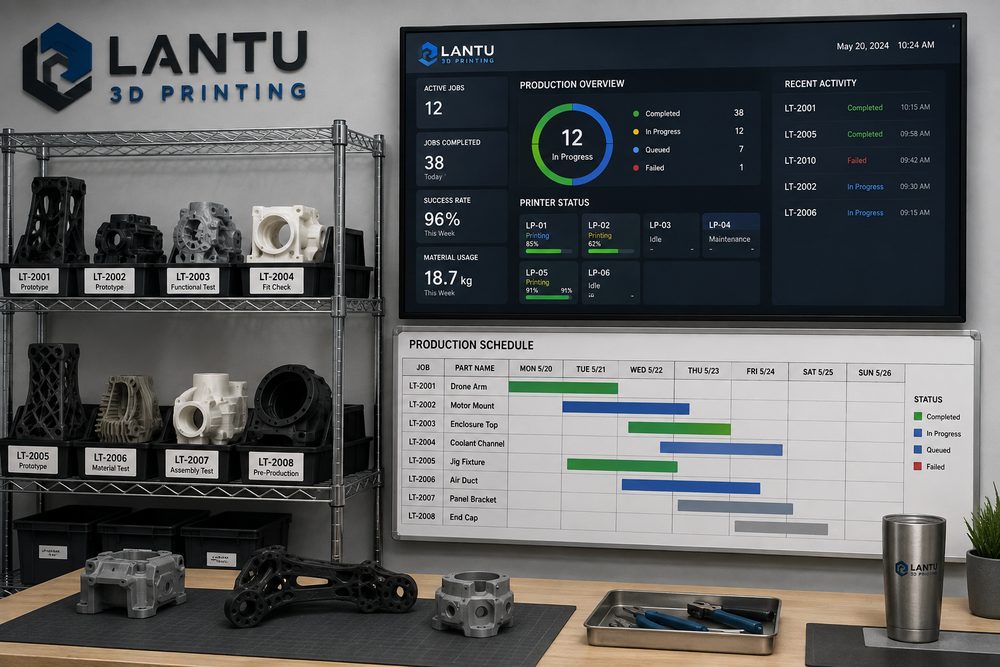
Small-Batch Production Management: Takt Control Methods for 3D Printing Orders from Trial Run to Delivery
The challenge of small-batch 3D printing is not single-part fabrication, but takt control when multiple models, materials, and post-processing steps run in parallel. This article explains how to turn prototyping experience into stable small-batch delivery capability from five aspects: order breakdown, capacity assessment, process kanban, quality gates, and delivery review.
quality control
news
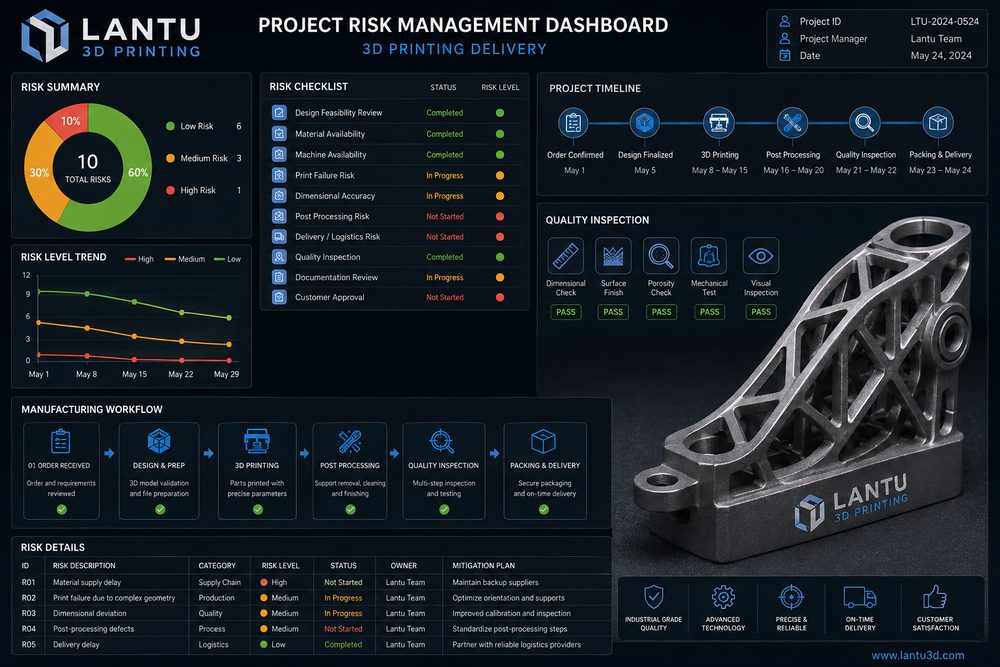
Risk Management for 3D Printing Projects: A Control Checklist from Requirements Freeze to Delivery Acceptance
Risks in enterprise 3D printing projects often come from unclear requirements, unreviewed designs, mismatched material selection, underestimated post-processing, and missing acceptance criteria. This article provides an actionable risk control checklist across five stages—requirements freeze, DFM review, production scheduling, quality inspection, and delivery acceptance—to help project teams reduce rework, delays, and communication costs.
news
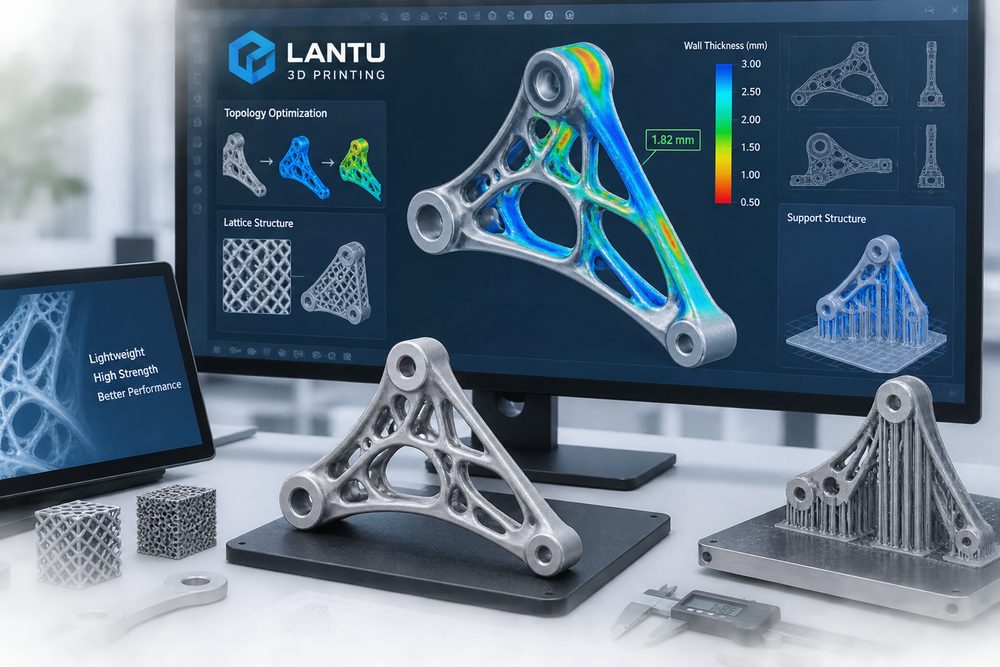
Design Optimization for Additive Manufacturing: A Systematic Approach from Wall Thickness to Topology
Additive manufacturing is not as simple as sending a traditional machining drawing straight to the printer. To produce parts that are more reliable and cost-effective, design must be approached systematically across wall thickness, supports, powder removal, assembly clearance, topology optimization, and post-processing accessibility. This article presents a DFAM review method for enterprise projects, helping engineering teams reduce failure rates, shorten prototyping cycles, and improve delivered part quality at the design stage.
news
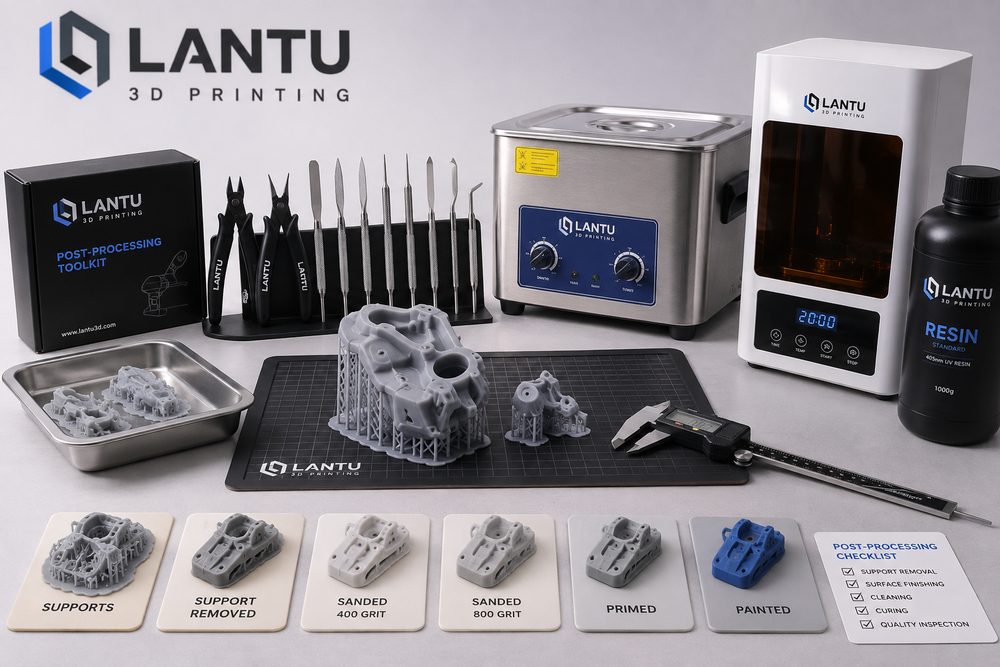
How 3D Printing Post-Processing Determines Part Consistency and Delivery Quality
Whether a 3D-printed part can move from a prototype to stable delivery depends not only on printing itself, but also on whether the post-processing workflow is standardized. This article examines support removal, cleaning and curing, sandblasting and polishing, dyeing and coating, and dimensional reinspection, and explains how post-processing affects surface roughness, dimensional deviation, assembly consistency, and delivery lead time. It also provides a checklist suitable for enterprise project management.
Enterprise Manufacturing
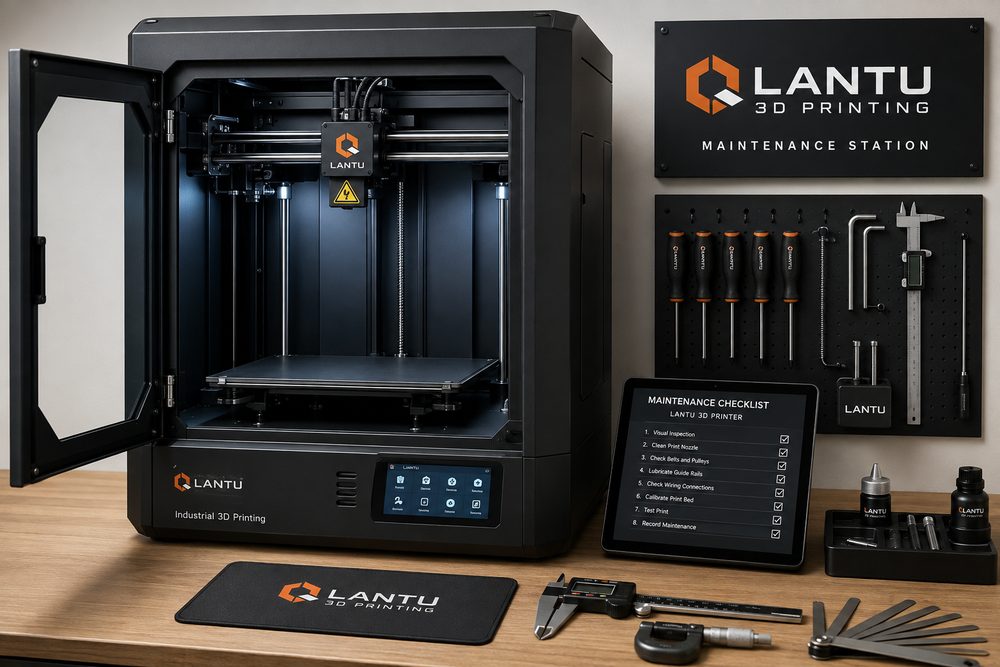
3D Printing Equipment Maintenance Plan: A Night Inspection Checklist to Reduce Downtime Risk
Stable delivery depends on equipment condition management. This article outlines maintenance methods for 3D printing service teams from five aspects: pre-print checks, consumables and environment, key component care, exception logging, and preventive maintenance planning, helping reduce downtime and batch quality fluctuation risks.
Quality Management
Materials and Processes
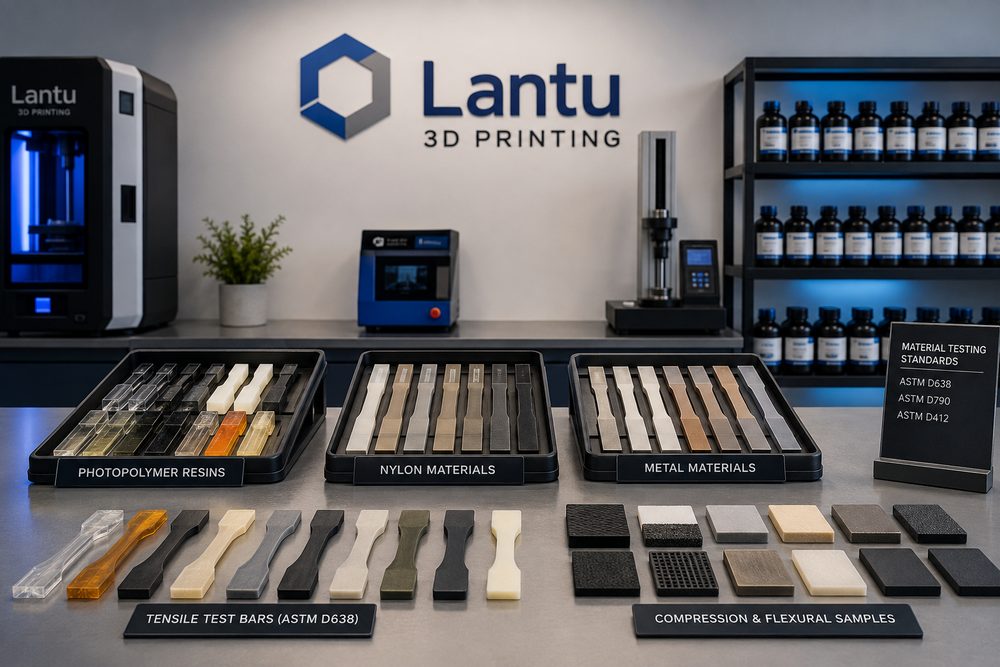
From Material Innovation to Performance Validation: A New Approach to Material Selection for Functional 3D Printed Parts
The key to functional 3D printing is not just whether a part can be formed, but whether material performance, process window, post-processing, and validation methods collectively support the final use case. This article explains how to reduce material selection risk through four steps: requirement breakdown, material screening, sample validation, and delivery traceability.

news
Small-Batch Production Management: Process Methods for 3D Printing from Prototype to Stable Delivery
This article explains how small-batch production management can be implemented in 3D printing projects. Drawing on Blueprint3D/lantu3D's experience across the full lifecycle from design blueprint to physical delivery, it shows how standardized workflows, data logging, and actionable checklists can reduce rework, delivery risks, and communication costs. The article provides parameter ranges, control points, quality evidence, and management actions for R&D, procurement, project managers, and quality teams working in small-batch manufacturing and sample validation.

news
Intellectual Property Protection for 3D Printing Projects: Secure Management from Model Files to Delivery Data
3D printing projects often involve product appearance, structural solutions, process parameters, and the client’s business plans. This article explains how to build an intellectual property protection and data security management system across five stages: model files, version permissions, supply chain collaboration, production data, and delivery archiving.

news
3D Printing Defect Analysis Methods: A Root-Cause Checklist from Warping, Delamination, to Porosity
Warping, delamination, porosity, under-sintering, and dimensional drift are common quality issues in 3D printing projects. This article builds a troubleshooting checklist across model, material, equipment, process parameters, environment, and post-processing to help teams identify root causes with data instead of repeated trial and error.
news
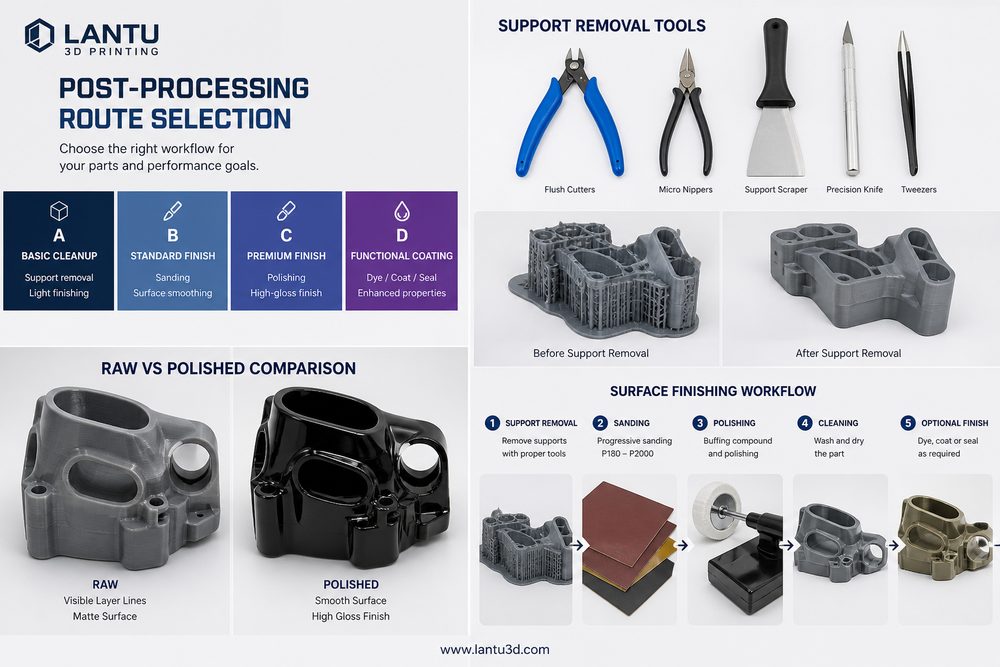
How to Choose a 3D Printing Post-Processing Workflow: Engineering Decisions from Support Removal to Surface Functionalization
The delivery quality of 3D printed parts depends not only on the build equipment but also on the post-processing workflow, which determines dimensions, appearance, assembly fit, and service life. This article covers support removal, depowdering, curing, sanding, coating, plating, and inspection loops, and provides post-processing decision methods for prototypes, small batches, and functional parts.
Service Process
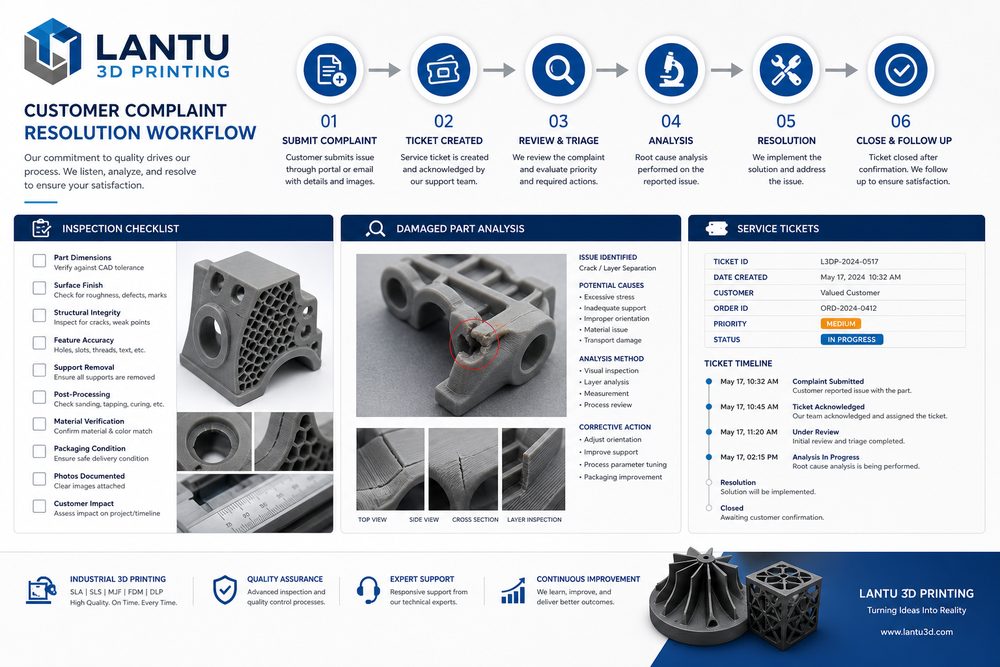
3D Printing Customer Complaint Handling Process: Turn After-Sales Issues into Repeat Orders
3D printing complaints often involve design, process, production, post-processing, and logistics. This article proposes a five-step mechanism of classification, response, review, resolution, and prevention to help service teams close the after-sales loop with engineering data and turn problems into repeat-order opportunities.
3D printing services
Start From Here
Have a model, drawing, or only an idea?
Submit your requirement and our engineers will recommend a better design and manufacturing path based on use, size, quantity, material, tolerance and lead time.