Introduction: Importance of Inconel 718 in Additive Manufacturing
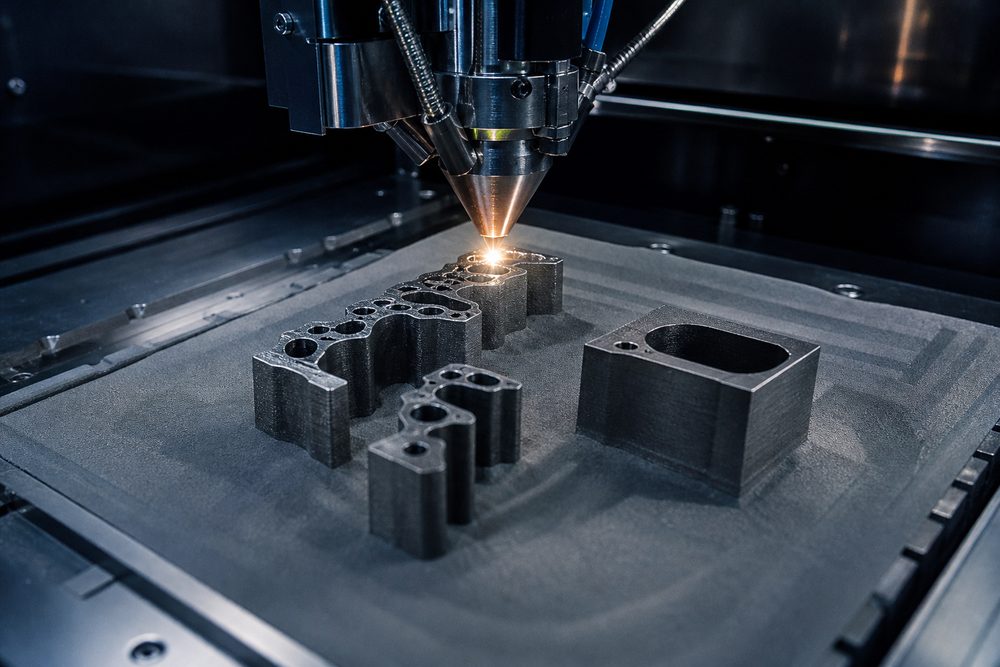
Inconel 718, as a precipitation-hardening nickel-based superalloy, has become the material of choice for critical components such as aerospace engine turbine disks and blades due to its excellent high-temperature strength, oxidation resistance, and corrosion resistance. With the rapid development of additive manufacturing technology, Laser Powder Bed Fusion (LPBF) processes provide a new approach for rapid prototyping of complex Inconel 718 components, but crack sensitivity caused by high temperature gradients and rapid solidification rates has become the main bottleneck restricting its widespread application.
1. Crack Formation Mechanisms in LPBF Process
Inconel 718 faces three main types of cracks during LPBF: solidification cracks, liquation cracks, and solid-state cracks. Solidification cracks occur at the final stage of solidification when low-melting-point elements (such as Nb, C) enriched between dendrites form liquid films that crack under solidification shrinkage stress. Liquation cracks originate from remelting of low-melting-point phases at heat-affected zone grain boundaries. Solid-state cracks are related to residual stress and decreased material ductility, commonly found in areas with large temperature gradient changes.
Research indicates that crack sensitivity is influenced by multiple factors: process parameters such as laser power, scanning speed, scanning strategy, layer thickness, and preheating temperature directly determine melt pool morphology and temperature field distribution, thereby affecting solidification microstructure and stress state. Proper optimization of these parameters can effectively reduce crack occurrence.
2. Process Parameter Optimization Strategies
Laser Power and Scanning Speed Matching
Laser power determines energy input density, while scanning speed affects energy deposition per unit length. Studies show that using moderate power (250-300W) with appropriate scanning speed (800-1000mm/s) can achieve stable melt pools, avoiding liquation cracks from overheating and solidification defects from undercooling. Volumetric Energy Density (EVD) control within 50-70J/mm³ range yields optimal results.
Scanning Strategy Optimization
Scanning paths significantly influence temperature field distribution and residual stress. Alternating scanning, island scanning, and rotating scanning strategies can effectively disperse heat accumulation and reduce thermal stress concentration. A chessboard scanning strategy with 67-degree rotation angle is recommended, with each scanning island area controlled between 5x5mm to 10x10mm, effectively reducing solid-state cracks.
Preheating Temperature Control
Substrate preheating is an important method to reduce temperature gradients and thermal stress. For Inconel 718, preheating temperature set at 200-400 degrees Celsius can significantly reduce crack sensitivity. Preheating temperature should not be too high to avoid increased element segregation and phase transformation risks.
3. Heat Treatment Process Design
Stress Relief Annealing
Immediate stress relief annealing after printing can effectively release residual stress and prevent crack propagation during subsequent processing. Recommended process: heat to 1065-1100 degrees Celsius, hold for 1-2 hours, furnace cool to 300 degrees Celsius then air cool. This process can eliminate approximately 70% of residual stress.
Homogenization Treatment
LPBF-formed Inconel 718 exhibits significant microsegregation, particularly enrichment of Nb, Ti and other elements between dendrites. Homogenization treatment temperature selected at 1160-1190 degrees Celsius with holding time of 2-4 hours can effectively improve element distribution uniformity and reduce delta phase precipitation risk during subsequent aging treatment.
Double Aging Heat Treatment
Standard double aging process: 720 degrees Celsius hold for 8 hours, furnace cool to 620 degrees Celsius hold for 8 hours, air cool. This process enables full precipitation of strengthening phases to achieve peak strength. Note that LPBF materials may have different aging responses from forged materials due to rapid solidification history, requiring adjustment of holding time based on actual testing.
4. Hot Isostatic Pressing (HIP) Post-Processing Technology
HIP is a key post-processing technology for eliminating internal defects in LPBF components. Under high temperature and pressure conditions (temperature 1160-1200 degrees Celsius, pressure 100-150MPa, holding time 2-4 hours), material undergoes plastic deformation and creep to close internal pores and microcracks.
HIP Advantages:
- Eliminate internal pores, achieve density above 99.98%
- Close microcracks, improve fatigue life
- Improve microstructure uniformity
- Reduce mechanical property variability
HIP Process Key Points:
HIP temperature selection requires comprehensive consideration: too low temperature results in insufficient plastic flow, too high temperature may cause grain coarsening. For Inconel 718, HIP is recommended below the strengthening phase dissolution temperature to avoid excessive dissolution. Standard heat treatment is required after HIP to restore strength properties.
5. Quality Inspection and Engineering Application Recommendations
Non-destructive Testing Requirements:
For aerospace critical components, CT scanning is recommended to detect internal defects with resolution capable of identifying defects below 50 micrometers. Ultrasonic testing is suitable for macroscopic crack screening. Penetrant testing is used for surface opening defect inspection.
Mechanical Property Verification:
LPBF+HIP treated Inconel 718 components should achieve room temperature tensile strength above 1350MPa, elongation greater than 12%, and stress rupture strength meeting AMS 5662 standard requirements. Fatigue property testing should cover both high-cycle fatigue and low-cycle fatigue ranges.
Engineering Application Recommendations:
- Establish comprehensive quality control system from powder to finished product
- Implement piece-by-piece non-destructive testing for critical components
- Build process parameter database for process traceability
- Develop differentiated post-processing plans based on component service conditions
- Conduct regular process validation and property testing
Conclusion
Crack control in Inconel 718 superalloy additive manufacturing is a systematic engineering problem requiring synergistic optimization from three dimensions: material characteristics, process parameters, and post-processing technology. Through rational design of LPBF process windows, scientific formulation of heat treatment regimes, and strict implementation of HIP post-processing, crack sensitivity can be effectively controlled to manufacture high-quality components meeting aerospace high-end application requirements. In the future, with the development of in-situ monitoring technology and machine learning-assisted process optimization, the quality stability and production efficiency of Inconel 718 additive manufacturing will further improve.
Submit a model, drawing, image or written notes. Engineers will review material, process, finishing and delivery based on actual use.