Principles and characteristics of nylon SLS molding
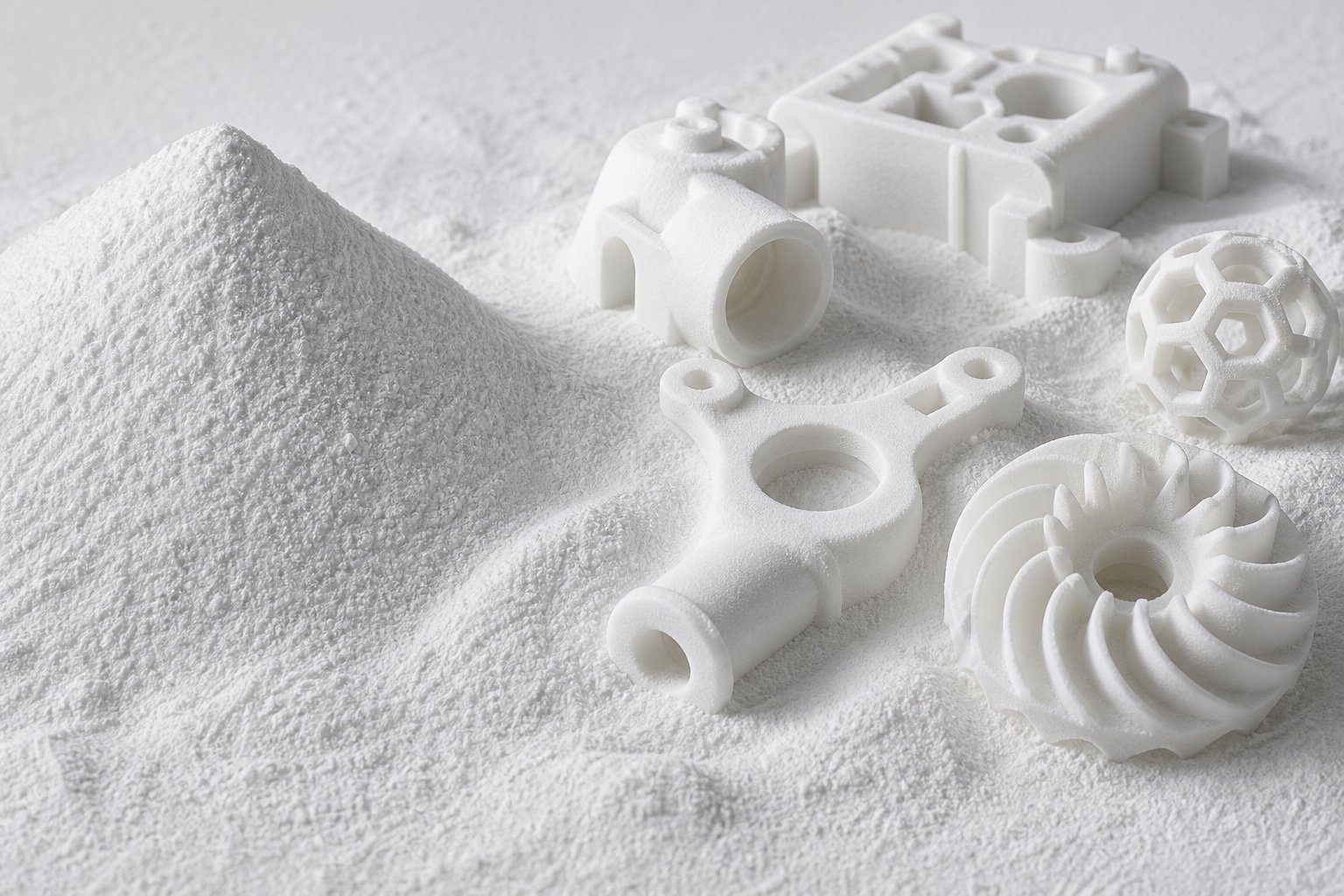
The selective laser sintering (SLS) process uses nylon powder to melt and form layer by layer under the action of laser. There is no need for a support structure because the unsintered powder automatically acts as a support. PA12 is the most commonly used engineering nylon material. Its tensile strength is about 48MPa, its flexural modulus is about 1500MPa, and it can withstand repeated bending loads. Nylon has excellent wear resistance and toughness and is suitable for manufacturing gears, hinges and functional structural parts.
Factors affecting mechanical properties
The crystallinity of nylon powder directly determines the final strength, and the crystallinity is affected by the thermal history and laser power setting value. The performance of the same material on different printers can vary by 15% to 20% in strength due to differences in layer thickness, scan spacing and build orientation. When designing parts, the interlayer bonding force along the printing direction is always weaker than in the parallel direction, so structures with greater stress should be placed parallel to the printing layer.
Post-processing improves product performance
There is powder residue on the surface of the nylon parts just taken out from the printer, and there is a certain porosity. Glass bead blasting can significantly improve the surface quality and further increase the density. Some application scenarios require parts to be dyed or impregnated. The prerequisite for uniform coloring is to fully remove the powder in the pores. Impregnated epoxy resin provides an airtight seal, suitable for fluid pathways or low-pressure vessels.
Submit a model, drawing, image or written notes. Engineers will review material, process, finishing and delivery based on actual use.