Core functions of supports
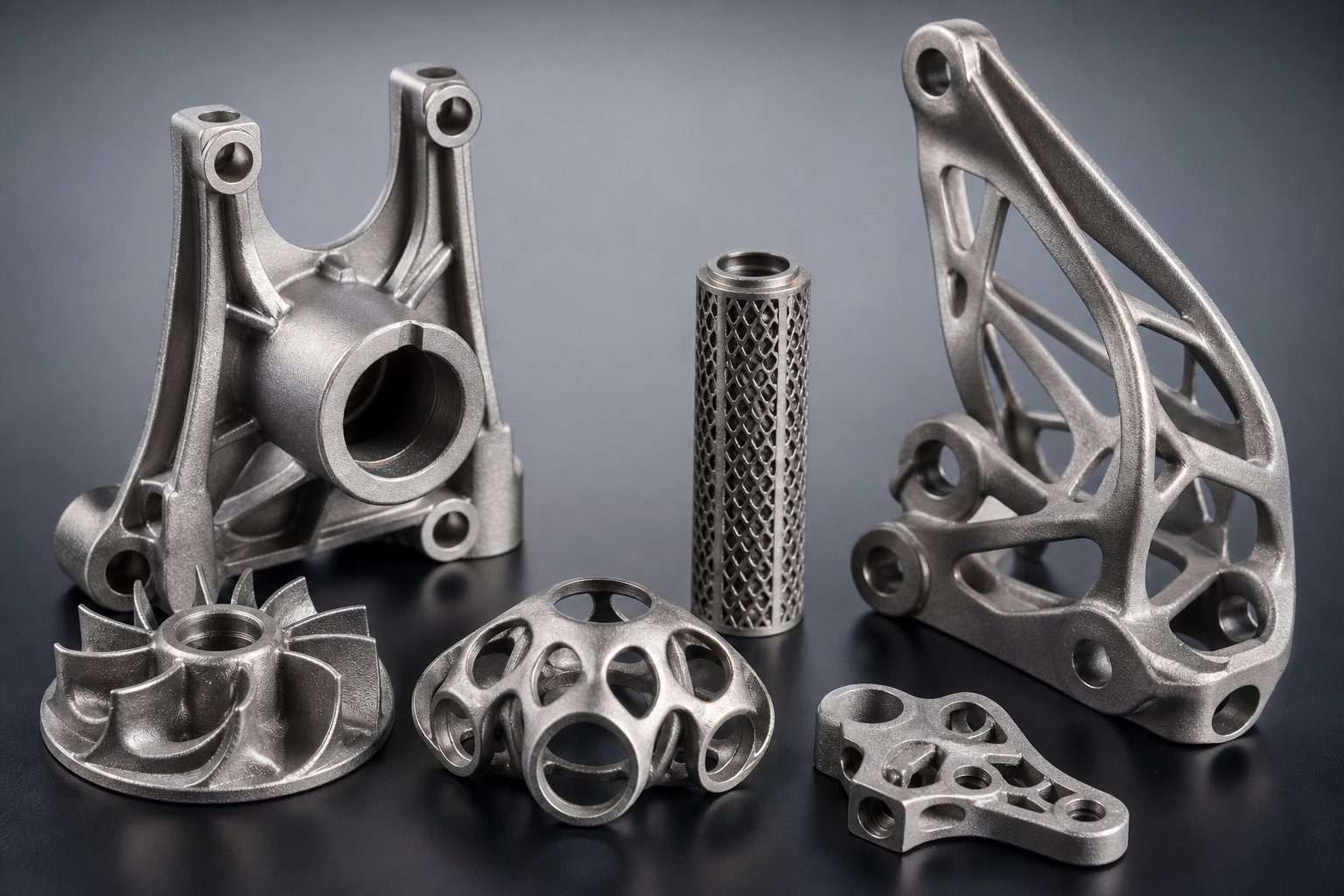
Supports in metal selective laser melting (SLM) are more than just mechanical structures that hold parts in place. It plays the multiple roles of heat conduction channel, thermal stress relief and ground conduction. Supports transfer heat generated by the part to the build base, preventing localized heat buildup that could lead to melt channel runaway control. At the same time, the support becomes the separation point after printing is completed, and sufficient cutting or wire cutting allowance must be reserved.
Support geometry and spacing strategy
The support geometry includes rod grid, cross and planar supports. For thin-walled parts, rod-shaped supports with larger spacing can be used, while large-area planes require dense cross supports to resist thermal deformation. The support spacing is usually between 0.8 and 1.5mm. For alloys with poor thermal conductivity (such as titanium alloys), a smaller spacing should be selected. The thickness of the support is generally 0.8mm. If it is too thick, it will increase the difficulty of removal. If it is too thin, the thermal conductivity and load-bearing capacity will be insufficient.
Process selection for support removal
Three methods are mainly used to remove supports from metal parts: wire cutting, sawing and grinding. Precision parts must be wire-cut to ensure that the dimensions are not deformed, but wire-cutting takes a long time. The use of CNC milling solutions to reserve support margins in mass production can significantly shorten the post-processing cycle. The heat-affected zone at the interface between the support and the part needs to be carefully inspected. Microcracks and residual stress often exist in this area. If necessary, heat treatment is required to eliminate the stress.
Submit a model, drawing, image or written notes. Engineers will review material, process, finishing and delivery based on actual use.