The Dilemma of Traditional Spare Parts Management
Spare parts management has always been a pain point in the manufacturing industry. Under the traditional model, companies need to stockpile a large number of spare parts to meet equipment maintenance needs. The inventory cost is high, takes up a lot of space, and is difficult to manage. What is even more troublesome is that many spare parts for old equipment have been discontinued, and the procurement cycle is long or even impossible to purchase. Once the equipment fails, it will lead to long downtime. Statistics show that the spare parts inventory turnover rate of manufacturing companies is only 0.5-1.5 times per year on average, and a large amount of money is tied up in spare parts that may never be used. The rise of digital technology has brought about a turning point in this dilemma. The model that combines virtual inventory with on-demand production is reshaping spare parts management.
Construction of digital inventory
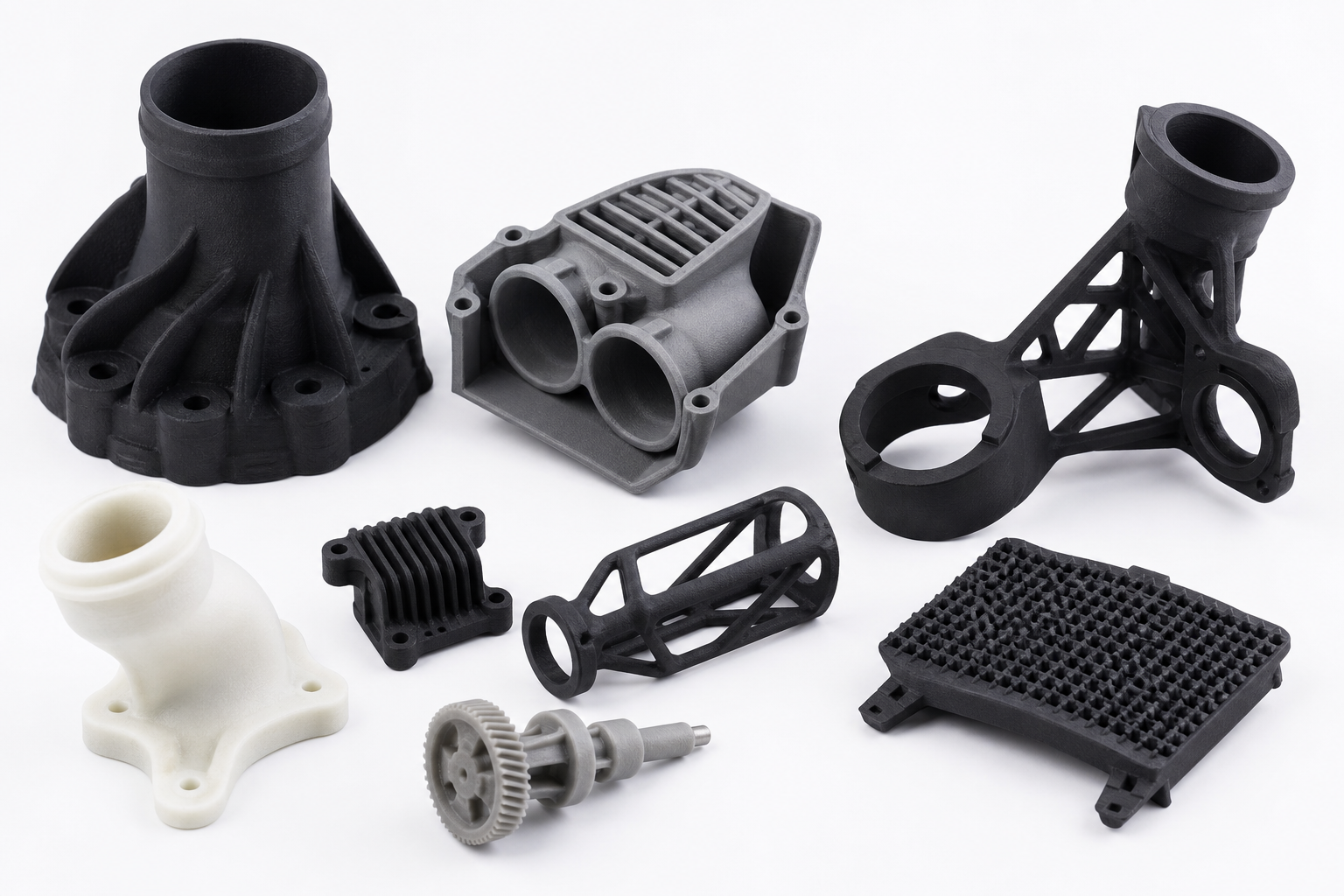
Digital inventory is to convert physical spare parts into three-dimensional digital models and store them in the cloud or local servers. They can be produced instantly through 3D printing technology when needed. Building a digital inventory requires completing 3D scanning or reverse modeling of spare parts. For existing physical spare parts, a three-dimensional scanner is used to obtain the shape data, and parametric modeling is completed using CAD software. For spare parts with complete drawings, the drawings are directly converted into 3D models. For discontinued spare parts, it is necessary to disassemble and measure or rebuild the model based on the original design data of the equipment. After the digital model is established, the printing process needs to be verified to ensure that the printed parts can meet the usage requirements. All model data are managed uniformly according to coding rules, and a convenient retrieval and calling mechanism is established.
Implementation Points of On-Demand Production
The on-demand production model transforms the traditional hoarding of spare parts into the hoarding of manufacturing capabilities, and the inventory is transferred from physical space to digital space. Implementation points include: establishing a rapid response mechanism to control the delivery of spare parts within 24-72 hours from request submission; selecting appropriate printing processes and materials to ensure that the performance of spare parts meets equipment operation requirements; establishing a quality assurance system, and printed spare parts can only be used after passing inspection; improving the cost accounting mechanism, the single production cost may be higher than batch purchasing, but the overall cost is significantly reduced due to a significant reduction in inventory; cultivating the capabilities of the technical team, including full-process skills such as three-dimensional modeling, printing operations, and post-processing. On-demand production is not a simple replacement of traditional procurement, but an organic combination of the two models, selecting the optimal solution based on the characteristics of spare parts.
Application cases and effects
A large manufacturing company has equipment assets of more than 1 billion yuan, the annual spare parts procurement cost is about 8 million yuan, and the value of spare parts in stock is about 20 million yuan. After implementing digital inventory management, key spare parts with low usage frequency and long procurement cycle were digitally stored, and a digital inventory containing 1,500 spare parts was established. Instant production through 3D printing when needed, the average delivery time is shortened from the traditional 2-4 weeks to 3 days. Physical inventory was reduced by 40%, and annual inventory management expenses were reduced by 1.6 million yuan. More importantly, equipment failure downtime is reduced by 65%, and production continuity is effectively guaranteed. Another energy company digitized commonly used spare parts for power stations in remote areas. Operation and maintenance personnel carried mobile 3D printers to print spare parts on-site as needed, greatly improving operation and maintenance efficiency and response speed.
Development Trends and Prospects
Digital inventory and on-demand production models are developing rapidly. Blockchain technology provides technical guarantee for the trustworthy storage and traceability of digital spare parts. Smart contracts realize permission management and usage tracking of spare parts data. The cloud manufacturing platform integrates distributed printing resources and builds a rapid supply network of spare parts. Advances in material technology have made the performance of printed spare parts closer and closer to or even better than spare parts manufactured by traditional processes. Industry standards are gradually improving, and the recognition and application scope of printing spare parts continue to expand. In the future, each enterprise may establish its own digital spare parts library and build a shared spare parts ecosystem with equipment manufacturers and service providers to achieve a more efficient, economical and sustainable spare parts management model.
Submit a model, drawing, image or written notes. Engineers will review material, process, finishing and delivery based on actual use.