
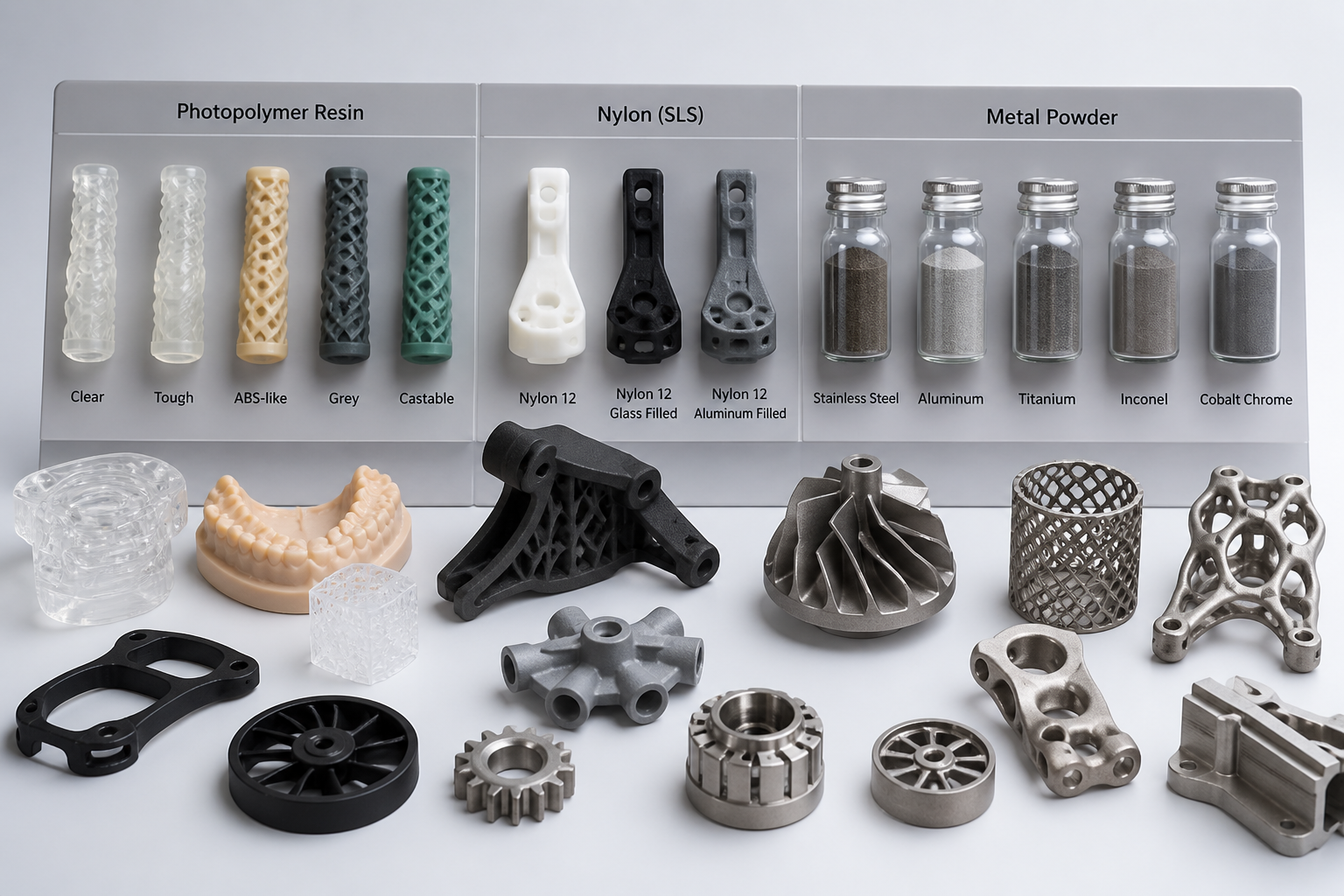
The Importance of Metal 3D Printing Post-processing
Metal 3D printing technology has made significant progress in recent years, expanding its application scope from aerospace to medical devices, and from automotive manufacturing to mold production. However, the completion of printing is merely half of the manufacturing process—post-processing often determines whether the final parts can meet stringent industrial standards. Metal 3D printed parts without proper post-processing may exhibit issues such as high porosity, surface roughness, high residual stress, and insufficient dimensional accuracy, severely affecting their mechanical properties and service life.
The primary objectives of post-processing include: eliminating internal pores and defects, relieving residual stress, improving surface quality, enhancing dimensional accuracy, and optimizing microstructure and mechanical properties. Depending on the application scenarios and performance requirements of the parts, the selection and combination of post-processing processes will vary. For critical application fields such as aerospace, post-processing is an essential step for airworthiness certification, directly determining whether the parts can obtain approval for installation.
Detailed Explanation of the Hot Isostatic Pressing (HIP) Process
Hot Isostatic Pressing (HIP) is one of the most critical processes in metal 3D printing post-processing. The HIP process subjects parts to an environment of high temperature (typically 0.7-0.9 times the melting point, in K) and high argon pressure (100-200 MPa), inducing plastic deformation in the material through uniform tri-axial pressure, thereby closing internal pores and microcracks. For metal parts printed via SLM/DMLS, HIP can reduce porosity from 0.5%-2% to less than 0.1%, while significantly improving fatigue strength.
The selection of HIP process parameters requires precise control based on material characteristics. Titanium alloys (such as Ti-6Al-4V) are typically treated at 920°C and 100MPa for 2-4 hours; aluminum alloys (such as AlSi10Mg) are treated at approximately 500°C and 100MPa; and stainless steels (such as 316L) are treated at 1150°C and 100-150MPa. It should be noted that the HIP process causes slight dimensional changes in parts (typically a shrinkage of 0.1%-0.3%), so allowances need to be made during design and process planning.
Heat Treatment and Residual Stress Relief
During the metal 3D printing process, rapid melting and solidification cycles generate significant residual stresses within the parts, which can lead to part warping, cracking, or dimensional instability during subsequent use. Heat treatment is the primary method for eliminating residual stresses, typically including processes such as stress relief annealing, solution treatment, and aging treatment.
Taking titanium alloy Ti-6Al-4V as an example, stress relief annealing (approx. 650-700°C, 2-4 hours) is typically required after printing, followed by solution treatment (approx. 950°C, 1 hour) and aging treatment (approx. 540°C, 4-8 hours) to obtain the optimal α+β dual-phase microstructure. For mold steel (such as 18Ni300), age hardening treatment (approx. 480-520°C, 6-12 hours) is required to achieve the desired hardness (up to 50-55 HRC).
Selection of Surface Treatment Processes
The surface roughness of metal 3D printed parts typically ranges between Ra 6-20μm, which falls far short of the requirements for most industrial applications. The selection of surface treatment processes depends on the part's geometric complexity, precision requirements, and functional needs. For parts with accessible external surfaces, CNC machining is the most direct finishing method, capable of achieving a surface quality below Ra 0.8μm. For complex internal cavities and flow channels, processes such as chemical polishing, electrochemical polishing, or abrasive flow polishing are required.
Sandblasting is one of the most commonly used surface treatment methods. By blasting aluminum oxide or glass beads at high speed, adhered powder can be removed from the surface, and a uniform matte finish can be obtained. For applications requiring higher surface quality, vibratory polishing or centrifugal polishing can be employed. Through the relative motion between the abrasive media and the parts, uniform surface finishing is achieved. For applications with special surface requirements, such as medical devices, electropolishing or passivation is also required to enhance the biocompatibility and corrosion resistance of the surface.
Dimensional Accuracy Control and Inspection
The dimensional accuracy of metal 3D printed parts is influenced by various factors, including powder characteristics, process parameters, part geometry, and heat treatment deformation. In general, SLM/DMLS processes can achieve a dimensional accuracy of ±0.1mm (for dimensions
Submit a model, drawing, image or written notes. Engineers will review material, process, finishing and delivery based on actual use.