Powder removal: the basic stage of post-processing
For SLS and metal binder jetting processes, powder removal is the initial post-processing step. Using ultrasonic cleaning combined with high-temperature baking can remove powder from deep holes and small flow channels, but be aware that some small parts may be damaged by ultrasonic waves. During the manual cleaning stage, special attention needs to be paid to removing the contact surface left by the support structure or natural support, which has the greatest impact on the surface quality.
Division of sandblasting and grinding
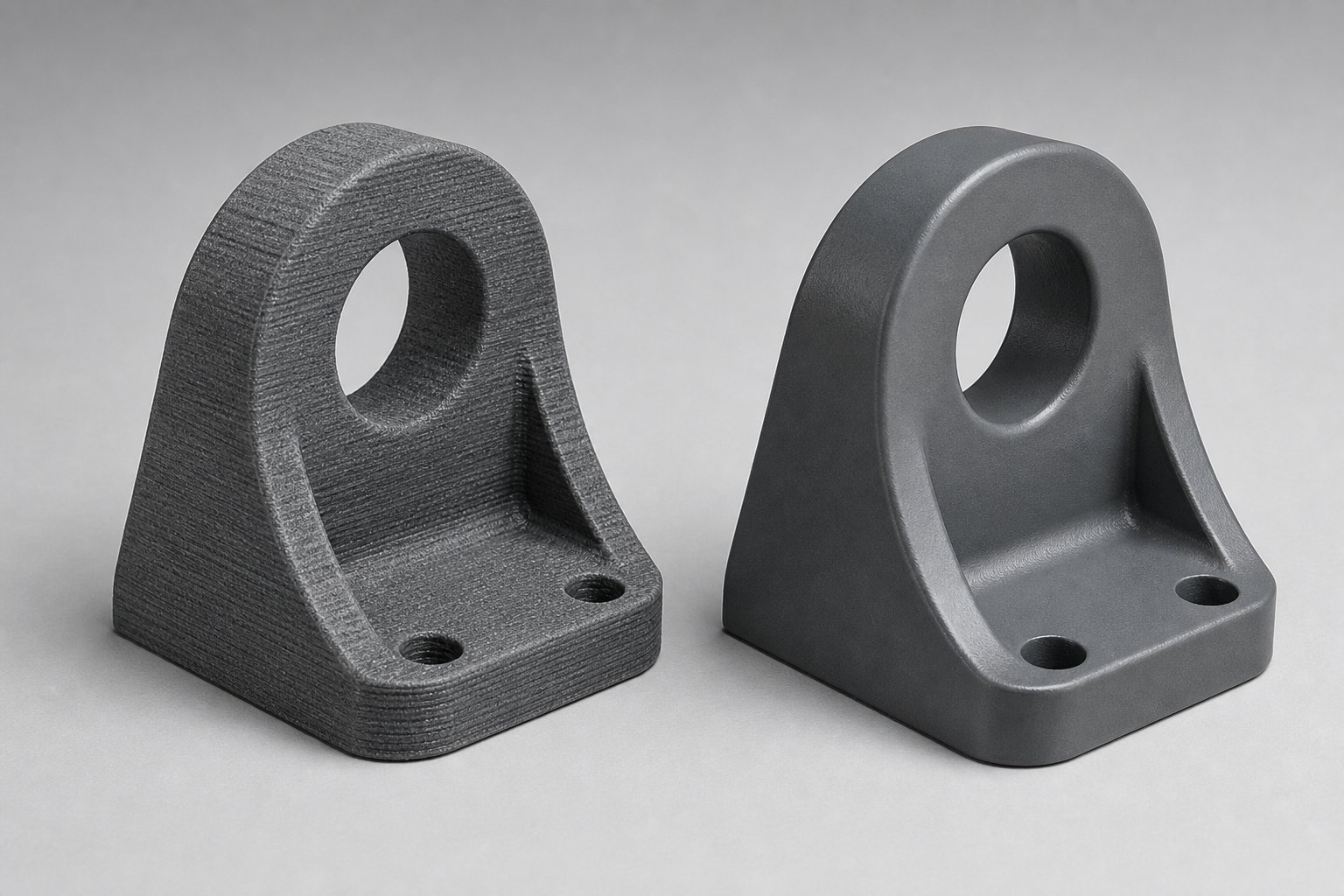
Sandblasting is suitable for quickly flattening large areas of surface. Glass beads, quartz sand or alumina abrasives can be selected according to needs. Glass bead blasting can obtain a matte and uniform surface, which is suitable for appearance pretreatment of functional parts. Dry sanding is used for local repairs and high-precision areas. Gradually transitioning from coarse mesh to high mesh can achieve a mirror effect. For resin parts, fine powder will be embedded during the polishing process, which needs to be cleaned with alcohol or special cleaner before entering the next process.
Quality improvement of dipping and spraying
Dip treatment is mainly for porous materials such as nylon and some sintered metal parts. Using a low viscosity epoxy or wax impregnation fluid can fully fill the pores in a vacuum environment, improving sealing and chemical resistance. The spraying process is the key to appearance quality. Before spraying, you need to use putty to repair defects. The choice of primer directly affects the adhesion of the topcoat. Metal parts usually need to be phosphated or anodized before spraying to ensure long-term adhesion.
Submit a model, drawing, image or written notes. Engineers will review material, process, finishing and delivery based on actual use.