Core challenges of mass production management
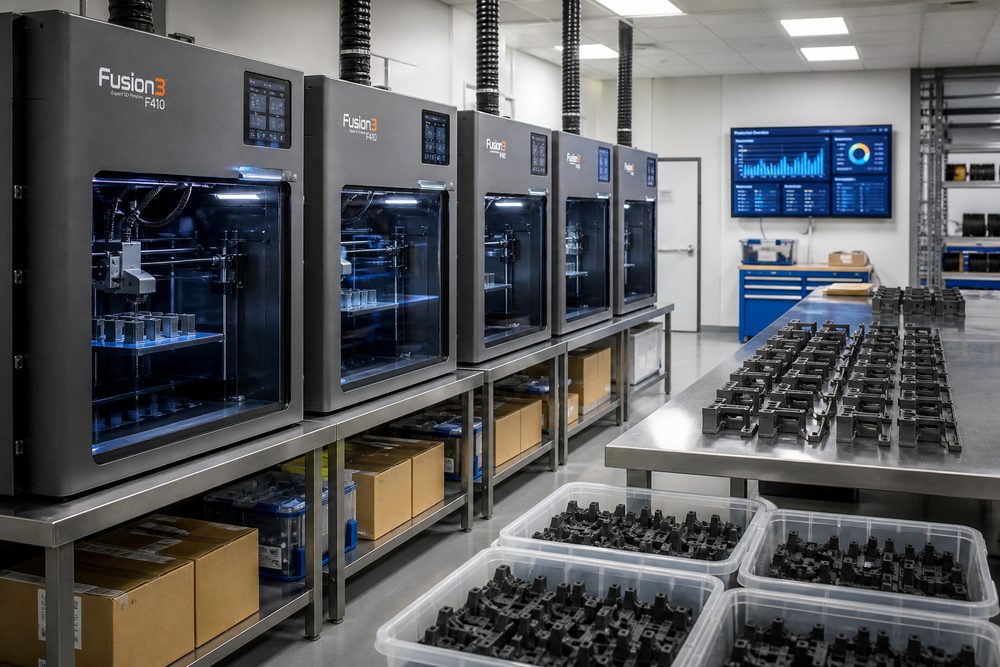
When 3D printing services shift from prototype production to mass production, the management complexity increases exponentially. Typical challenges include: resource conflicts caused by multiple orders in parallel, quality fluctuations caused by unstable process parameters, delivery delays caused by insufficient visibility of production progress, and quality control affected by difficulties in batch traceability. Establishing a systematic batch production management process is the key to improving production capacity utilization and customer satisfaction.
Order consolidation and production scheduling optimization
Order classification strategy: Classify orders according to materials, processes, accuracy, and delivery dates. Orders for the same materials are merged and produced to reduce material replacement time; orders for the same process are scheduled together to reduce equipment switching costs; orders with similar delivery dates are processed collaboratively to optimize logistics efficiency.
Intelligent production scheduling algorithm: Develop a production scheduling optimization system that considers multi-dimensional constraints such as equipment capacity, material inventory, personnel skills, and order priority. Use heuristic algorithms or genetic algorithms to find the optimal production scheduling plan. The system automatically generates a Gantt chart of the production plan to visually display the production progress of each order.
Dynamic adjustment mechanism: Establish a production abnormality response mechanism to quickly adjust the production schedule when equipment failure, material shortages, or emergency orders occur. Set up a capacity buffer zone (10%-15% recommended) to reserve room for exceptions. Hold daily production scheduling meetings to update production schedules and communicate them to the executive level.
Process parameter solidification and standardization
Parameter verification process: Before mass production, process parameter verification must be completed. Use the DOE (Design of Experiments) method to systematically test the impact of parameters such as layer height, filling rate, printing speed, temperature, etc. on quality to determine the optimal parameter combination. Generate parameter verification reports as a technical basis for mass production.
Parameter curing mechanism: The verified parameters are cured into process files, including equipment model, material batch, slicing settings, and post-processing requirements. Unauthorized parameter modification is prohibited, and all changes are subject to technical review and customer confirmation. Establish parameter version management and trace historical change records.
Material batch management: Record the material batch number produced in each batch and establish a material performance database. When changing material batches, conduct key performance tests (melt index, density, viscosity) to ensure material consistency. For batches with large performance differences, re-verify the process parameters.
Process quality control system
First article inspection system: The first article produced in each batch must undergo full-size inspection, appearance inspection, and functional testing. Production can continue only after the first piece is qualified. If the first piece fails, the reasons need to be analyzed and the process parameters adjusted. The first article inspection report is archived as a benchmark for batch quality.
Process inspection mechanism: Set inspection points (recommended every 50 pieces or every 4 hours) to check key dimensions, surface quality, and printing defects. Record inspection data, draw control charts, and discover quality trends in a timely manner. When abnormal trends are detected, production is suspended and the cause is investigated.
Equipment status monitoring: Real-time monitoring of equipment operating parameters (nozzle temperature, platform temperature, printing speed, layer height deviation). Install sensors to collect vibration and noise data to predict the risk of equipment failure. Establish an equipment maintenance plan to complete preventive maintenance before failure occurs.
Defective product management process: Isolate defective products and identify defective types and quantities. Analyze the causes of defects (design problems, process problems, equipment problems, material problems) and formulate corrective measures. Statistics on defective rate trends and continuous improvement of process flow. For defective products that can be repaired, formulate a repair process and verify the repair effect.
Visual management of production progress
Real-time Kanban system: Deploy production Kanban to display the production progress, equipment utilization and personnel load of each order in real time. Kanban data is automatically updated and supports PC and mobile access. Set a progress warning threshold to automatically remind you when order progress lags behind.
Customer progress query: Develop a customer self-service query system so that customers can check the order production progress, estimated delivery time, and logistics status in real time. The system automatically pushes progress update notifications to reduce customer inquiry workload. For delayed orders, proactively inform us of the reasons for the delay and the adjusted delivery plan.
Exception escalation mechanism: Define exception levels and processing procedures. First-level exceptions (slight delays, small batch defects) are handled by the team leader; second-level exceptions (moderate delays, batch defects) are handled by the production manager; third-level exceptions (serious delays, major quality accidents) are handled by the general manager. Ensure exceptions are handled promptly and effectively.
Batch traceability and quality management
Batch coding system: Assign a unique batch number to each batch of products. The coding includes order number, production date, equipment number, and material batch. The batch number is marked on the product body or packaging to support subsequent traceability. Scan the batch number to query the complete production record of the batch.
Traceability data record: Record the entire batch production process data, including: process parameters, equipment status, inspection data, operators, and time nodes. The data is stored in the production management system, and the retention period is no less than the product warranty period. Supports multi-dimensional queries by batch number, order number, time range, etc.
Quality traceability application: When customers report quality problems, they can quickly locate products of the same batch through the batch number and assess the scope of the problem. Analyze root causes, develop corrective actions, and notify relevant customers. Recall defective batches of products to reduce quality risks.
Logistics delivery optimization strategy
Packaging standardization: Design standardized packaging solutions based on product size, weight, and vulnerability. The inner packaging uses bubble wrap, pearl cotton, and customized paper trays to protect the product; the outer packaging uses cartons and wooden boxes, with markings on transportation requirements such as fragile, moisture-proof, and upward. Establish a balance between packaging cost and protective effect.
Logistics channel selection: Select logistics channels based on delivery time, transportation distance, and cost budget. Urgent items use express delivery such as SF Express and JD.com; regular items use economical express delivery such as ZTO and YTO; large-volume items use dedicated logistics lines. Establish strategic cooperation with high-quality logistics providers to obtain preferential prices and priority services.
Delivery and receipt management: The logistics provider is required to provide a receipt and the system automatically updates the order status after the customer signs for it. For valuable products, customers are required to inspect and sign for receipt in person. Establish a delivery exception handling process to deal with problems such as damage, loss, delay, etc. to protect customer rights.
Continuous improvement and data-driven
Establish a mass production performance indicator system to monitor key indicators such as on-time delivery rate, first-time pass rate, equipment utilization rate, and unit cost. Regularly analyze metric trends to identify opportunities for improvement. Carry out lean production improvement activities to eliminate waste and improve efficiency. Create efficient, stable and reliable mass production capabilities through data-driven continuous improvement.
Submit a model, drawing, image or written notes. Engineers will review material, process, finishing and delivery based on actual use.