lantu3D

Innovative Applications of 3D Printing in the Consumer Electronics Industry: From Custom Enclosures to Internal Structure Optimization

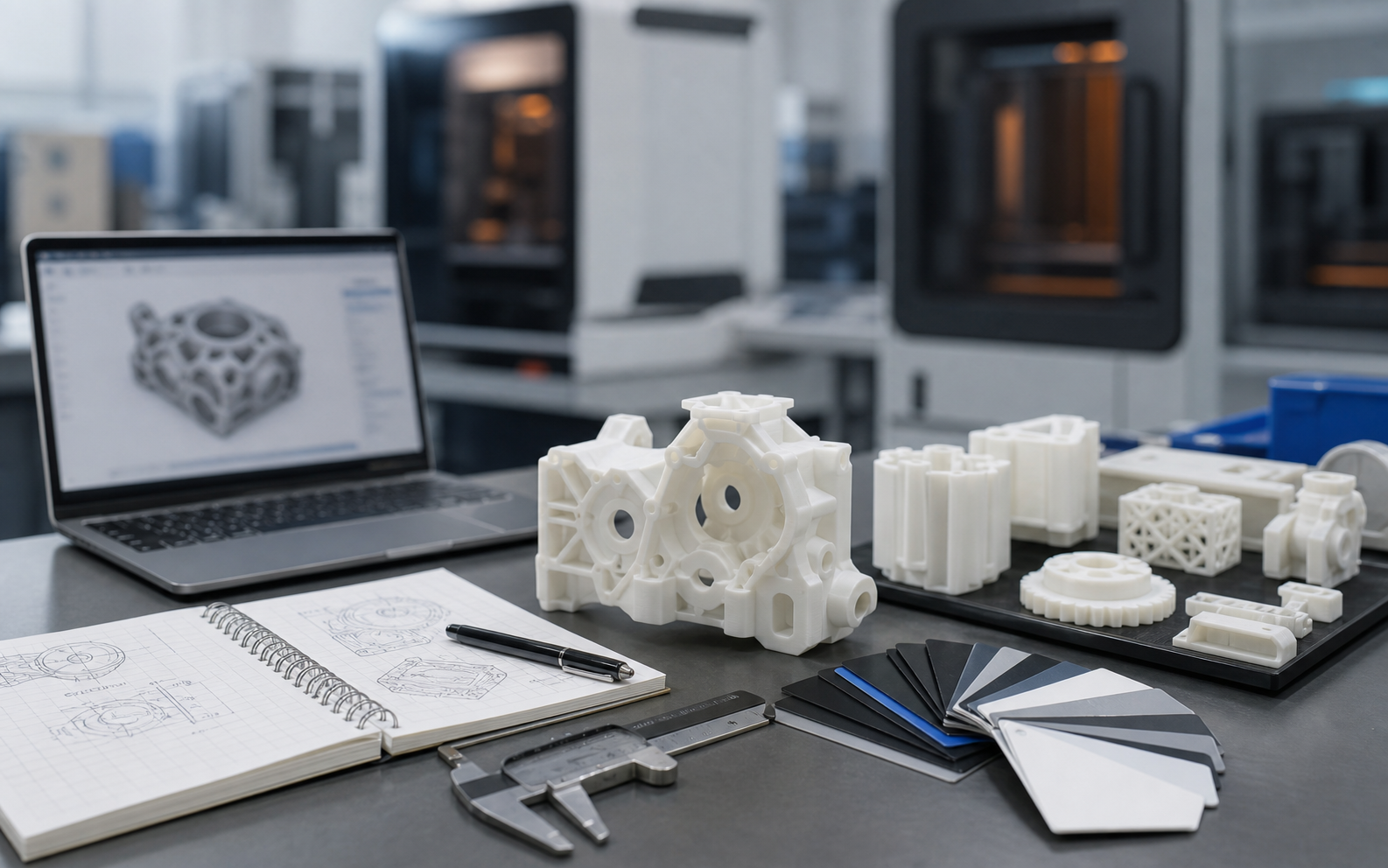
3D printing is reshaping the consumer electronics industry through custom enclosures, functional internal structures, rapid prototyping, and supply chain optimization. From smartphone shells and wearable accessories to drone frames, additive manufacturing enables faster development, lower-cost small-batch production, and highly personalized products. According to an IDC 2026 report, global investment in 3D printing across consumer electronics has grown from $850 million in 2020 to $4.2 billion in 2026, reflecting a CAGR of 38%.
Innovative Applications of 3D Printing in the Consumer Electronics Industry: From Custom Enclosures to Internal Structure Optimization
# Innovative Applications of 3D Printing in the Consumer Electronics Industry: From Custom Enclosures to Internal Structure Optimization ## Introduction: The 3D Printing Revolution in Consumer Electronics The consumer electronics industry is one of the most dynamic manufacturing sectors in the world. Short product lifecycles, rapid model refreshes, and strong demand for personalization make it a natural fit for 3D printing. From smartphone enclosures to headphone accessories, from smartwatch bands to drone frames, 3D printing is profoundly changing the design, manufacturing, and business models of consumer electronics. According to an IDC 2026 report, global investment in 3D printing for the consumer electronics industry has grown from $850 million in 2020 to $4.2 billion in 2026, representing a compound annual growth rate of 38%. Behind this growth lies the unique value of 3D printing in rapid prototyping, low-volume customization, complex structure manufacturing, and supply chain optimization. Compared with traditional manufacturing processes such as injection molding, CNC machining, and stamping, 3D printing offers significant advantages in consumer electronics production: it enables complex geometries without molds, supports personalization, shortens product development cycles by 60-80%, and reduces small-batch production costs by 40-60%. However, 3D printing also faces challenges such as material limitations, surface quality, production efficiency, and certification standards. How to fully leverage the advantages of 3D printing while overcoming its limitations is a key issue for consumer electronics companies. ## Innovative Design for Enclosures and Structural Parts The enclosure of a consumer electronics product not only protects internal components but also serves as an important carrier of brand identity and user experience. 3D printing brings unprecedented design freedom to enclosures. **Complex Curves and Organic Forms** 3D printing can produce complex curved surfaces that are difficult to manufacture using traditional methods: - Biomimetic design: lightweight structures inspired by natural forms such as shells and honeycombs - Parametric textures: functional surfaces generated according to acoustic, thermal, or aesthetic requirements - Variable wall thickness: dynamically adjusted wall thickness based on structural strength needs - Internal reinforcement: internal ribs and honeycomb structures designed to improve stiffness-to-weight ratio **Personalized Custom Enclosures** 3D printing makes it possible for every product to be different: - Custom engraving: user names, patterns, QR codes, and more - Size matching: custom-fit earphones and watch bands based on user-provided 3D scan data - Color and material options: multi-material printing for soft-hard combinations and color gradients - Modular design: user-replaceable modular components **EMI Shielding and Thermal Optimization** Electronic product enclosures must balance electromagnetic shielding and heat dissipation: - Conductive materials: conductive PLA, copper-filled nylon, and similar materials - Heat-dissipation fins: integrated printed cooling structures with no assembly required - Internal air channels: designed airflow paths to optimize convection - Thermal management structures: embedded phase-change materials and heat-pipe channel designs **Waterproof and Dustproof Design** Consumer electronics must meet IP67/IP68 protection levels: - Seal groove design: precisely designed O-ring grooves to ensure sealing performance - Ultrasonic welding ribs: energy directors designed for ultrasonic welding - Snap-fit sealing: integrated snap-fit and gasket structures - Breathable membrane mounts: fixtures for waterproof and breathable membranes ## Internal Structures and Functional Integration 3D printing can do more than manufacture enclosures; it can also optimize internal structural design and enable functional integration. **Antenna Design and Integration** 3D printing can directly integrate antennas into the enclosure: - Conductive ink printing: conductive antenna patterns printed on the inner walls of enclosures - Structural antennas: antennas designed as part of the structural component, such as a phone mid-frame - Multi-material printing: conductive material used in antenna areas and insulating material elsewhere - Optimized radiation direction: antenna layouts optimized for handheld use positions **Battery Compartments and Retention Structures** The battery is a core component of electronic products, and its retention structure is critical: - Elastic clips: secure battery fixation without screws - Cooling channels: thermal pathways designed around the battery compartment - Safety isolation: fire-resistant structures that isolate the battery from the PCB - Quick replacement: structures that allow users to replace batteries themselves **PCB Mounting and Cable Routing** 3D printing enables complex PCB retention structures: - Snap-fit mounting: screwless PCB retention solutions - Wire channels: integrated cable routing channels to prevent clutter - Connector positioning: precise placement of connector interfaces - Strain relief: cable strain-relief structures to prevent damage from pulling **Sensor Windows and Optical Design** Cameras and sensors require precise window design: - Optical-grade transparent materials: SLA transparent resin used to print lens windows - Filter retention: fixtures for filters and infrared windows - Sensor protection: protective structures around sensors - Optical calibration: calibration structures for camera modules ## Material Selection and Application Scenarios Consumer electronics place extremely strict demands on materials: flame retardancy, environmental compliance, strength, appearance, and tactile feel all matter. Material selection for 3D printing must consider all of these factors. **Enclosure Material Selection** - PLA: eco-friendly and biodegradable, suitable for concept prototypes but not heat-resistant (
Next Step Is this close to what you need?

Submit a model, drawing, image or written notes. Engineers will review material, process, finishing and delivery based on actual use.

Submit Request Ask First