
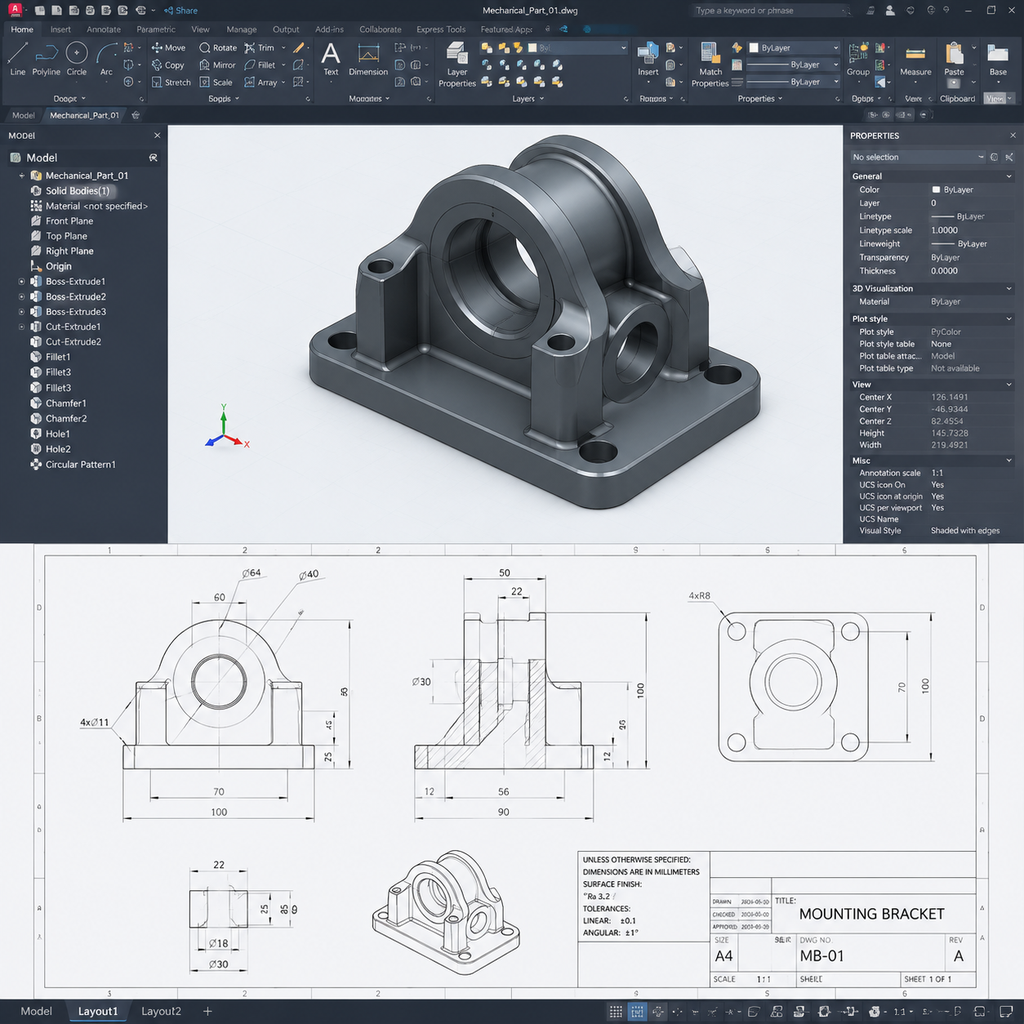
Definition and Challenges of Complex Structural Parts
Complex structural parts refer to parts or assemblies with complex geometric shapes, high functional requirements, and difficulty in manufacturing. Such parts usually have the following characteristics: complex surface modeling, such as streamlined appearance, bionic structure, etc. Internal complex structures, such as internal flow channels, inner cavities, inserts, etc. Multi-material integration, such as soft and hard combination, functional gradient, etc. High precision requirements, such as fit accuracy, surface quality, etc. High strength or special performance requirements, such as load-bearing capacity, temperature resistance, sealing, etc. The design and manufacturing of complex structural parts faces many challenges, which requires the engineering team to have multi-disciplinary knowledge such as materials, processes, and structural analysis to help customers realize their design intentions through systematic engineering support services.
Design optimization consulting services
Engineering support services run through the entire process from design to delivery. During the design stage, engineers can provide the following optimization suggestions: printability optimization, identifying design features that may cause printing failure, and proposing modification suggestions. Topology optimization optimizes material distribution based on load analysis to achieve lightweight design. Support optimization, adjust the suspension angle and structure, reduce the use of support materials and the difficulty of post-processing. Functional integration combines multiple parts into one piece for printing, reducing assembly links. Process-oriented design adjusts design parameters according to the characteristics of the selected process, such as minimum wall thickness, draft angle, etc. Post-processing is reserved to reserve machining allowances and process benchmarks for machining and assembly. Design optimization requires full communication with customers to strike a balance between performance, appearance, cost, and cycle.
Process plan formulation
The formulation of process plans for complex structural parts requires comprehensive consideration of multiple factors. Process selection, compare the applicability of FDM, SLA, SLS, SLM and other processes, and select the most appropriate process or process combination. Material selection, recommend materials based on part performance requirements, and conduct material testing and verification when necessary. Printing parameter optimization, adjust printing parameters according to complex structural characteristics, such as special support strategy, temperature control, etc. Part-part strategy: For oversized or complex structures, consider splitting into multiple parts and printing them separately before assembling them. Printing direction optimization, select the optimal printing direction to reduce support, improve accuracy, and shorten time. Post-processing process, formulate the sequence and methods of post-processing processes such as support removal, surface treatment, machining, and coating. The process plan needs to be documented and implemented after confirmation with the customer.
Quality Assurance and Verification
Quality assurance of complex structural parts requires the establishment of a complete inspection and verification system. Process inspection monitors key parameters during the printing process to detect problems in a timely manner. First article inspection: conduct a comprehensive inspection on the first article to verify the effectiveness of the process plan. Dimensional inspection, using a CMM or optical scanner to measure critical dimensions. Surface inspection, check surface quality, support marks, defects, etc. Internal inspection, use industrial CT to detect internal pores, cracks and other defects. Mechanical testing, and mechanical performance testing verification if necessary. Functional verification, simulating actual working conditions for functional testing. Quality data needs to be recorded and archived to provide a basis for subsequent improvements.
Project delivery and knowledge transfer
Project delivery is not only the delivery of parts, but also the transfer of relevant technical knowledge. Deliverables include: finished parts, inspected and qualified printouts. Technical reports, including process plans, printing parameters, inspection data, etc. Improvement suggestions, suggestions for design optimization based on project experience. Follow-up services, such as small batch production, spare parts supply and other service plans. Knowledge transfer helps customers improve their design capabilities and establish long-term cooperative relationships. Complex structural parts projects often require multiple iterations. Establishing a good communication mechanism and document management can improve iteration efficiency. It is recommended to establish a project summary meeting system, review project experience, and continuously improve service levels.
Submit a model, drawing, image or written notes. Engineers will review material, process, finishing and delivery based on actual use.