Introduction: Optimizing 3D Printing Energy Consumption Is Shifting from Experience-Based Management to Data-Driven Operations
3D printing is often regarded as a manufacturing method that reduces material waste, but that does not mean energy use can be ignored. Industrial machines consume power during preheating, long print runs, temperature-controlled environments, powder cooling, UV curing, sandblasting, heat treatment, and compressed air operation.
1. Establish Quantifiable Business Scenarios and Boundary Conditions
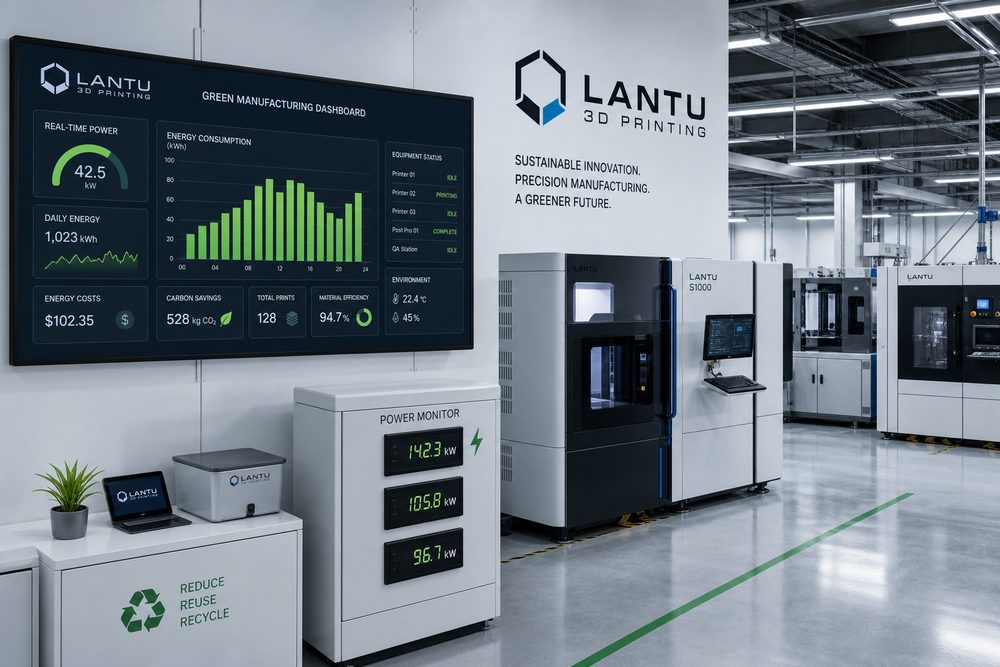
The first step is measurement. Companies should track energy consumption by machine, material, process, and order, rather than looking only at monthly electricity bills. Smart meters or machine data acquisition systems can be used to record standby power, preheat power, print power, cooling time, and the energy use of post-processing equipment.
2. Break Down Risks and Delivery Responsibilities by Process Node
The second step is to reduce ineffective energy use through scheduling. Combining orders with the same material, increasing build density, reducing idle-bed printing, and arranging long jobs for nighttime can all improve output per unit of energy. However, batch consolidation should not blindly pursue maximum packing density, as excessive density may affect heat dissipation and print quality.
3. Embed Parameters, Data, and Acceptance Criteria into the System
The third step is process and material selection. Some parts do not require the highest precision or the longest print time. Adjusting layer height, part orientation, and support strategy appropriately can significantly reduce print duration. Lightweight design and topology optimization can also reduce material usage and post-processing workload.
4. Continuous Optimization: From Single-Order Reviews to Organizational Capability Building
At the management level, businesses should establish key metrics. It is recommended to track energy consumption per order, energy use per unit weight, machine standby duration, energy loss from failed prints, and the share of post-processing energy consumption. Equipment maintenance also affects energy performance; clogged filters or unstable temperature control can increase power consumption.
Conclusion
Optimizing energy consumption is not simply about saving electricity; it is about improving overall manufacturing system efficiency. By combining measurement, scheduling, process selection, equipment maintenance, and metric management, 3D printing companies can reduce costs, cut waste, and strengthen their green manufacturing capabilities at the same time.
Submit a model, drawing, image or written notes. Engineers will review material, process, finishing and delivery based on actual use.