
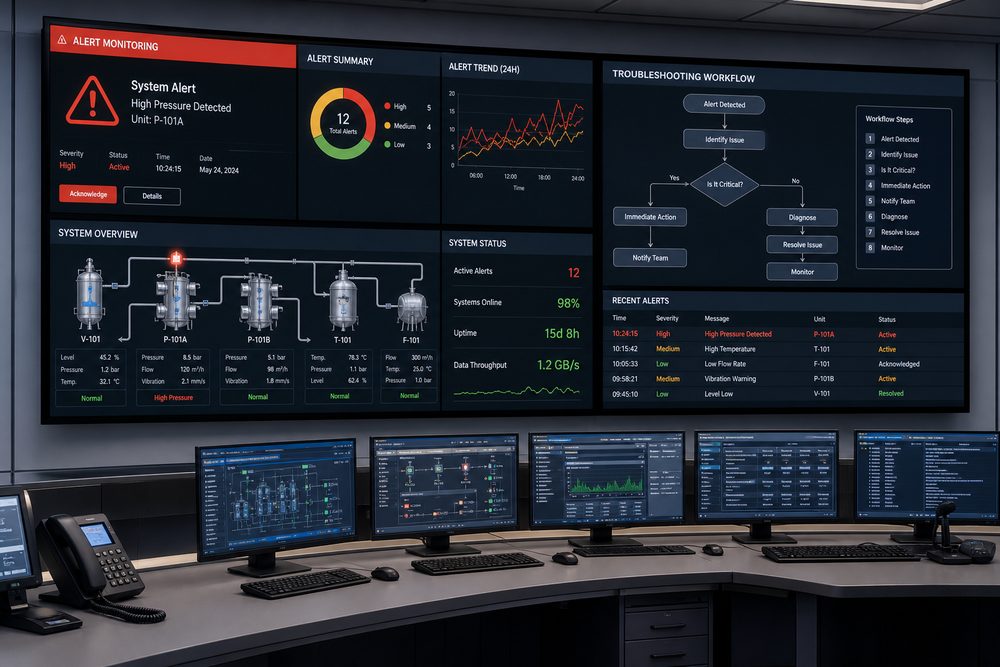
Introduction: The Importance of Production Exception Management
During the 3D printing production process, unexpected situations such as equipment failures, material issues, and process abnormalities are unavoidable. Establishing a comprehensive exception handling mechanism can minimize the impact of abnormalities, ensuring production continuity and on-time delivery rates.
1. Classification of Production Exceptions
1.1 Equipment Exceptions
Equipment failures are a major factor affecting production:
- Print head clogging/damage
- Laser power degradation
- Motion system failure
- Temperature control system abnormalities
- Material feeding system stalling
1.2 Material Exceptions
Material issues directly affect print quality:
- Material moisture absorption and deterioration
- Batch performance fluctuations
- Material supply shortages
- Material compatibility issues
1.3 Process Exceptions
Exceptions caused by improper process parameters:
- Incorrect printing parameters
- Unreasonable support design
- Abnormal slicing files
- Print path conflicts
1.4 Quality Exceptions
Quality issues during the printing process:
- Dimensional out-of-tolerance
- Surface defects
- Interlayer cracking
- Deformation and warping
2. Exception Early Warning Recognition System
2.1 Real-Time Monitoring Indicators
Establish key monitoring parameters:
| Monitoring Indicator | Warning Threshold | Detection Frequency |
|---|---|---|
| Print head temperature | Deviation of ±10 degrees from the set value | Real-time |
| Chamber temperature | Deviation of ±5 degrees from the set value | Real-time |
| Print speed | 20% below the set value | Real-time |
| Material remaining | Below the estimated consumption | Hourly |
| Equipment vibration | Exceeds the baseline by 50% | Real-time |
2.2 Early Warning Level Classification
Establish a tiered warning mechanism:
- Level 1 Warning (Red): Requires immediate shutdown for handling; affects production safety
- Level 2 Warning (Orange): Must be handled within 4 hours; affects product quality
- Level 3 Warning (Yellow): Can be handled within the current shift; does not affect delivery
2.3 Warning Notification Mechanism
Establish a multi-channel notification system:
- Equipment screen alarm prompt
- SMS/WeChat notifications to the responsible person
- Audible and visual alarms in the central control room
- Automatic recording of exception logs
3. Tiered Response Process
3.1 Level 1 Exception Response
Immediate response process:
- The operator immediately shuts down the machine and initiates safety measures
- Notify the equipment engineer to come to the site
- Conduct a preliminary assessment of the cause of the failure
- Develop a repair plan
- Perform functional testing after repair
- Resume production and record the exception report
3.2 Level 2 Exception Response
Response process within 4 hours:
- The operator records the exception phenomenon
- Notify relevant technical support
- Remote diagnosis or on-site support
- Adjust process parameters or replace materials
- Verify the effectiveness of the solution
- Continue production and update the exception log
3.3 Level 3 Exception Response
Handling process within the shift:
- The operator handles it independently or records it
- Adjust parameters or operating methods
- Monitor subsequent production status
- Explain the exception during shift handover
4. Root Cause Analysis Methods
4.1 5 Why Analysis
Find the root cause through continuous questioning:
- What is the problem?
- Why did it happen?
- Why does this cause exist?
- Keep asking until the root cause is found
4.2 Fishbone Diagram Analysis
Systematically analyze the factors affecting the exception:
- People: operating skills, insufficient training
- Machine: equipment aging, improper maintenance
- Material: material quality, storage conditions
- Method: process parameters, operating procedures
- Environment: temperature and humidity, cleanliness
4.3 Data-Driven Analysis
Use historical data to identify patterns:
- Abnormality frequency
Submit a model, drawing, image or written notes. Engineers will review material, process, finishing and delivery based on actual use.