Introduction: Knowledge Management is the Core Competitiveness of 3D Printing Service Enterprises
In knowledge-intensive industries, the core competitiveness of enterprises increasingly depends on their capabilities to accumulate, manage, and apply knowledge assets. As typical knowledge-intensive enterprises, the core value creation processes of 3D printing service enterprises—ranging from design optimization, process selection, and parameter tuning to post-processing decision-making—heavily rely on professional knowledge and experience. However, many 3D printing enterprises face challenges such as knowledge loss, failure to pass down experience, and repetitive problem-solving efforts, resulting in low efficiency, inconsistent quality, and prolonged training cycles for new employees. Establishing a systematic knowledge management system has become a critical measure for 3D printing service enterprises to enhance their core competitiveness and achieve sustainable development.
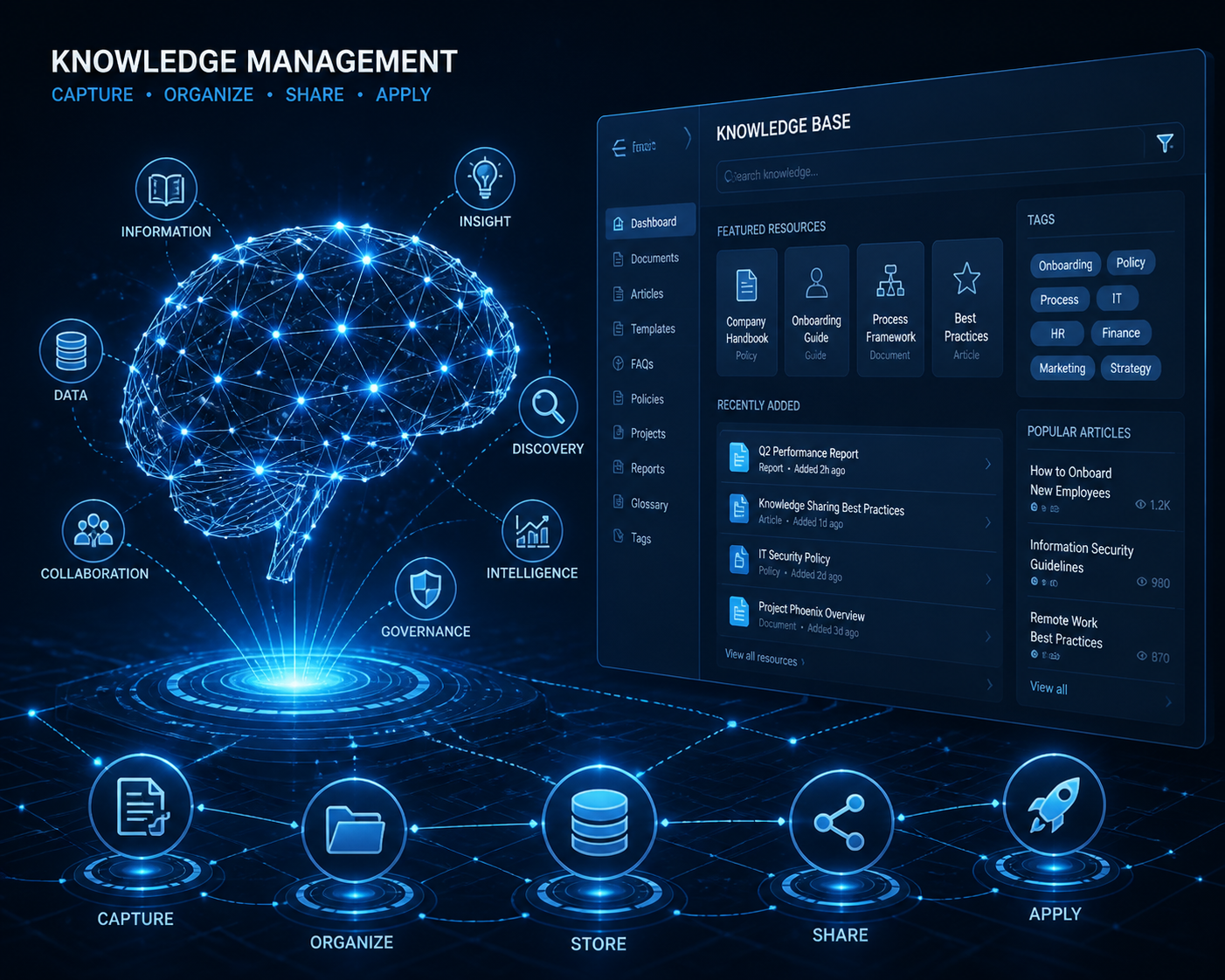
Knowledge Management (KM) is a management activity that identifies, acquires, stores, shares, and applies enterprise knowledge assets through systematic methods. For 3D printing service enterprises, knowledge assets include: technical knowledge (material properties, process parameters, equipment operation), project experience (successful cases, lessons learned, customer feedback), process specifications (operating SOPs, quality inspection standards, safety regulations), and market knowledge (customer needs, industry trends, competitors). This article will systematically introduce how 3D printing service enterprises can establish a knowledge management system, from knowledge identification to intelligent application, providing a practical implementation guide for enterprises.
Knowledge Identification and Classification: Constructing a Knowledge Map
The first step in knowledge management is to identify and classify the knowledge assets owned by the enterprise. Based on the nature of knowledge, it can be categorized into Explicit Knowledge and Tacit Knowledge. Explicit knowledge is knowledge that can be documented and codified, such as operation manuals, process parameter tables, design guidelines, and training videos. Tacit knowledge consists of experience, intuition, and skills that exist in the minds of employees, such as the judgment that "the material state feels wrong," experience in handling exceptions, and communication skills with customers. One of the core challenges of knowledge management is transforming tacit knowledge into explicit knowledge to achieve knowledge inheritance and sharing.
Knowledge classification in 3D printing enterprises can adopt a multi-dimensional framework. Classification by knowledge domain: material knowledge (characteristics of different materials, applicable scenarios, storage requirements), equipment knowledge (equipment operation, maintenance, troubleshooting), process knowledge (slicing parameters, support design, post-processing methods), design knowledge (DFAM principles, common defects, optimization methods), quality knowledge (defect identification, inspection methods, improvement measures), customer knowledge (customer needs, project experience, communication skills). Classification by knowledge form: document type (operation manuals, technical documents, design schemes), data type (process parameter libraries, material property databases, failure case libraries), process type (workflows, approval processes, emergency plans), experience type (expert experience, project reviews, lessons learned).
Building a Knowledge Map is a visualization tool for knowledge classification. A knowledge map presents a panoramic view of an enterprise's knowledge assets, including knowledge categories, knowledge locations (where it is stored), knowledge owners (who owns or manages it), and knowledge relationships (the relationships between knowledge). Knowledge maps can help new employees quickly understand the enterprise's knowledge system, assist existing employees in finding the required knowledge resources, and help managers identify knowledge gaps and redundancies. It is recommended that enterprises use mind mapping or knowledge graph tools (such as XMind, MindManager, Neo4j) to build dynamically updated knowledge maps to serve as navigation tools for the knowledge management system.
Knowledge Acquisition and Accumulation: From Experience to Assets
Knowledge acquisition is the process of collecting knowledge scattered throughout an enterprise. For explicit knowledge, this is primarily achieved through documentation: establishing documentation standards to require employees to document workflows, operational experiences, and project summaries; creating document templates to lower the barrier to documentation; and setting up document review mechanisms to ensure document quality. For tacit knowledge, acquisition is more challenging and requires methods such as interviews, observations, and reviews. Expert interviews are an effective method for acquiring tacit knowledge; through structured interviews, experts are guided to articulate their experiences, judgments, and decision-making logic, which are then recorded.
Project retrospectives are an important mechanism for consolidating project experience. Upon completion of each project, a retrospective meeting should be organized to review the project objectives, execution process, issues encountered, solutions, and lessons learned. The retrospective should adopt the principle of "blameless reflection," encouraging candid sharing of problems and mistakes to avoid information concealment caused by blame. The results of the retrospective should be documented, and reusable knowledge points should be distilled (e.g., "Parts with a wall thickness of less than 1mm are prone to deformation; it is recommended to add reinforcement ribs"). A project case library should be established to include both successful and failed cases, providing references for future projects.
The accumulation of knowledge on troubleshooting and problem-solving is of paramount importance. Various faults can be encountered during the 3D printing process (such as layer shifting, warping, stringing, and support failure), and the resolution of each fault represents a valuable knowledge asset. It is advisable to establish a "fault knowledge base" to document fault phenomena, potential causes, troubleshooting steps, and solutions. Utilize the "5 Whys analysis method" to deeply investigate the root causes of faults, avoiding superficial fixes. Encourage employees to consult the knowledge base first when facing issues to reduce repetitive labor; once a problem is resolved, the knowledge base should be updated promptly to form a closed loop of "problem-solution-accumulation." Some enterprises also compile "fault collections," turning common faults into manuals or videos for training new employees.
Knowledge Storage and Organization: Building a Knowledge Base System
Knowledge storage requires the selection of an appropriate Knowledge Management System (KMS). For small and medium-sized 3D printing enterprises, it is advisable to start with a simple file server combined with a directory structure, gradually transitioning to a professional knowledge management platform. A Knowledge Management System should possess the following core functions: knowledge storage (supporting multiple formats: documents, images, videos, data sheets), knowledge retrieval (full-text search, tag search, category browsing), knowledge version management (tracking knowledge update history), knowledge permission management (different roles accessing different knowledge), and knowledge collaboration (comments, ratings, collaborative editing).
Knowledge organization is key to improving knowledge usability. Knowledge is organized using a combination of taxonomy and tagging. Taxonomy establishes a hierarchical structure of knowledge (e.g., Material Knowledge > Metal Powder > Titanium Alloy > Process Parameters), suitable for organizing structured knowledge; tagging adds multi-dimensional tags to knowledge (e.g., #SLM #TitaniumAlloy #Warping #Solution), suitable for cross-category knowledge association. Knowledge naming conventions are also important; adopting unified naming rules (e.g., "Material_Process_Problem_Solution") can improve knowledge discoverability. Establish knowledge indexes and catalogs, and update them regularly to ensure the orderliness of the knowledge base.
Cloud storage and collaboration platforms are essential tools for modern knowledge management. Using enterprise cloud drives (such as Alibaba Cloud Drive, Tencent Weiyun, and OneDrive) enables centralized storage and multi-device synchronization of knowledge; using collaboration platforms (such as Notion, Lark Docs, and Tencent Docs) enables real-time collaboration and version management of knowledge; using professional knowledge base software (such as Confluence, MediaWiki, and Yuque) facilitates the construction of structured enterprise knowledge bases. When selecting a knowledge management system, consideration should be given to usability (employees are willing to use it), scalability (supporting future growth), and integration (integrating with existing systems). The construction of a knowledge base is a continuous process that requires regular maintenance, updates, and cleanup to prevent the knowledge base from becoming a "garbage dump".
Knowledge Sharing and Dissemination: From Individual to Team
Knowledge sharing is the process of transforming individual knowledge into organizational knowledge. Establishing a knowledge sharing culture is key: encourage employees to share knowledge, incorporate knowledge sharing into performance appraisals, and establish knowledge sharing incentive mechanisms (such as the "Best Knowledge Contribution Award"). Break down departmental barriers to promote cross-departmental knowledge flow. In 3D printing enterprises, the design, production, quality inspection, and customer service departments each possess specialized knowledge; regular cross-departmental exchanges can stimulate innovation and solve problems. It is recommended to establish a "knowledge sharing session" system, organized on a weekly or monthly basis, with one employee sharing professional knowledge or project experience each time.
Various forms of knowledge sharing can meet different needs. Formal training is the most systematic form of sharing, used to impart core knowledge and skills; technical lectures are a flexible form of sharing, where internal experts or external lecturers can be invited to share cutting-edge technologies; case studies are an interactive form of sharing that promotes knowledge understanding and application through the analysis of real-world cases; mentorship is a personalized form of sharing, where senior employees provide one-on-one guidance to new employees. In addition, establishing internal corporate forums or instant messaging groups (such as WeCom, DingTalk groups) to encourage employees to share knowledge and ask questions at any time during their daily work can foster a "micro-sharing" culture.
Knowledge dissemination requires considering the learning characteristics of different employees. For younger employees, short videos and illustrated tutorials may be more effective; for senior employees, in-depth technical documents and case studies may be more popular. Establish a knowledge dissemination matrix to employ different dissemination methods tailored to different audiences. For instance, complex process knowledge can be produced as a series of short videos (5-10 minutes per episode) to facilitate fragmented learning for employees; important operating specifications can be made into illustrated cards posted beside equipment; and typical fault cases can be developed into interactive electronic manuals supporting keyword search and hyperlink navigation. The effectiveness of knowledge dissemination should be evaluated through testing, feedback, and application results, thereby continuously optimizing dissemination methods.
Knowledge Application and Innovation: From Assets to Value
Knowledge application is the ultimate objective of knowledge management. Embedding knowledge into business processes realizes "knowledge empowering business." For example, embedding a DFAM checklist into the design process alerts designers to common design issues; embedding a material-process matching matrix into the process selection workflow supports process decision-making; and embedding links to the fault knowledge base into the troubleshooting process enables rapid identification of solutions. Transforming knowledge into tools (such as parameter calculators and defect identification apps) can further enhance the convenience of knowledge application.
Knowledge innovation is an advanced goal of knowledge management. Through knowledge recombination, intersection, and collision, new knowledge and solutions are generated. Employees are encouraged to integrate knowledge from different fields to solve complex problems. For instance, applying knowledge of metal printing to ceramic printing, or applying knowledge of medical implant design to consumer electronics. Establish an innovation incentive mechanism to reward improvements and inventions derived from knowledge innovation. Knowledge innovation can also be achieved through the introduction of external knowledge: focusing on cutting-edge industry technologies, attending technical conferences, and collaborating with universities and research institutions to bring external knowledge into the enterprise and integrate it with internal knowledge for innovation.
Evaluating the effectiveness of knowledge management is the foundation for continuous improvement. Establish a knowledge management KPI system, including knowledge asset indicators (number of knowledge base documents, knowledge coverage), knowledge activity indicators (frequency of knowledge sharing, training participation rate), knowledge application indicators (knowledge base utilization rate, problem-solving efficiency), and business impact indicators (new employee training cycle, project success rate, customer satisfaction). Regularly evaluate the ROI (Return on Investment) of knowledge management to quantify its value to the business. Knowledge management is a process of continuous improvement that requires regular review, evaluation, and optimization to ensure the knowledge management system consistently supports corporate strategy and business development.
Digitalization and Intelligence: The Future of Knowledge Management
With the advancement of artificial intelligence technology, knowledge management is evolving into intelligent knowledge management. AI can automatically extract knowledge from unstructured data (such as emails, chat logs, and project documents), reducing the workload of manual organization. Natural Language Processing (NLP) technology enables intelligent knowledge retrieval, allowing employees to ask questions in natural language (e.g., "Why does titanium alloy printing warp?"), with the system automatically returning relevant knowledge. Machine learning can analyze knowledge usage patterns and recommend relevant knowledge (similar to recommendation systems), achieving "knowledge finding people" rather than "people finding knowledge."
The Knowledge Graph is an important technology for intelligent knowledge management. By constructing a knowledge graph, scattered knowledge points are connected into a network, revealing the relationships between them. For example, the knowledge point "Titanium alloy SLM printing warping" can be connected to multiple related knowledge points such as "Titanium alloy material properties," "SLM process parameters," "Warping solutions," and "Similar cases." Knowledge graphs support intelligent reasoning; when encountering new problems, the system can infer possible solutions based on the knowledge graph. Knowledge graphs can also be visualized, helping employees understand the overall structure and associations of knowledge.
In the future, knowledge management will be deeply integrated with enterprise digital systems. Integration with ERP systems will embed supply chain knowledge and order knowledge into business processes; integration with MES systems will push production knowledge and equipment knowledge to operators in real-time; and integration with CRM systems will support sales and service with customer knowledge and service knowledge. Knowledge management will also combine with Virtual Reality (VR) and Augmented Reality (AR); through AR glasses, maintenance personnel can view virtual maintenance guides on equipment, and through VR training, new employees can immersively learn complex operations. The future of knowledge management is intelligent, personalized, and contextualized, where knowledge will be automatically delivered to those who need it, in the most appropriate form, at the right time and place.
Conclusion: Knowledge Management is a Long-term Investment for 3D Printing Enterprises
Knowledge management is not a one-time project but a continuous investment. For 3D printing service enterprises, knowledge management can significantly enhance operational efficiency (reducing repetitive work, accelerating problem-solving), ensure quality consistency (standardized operations, knowledge transfer), accelerate talent development (systematic training, rapid onboarding), and promote continuous innovation (knowledge recombination, cross-disciplinary integration). In an increasingly competitive market environment, knowledge management capability will become a core competitive advantage for enterprises.
It is recommended that 3D printing service companies initiate knowledge management implementation from the following aspects: First, secure top management commitment and incorporate knowledge management into the corporate strategy; Second, start small by selecting a specific pain point (such as troubleshooting) for a pilot program; Third, select appropriate tools, prioritizing practicality and ease of use rather than seeking an all-encompassing solution; Fourth, cultivate knowledge management specialists responsible for the construction and maintenance of the knowledge base; Fifth, establish an incentive mechanism to encourage employee participation in knowledge sharing. Through continuous efforts, the enterprise can be transformed into a "learning organization," making knowledge its most valuable asset to drive sustainable growth and innovation. Knowledge management is not merely a management tool but a vital component of corporate culture; it is an essential path for 3D printing companies to achieve maturity and excellence.
Submit a model, drawing, image or written notes. Engineers will review material, process, finishing and delivery based on actual use.