UHMWPE material property advantages
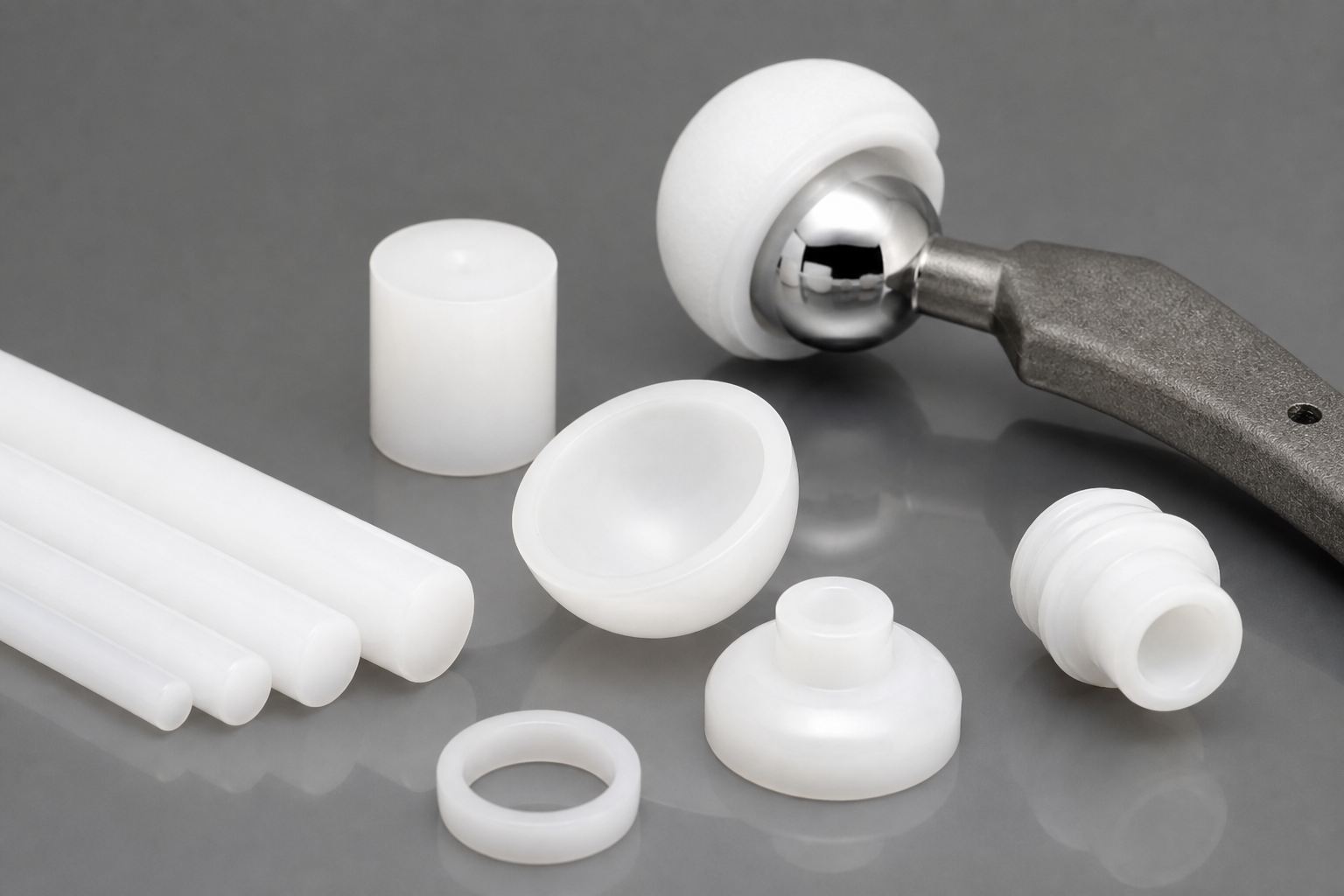
Ultra-high molecular weight polyethylene (UHMWPE) has a molecular weight usually between 3 million and 6 million, and has extremely high wear resistance, low friction coefficient and excellent biocompatibility. In artificial joint applications, the wear rate of UHMWPE is an order of magnitude lower than that of ordinary polyethylene, which greatly extends the service life of the prosthesis. Its molecular chain structure gives the material excellent impact resistance and fatigue resistance, allowing it to withstand repeated loads generated by human movement. These properties make UHMWPE the first choice lining material for load-bearing joint replacements such as hip and knee joints.
Comparison between traditional processing and 3D printing
Traditional UHMWPE prosthesis manufacturing mainly uses compression molding and machining methods. The process is complex, the material utilization rate is low, and it is difficult to achieve personalized customization. 3D printing technology has brought revolutionary changes to the manufacturing of UHMWPE prostheses, which can customize the geometry of the prosthesis based on the patient's anatomical data to achieve precise matching. Selective laser sintering (SLS) and fused deposition modeling (FDM) are two main technical routes, each with its own advantages and disadvantages. SLS can create complex porous structures, which is conducive to bone ingrowth; FDM equipment is low-cost and easy to operate, making it suitable for clinical rapid prototyping.
Optimization of printing process parameters
The extremely high molecular weight of UHMWPE results in extremely high melt viscosity, which brings unique challenges to 3D printing. Parameters such as laser power, scanning speed, and powder preheating temperature need to be precisely controlled to avoid material degradation and defects. Research shows that controlling the powder bed temperature near the melting point (about 135-140°C) can reduce sintering shrinkage and warpage. The choice of layer thickness and scan spacing requires a balance between printing efficiency and surface quality. For the FDM process, the nozzle temperature is usually set at 240-260°C, and the optimized flow channel structure is used to reduce shear stress.
Post-processing and surface modification
Printed UHMWPE parts require appropriate post-processing to improve performance. Hot isostatic pressing can eliminate internal pores and improve density and mechanical strength. Surface polishing reduces roughness and reduces the generation of wear particles after implantation. Advanced surface modification technologies such as vitamin E impregnation and plasma treatment can further improve the antioxidant performance and biological activity of UHMWPE. Cross-linking treatment significantly improves wear resistance, but requires a balance between the degree of cross-linking and material toughness.
Clinical Validation and Regulatory Considerations
Medical applications require strict quality control and regulatory compliance. The ISO 5834 series of standards specifies material requirements and test methods for UHMWPE for surgical implants. Printed parts need to undergo comprehensive mechanical property testing, biocompatibility evaluation and sterilization verification. Long-term clinical follow-up data are critical to demonstrate safety and efficacy. At present, the clinical application of additively manufactured UHMWPE prostheses is still in its early stages, and more systematic research in material technology, design specifications and clinical evaluation is needed to promote the clinical transformation of the technology.
Submit a model, drawing, image or written notes. Engineers will review material, process, finishing and delivery based on actual use.