MIM process overview
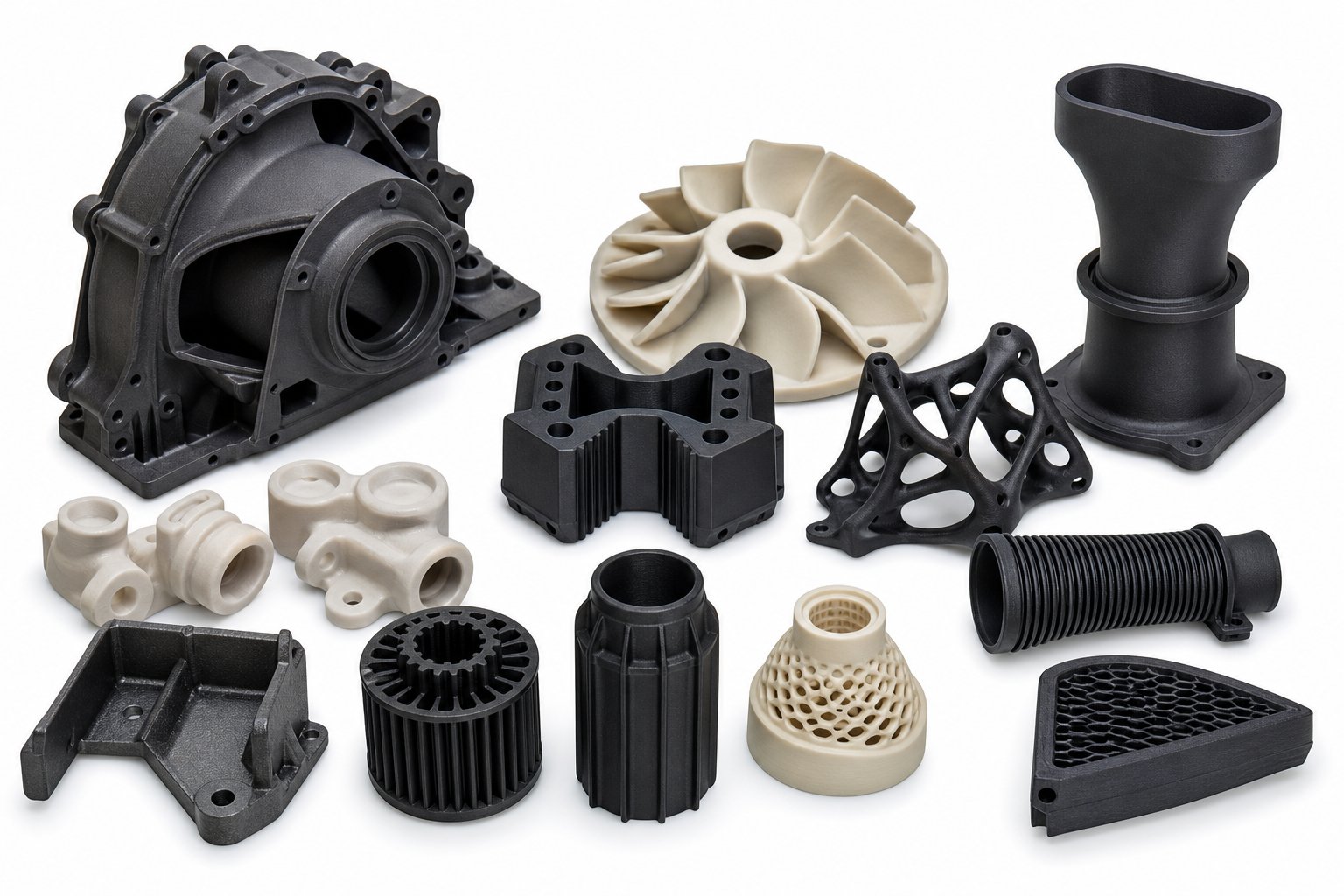
Metal injection molding MIM is an advanced manufacturing process that combines powder metallurgy and plastic injection molding technology. It is particularly suitable for the production of small and complex metal parts. Stainless steel 316L has become one of the most widely used materials in the MIM process due to its excellent corrosion resistance and good mechanical properties. The MIM process includes four main steps: mixing, injection molding, degreasing and sintering. Sintering is the most critical step, which determines the final density, dimensional accuracy and mechanical properties of the part. In-depth study of the sintering behavior of 316L powder is of great significance for optimizing process parameters and improving product quality.
Powder characteristics and sintering mechanism
The characteristics of 316L stainless steel powder have a significant impact on the sintering behavior. The particle size of the powder is usually controlled within the range of 10-30 μm, and the particle size distribution affects the sintering densification speed and final density. The powder morphology is mainly spherical, which is beneficial to fluidity and packing density. During the sintering process, powder particles are densified through diffusion mechanisms, including surface diffusion, grain boundary diffusion and volume diffusion. The sintering temperature is usually in the range of 1300-1400°C, and the holding time is 1-3 hours. Increasing temperature accelerates the diffusion process, but too high a temperature can lead to coarse grains and uncontrolled size. The sintering atmosphere usually uses hydrogen or vacuum. Hydrogen can reduce surface oxides and promote sintering.
Analysis of densification process
The sintering densification process can be divided into three stages: initial stage, middle stage and late stage. In the early stage, the formation and growth of intergranular necks mainly occur, and the density increases from about 60% to about 75%. In the middle stage, a connected pore network is formed, and the density increases from about 75% to about 90%. In the later stage, the pores are closed and gradually eliminated, and the density can reach more than 95%. Densification rate is affected by many factors such as temperature, time, powder properties and initial green density. The densification equation describes the change of density with time and temperature, providing a theoretical basis for process optimization.
Dimensional shrinkage control
Dimensional shrinkage during the sintering process is one of the difficulties in the MIM process. Linear shrinkage is usually 15-20%, and the shrinkage of isotropic materials should be uniform. However, in actual sintering, due to factors such as gravity and friction, shrinkage is anisotropic, resulting in dimensional deviations of parts. Methods to control shrinkage uniformity include: optimizing the degreasing process to reduce residual stress; using support structures to prevent deformation; controlling the heating rate to avoid thermal stress; and accurately predicting shrinkage for mold compensation. Accurate prediction of shrinkage is key to ensuring part dimensional accuracy.
Mechanical properties and quality control
The sintered 316L stainless steel parts should achieve mechanical properties close to those of forged materials. Typical performance indicators include: density greater than 7.6g/cm3, hardness HRB70-80, tensile strength 450-550MPa, and elongation 30-40%. Mechanical properties are affected by factors such as density, grain size, and pore morphology. Quality control includes density testing, dimensional measurements, mechanical property testing and metallographic analysis. Density testing uses Archimedes' method or drainage method. Dimensional measurement uses a three-dimensional coordinate measuring machine or special inspection tool. Mechanical property testing includes tensile testing, hardness testing and impact testing. Metallographic analysis observes pore distribution, grain size and inclusion content. Establish a complete quality management system to ensure that the performance of each batch of products is stable and reliable.
Submit a model, drawing, image or written notes. Engineers will review material, process, finishing and delivery based on actual use.