The core performance advantages of PEEK materials
PEEK (polyetheretherketone) is a high-performance engineering plastic whose comprehensive performance is in a leading position among thermoplastic materials. The tensile strength of PEEK can reach 90-100MPa, the bending strength is 150-170MPa, the heat deformation temperature exceeds 300°C, and it can be used for a long time in an environment of 250°C. PEEK has excellent chemical resistance and can withstand most organic solvents, acids, alkalis, and oils. More importantly, PEEK has passed ISO 10993 biocompatibility certification and can be in long-term contact with human tissue without causing rejection. The elastic modulus of PEEK is close to that of human bone, which can effectively avoid the common stress shielding effect of metal implants.
Special requirements for materials for medical implants
Medical implant materials need to meet strict safety and functional requirements. The first is biocompatibility. Materials and their degradation products must not cause toxicity, sensitization or carcinogenesis to the human body. The second is mechanical adaptation. The strength and elastic modulus of the material need to match the implant site. The third is corrosion resistance, long-term stability in body fluid environments is crucial. The fourth is sterilizability. The material needs to be able to withstand sterilization methods such as high temperature and high pressure, ethylene oxide or gamma rays. The fifth is image compatibility. The material should not produce significant artifacts in X-ray, CT, and MRI examinations. PEEK material performs well in these aspects.
Technical challenges of PEEK 3D printing process
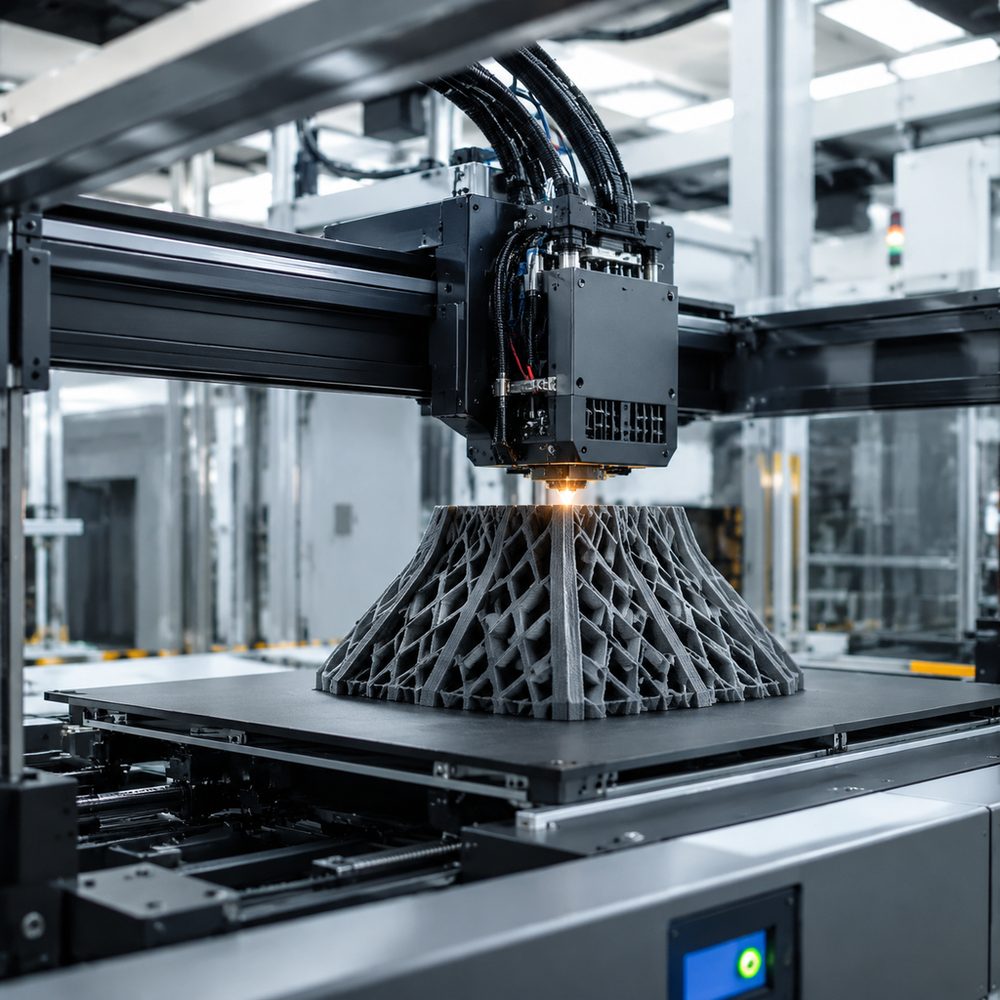
The high melting point of PEEK (approximately 343°C) brings special challenges to 3D printing. The printing temperature needs to be set at 380-420°C, which requires high temperature resistance of the equipment. The printing cavity temperature needs to be maintained at 120-150°C to reduce thermal stress and warpage of the material. The printing platform needs to be preheated to above 150°C to ensure that the first layer is firmly bonded. It is recommended that the printing speed be controlled at 20-40mm/s. Too fast a speed will result in insufficient melting of the material. The cooling method adopts gradient cooling to avoid internal stress concentration caused by rapid cooling. When selecting equipment, you need to pay attention to the nozzle material. Carbide or ruby nozzles are more resistant to high-temperature wear of PEEK.
Key points in the design of customized medical implants
3D printing technology makes customized medical implants possible. The design process starts with CT/MRI medical imaging data and generates patient-specific models through three-dimensional reconstruction. Implant design needs to consider surgical approach, fixation method, load-bearing requirements, and anatomic fit. The porous structure design can promote the ingrowth of bone tissue, and the porosity is recommended to be 60-80%. Surface texture design increases soft tissue adhesion. Mechanical analysis is a key step to verify the safety of the design and needs to simulate the stress distribution under physiological loads.
Key points of quality control and regulatory compliance
The manufacturing of medical implants requires a strict quality management system. Raw materials must provide material certification and biocompatibility test reports. The printing process needs to completely record the process parameters to ensure traceability. Finished product inspection includes dimensional accuracy, surface quality, internal defects and mechanical property testing. Sterilization verification is a necessary step before products are put on the market. The entire production process must comply with ISO 13485 medical device quality management system requirements and GMP specifications.
Submit a model, drawing, image or written notes. Engineers will review material, process, finishing and delivery based on actual use.