Introduction: Project Management Challenges of Multi-Material Combination Printing
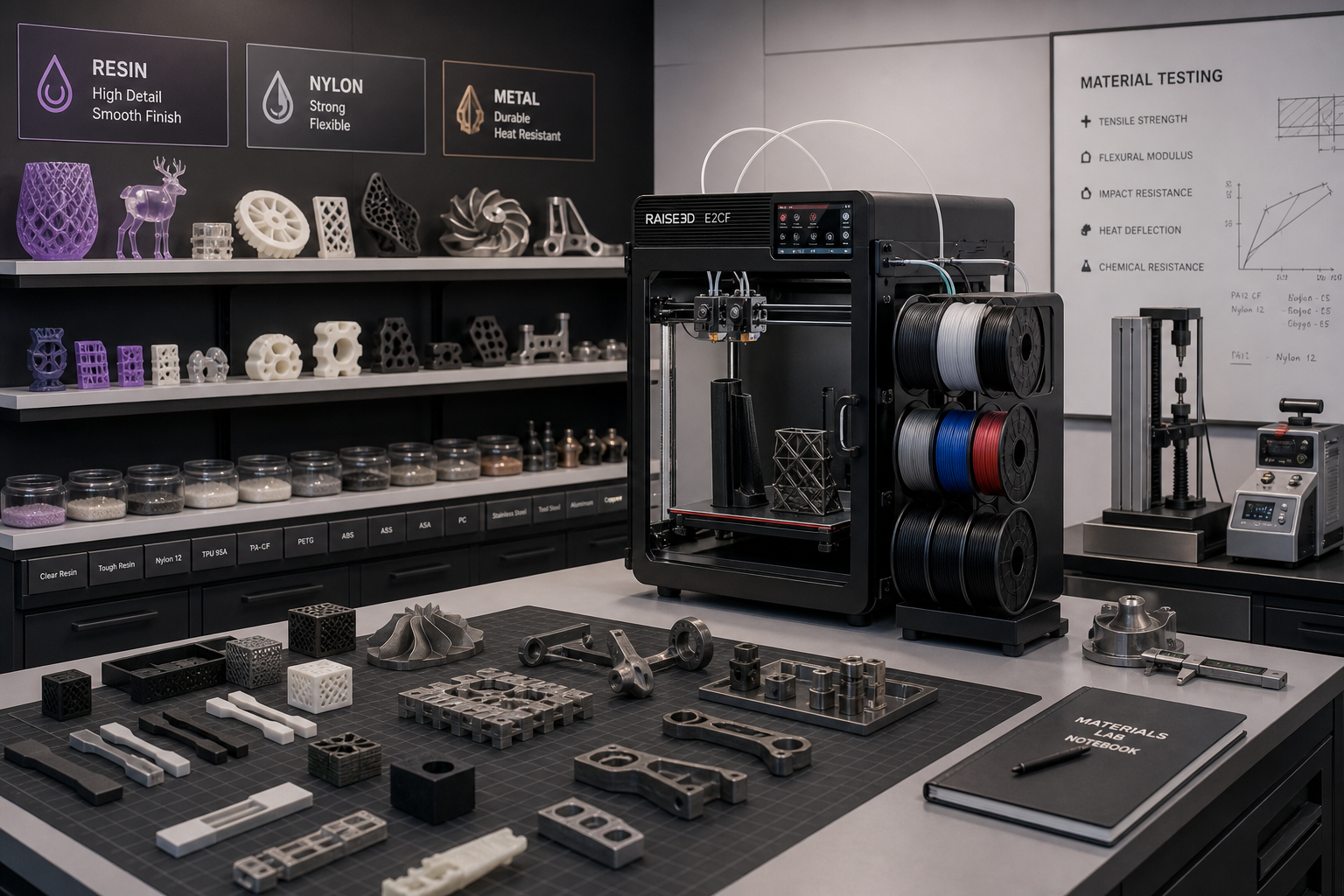
Multi-Material 3D Printing represents a high-end application direction in additive manufacturing. It enables the combination of different materials within the same part to meet complex functional requirements. For example, a single part may need both a rigid structure and a flexible seal, conductive traces and an insulating substrate, or a transparent window and an opaque housing. However, multi-material printing also brings significant project management complexity: material compatibility assessment, process parameter matching, post-processing coordination, and cost control all require careful management. For 3D printing service providers, establishing a systematic multi-material project management process is a prerequisite for delivering high-quality service.
Requirement Decomposition: Identifying the Functional Goals of Material Combinations
The first step in a multi-material project is to fully understand the customer’s functional requirements and break them down into specific material property requirements. Engineers need to clarify: which areas require high strength? Which areas require flexibility? Which areas need high-temperature resistance? Which areas need conductivity? This requirement decomposition should not only consider current functional needs, but also anticipate future operating conditions and potential stress. For example, a medical device may require a biocompatible material for the contact area, while the structural support portion can use a standard medical-grade material. Through systematic requirement decomposition, a solid foundation is laid for subsequent material selection and process design.
Material Compatibility Assessment and Matching Strategies
The compatibility between different materials is the key to successful multi-material printing. Material compatibility includes chemical compatibility (whether reactions occur), thermal compatibility (matching coefficients of thermal expansion), and mechanical compatibility (interfacial bonding strength), among other dimensions. In material matching strategy, the preferred choice is different formulations within the same material family (such as TPU with different hardness levels), followed by verified dissimilar material combinations (such as PA12 + TPU), and only then exploratory new material combinations. For each material combination, a complete process parameter library should be established, including critical parameters such as printing temperature, interlayer bonding time, and support material selection, to ensure reliability and consistency during project execution.
Process Planning: From Printing Strategy to Post-Processing Workflow
Process planning for multi-material printing is far more complex than for single-material printing. First, the printing strategy must be determined: should multi-nozzle synchronous printing be used, or should the part be printed in batches and then assembled? The multi-nozzle approach is efficient but requires more advanced equipment, while batch printing is more flexible but may affect interface quality. Second, support material selection must take into account the characteristics of multiple materials to avoid damaging the surface of any material during support removal. Finally, the post-processing workflow must be tailored for different materials: some materials require UV curing, some require heat treatment, and some require moisture-proof treatment. The completeness of process planning directly determines the final quality and delivery cycle of the project.
Cost Model: Pricing Logic for Multi-Material Projects
The cost structure of multi-material projects is much more complex than that of single-material projects, and therefore requires a refined cost model. Direct costs include material costs (typically with different unit prices for multiple materials), equipment costs (multi-material printing usually occupies high-end equipment), and labor costs (engineers need more time for process planning). Indirect costs include trial-and-error costs (new material combinations require printing validation), inventory costs (multiple materials must be kept in stock), and waste costs (cleaning losses when switching materials). When quoting, a model of "base cost + complexity coefficient" should be used to quantify the complexity of the material combination into a specific cost factor, ensuring both profit margins and customer understanding of the pricing structure.
Quality Control: Inspection Standards for Multi-Material Interfaces
The focus of quality control in multi-material printing is the inspection of material interfaces. Interfacial bonding strength is the most critical metric and must be verified through methods such as tensile testing and shear testing. Defects at the interface, such as bubbles, delamination, and incomplete fusion, must be screened using non-destructive testing methods such as X-ray and ultrasound. In addition, differences in shrinkage rates between materials may create internal stress at the interface, so compensation should be applied during the design stage and dimensional accuracy should be verified during quality inspection. Establishing specialized quality inspection standards for multi-material printing is a necessary measure to ensure delivery quality and is also a hallmark that distinguishes professional service providers from hobbyists.
Delivery Acceptance: Customer Communication and Standard Confirmation
Submit a model, drawing, image or written notes. Engineers will review material, process, finishing and delivery based on actual use.