lantu3D

Efficiency Improvement in 3D Printing Production of Lightweight Automotive Components

This article explores the application of 3D printing technology in the production of lightweight automotive components, analyzing strategies for production efficiency improvement and cost optimization methods.
Efficiency Improvement in 3D Printing Production of Lightweight Automotive Components
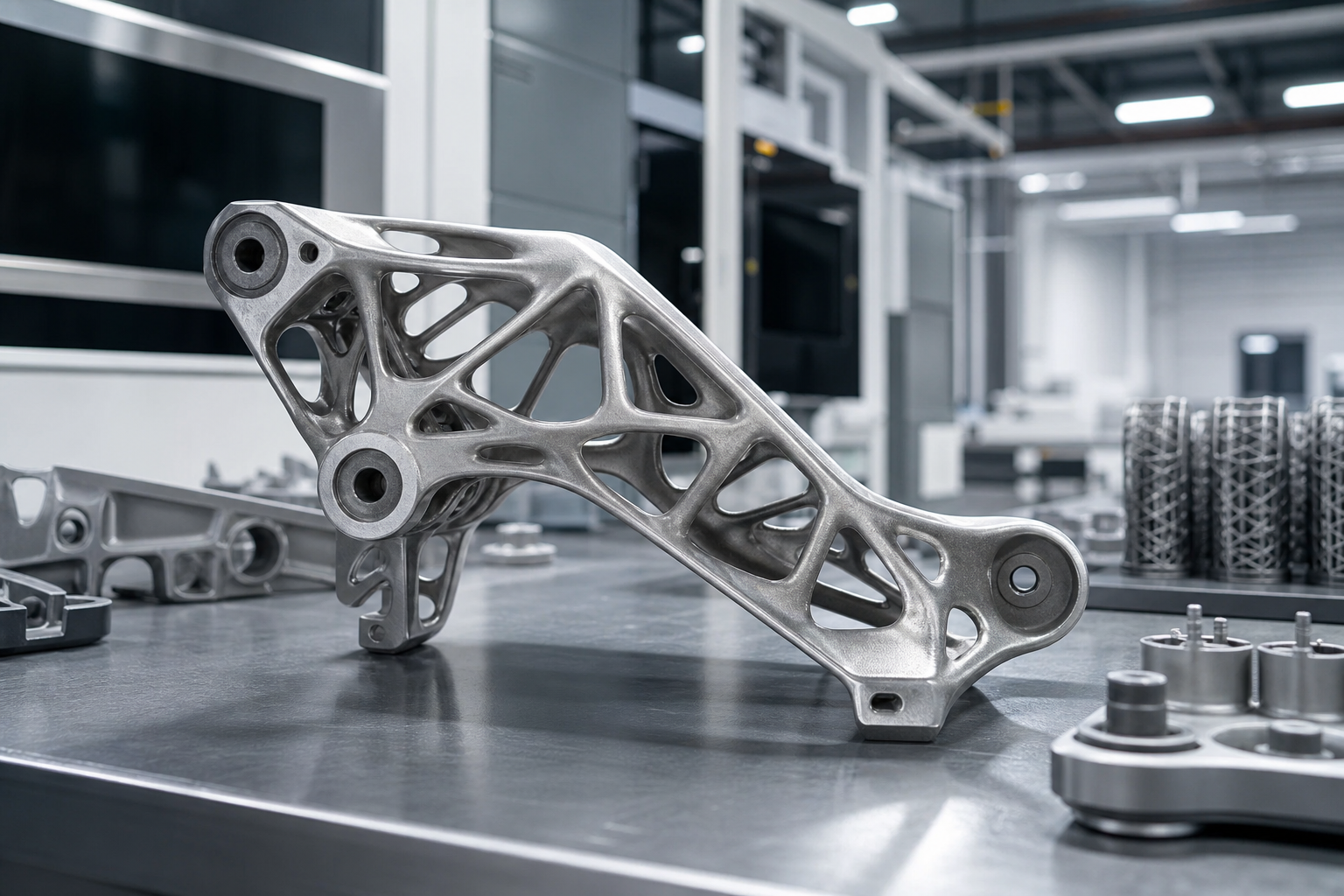
## Revolutionary Breakthrough in Lightweight Design Concepts With the advancement of global carbon neutrality goals, automotive lightweighting has become a core direction of industry development. Traditional casting and forging processes have obvious limitations in the production of complex structural components, while the mature application of 3D printing technology provides new possibilities for lightweight design. Through additive manufacturing processes, engineers can achieve topology-optimized structures that are unattainable with traditional processes, significantly reducing component weight while ensuring strength. ## Technical Bottlenecks and Breakthroughs in Production Efficiency Traditional automotive component production involves multiple stages including mold development, process debugging, and batch production, with the entire cycle lasting several months. After introducing 3D printing technology, enterprises can complete the entire process from design to physical verification within a few days. After a well-known automobile manufacturer adopted laser selective melting technology, the development cycle of intake manifold components was shortened from the traditional 12 weeks to 2 weeks, an efficiency improvement of over 500%. ## Cost Optimization Strategies in Batch Production Although 3D printing technology still has higher unit costs than traditional processes, it has significant advantages in small-batch customized production. Through multi-component combined printing strategies, enterprises can complete dozens of different components in the same printing batch, effectively reducing equipment utilization costs. Data shows that when the batch scale is below 500 pieces, the comprehensive cost of 3D printing already has a competitive advantage. ## Intelligent Upgrade of Quality Control Systems Quality control in the additive manufacturing process relies on real-time monitoring systems. Advanced laser selective melting equipment is equipped with multi-spectral sensors that can detect key parameters such as melt pool temperature and powder spreading quality in real time. Through artificial intelligence algorithms analyzing process data, the system can automatically identify potential defects and adjust process parameters, increasing product qualification rates to over 99.5%. ## Industry Chain Collaboration and Future Development Trends The development of automotive lightweight 3D printing technology is reshaping the industry chain pattern. Material suppliers, equipment manufacturers, software developers, and vehicle enterprises form a closely collaborative innovation ecosystem. In the next five years, with the continuous improvement of printing speed and the decline of material costs, it is expected that more than 30% of automotive structural components will adopt additive manufacturing processes, promoting the entire industry to accelerate transformation towards intelligence and green development.
Next Step Is this close to what you need?

Submit a model, drawing, image or written notes. Engineers will review material, process, finishing and delivery based on actual use.

Submit Request Ask First