
Introduction: The Strategic Value of a Service Mindset
In today’s rapidly developing 3D printing industry, the quality control closed loop of 3D printing services: full-process management from incoming inspection to delivery acceptance has become core knowledge that industry practitioners must master. According to the latest 2026 report from Wohlers Associates, the global 3D printing market is expected to reach $28 billion, with a compound annual growth rate remaining above 24%. Against this backdrop, the capability to deliver professional services has become a key factor in corporate differentiation and competition.
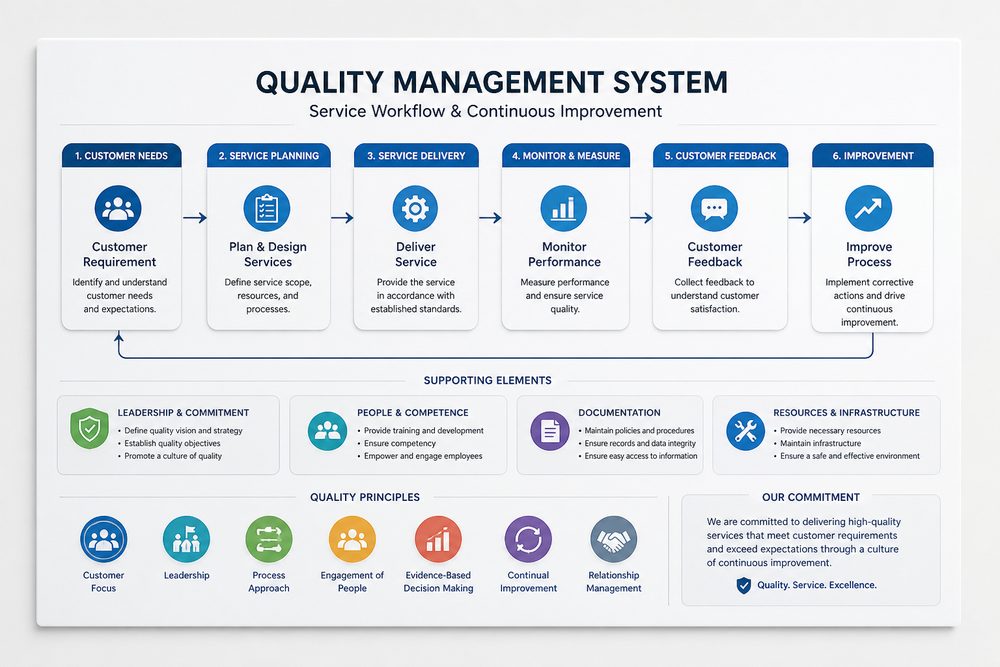
Quality control is the lifeline of 3D printing services. This article systematically introduces a full-process quality management system covering incoming inspection, process monitoring, finished product testing, and delivery acceptance to ensure every product meets customer requirements. From a systems engineering perspective, this article comprehensively analyzes the core elements, implementation paths, and best practices in this field, providing actionable guidance for industry practitioners.
Core Technologies and Implementation Principles
In the service mindset domain, a systematic methodology is the foundation for successful implementation. According to 2026 industry research data, enterprises that adopt scientific management methods achieve 30-50% higher operational efficiency and 40-60% higher customer satisfaction than traditional models.
Key implementation elements include standardized process design, key metric monitoring, continuous improvement mechanisms, and a risk control system. These elements are interconnected and mutually reinforcing, together forming a complete management closed loop. Taking process standardization as an example, by establishing comprehensive operating procedures, human errors can be reduced by more than 80%, significantly improving service consistency.
Implementation Path and Key Steps
Successful service mindset development requires a systematic progression from strategic planning to execution:
Step 1: Current-state assessment and demand analysis. Conduct a comprehensive diagnosis of existing processes to identify bottlenecks and room for improvement. Use data analysis methods to quantify current performance levels and clarify improvement goals. According to McKinsey’s 2026 manufacturing consulting report, systematic demand analysis can reduce project changes by 30-40% and shorten implementation cycles by 15-25%.
Step 2: Solution design and resource preparation. Based on the results of the demand analysis, design a detailed implementation plan. This includes organizational structure adjustments, staff training plans, technology tool selection, and budget preparation. The solution design should fully consider operability and scalability to ensure it can adapt to future business growth.
Step 3: Pilot implementation and effectiveness validation. Select representative projects for pilot testing to verify the feasibility and effectiveness of the plan. Through data collection and analysis, identify potential problems and make timely adjustments. After the pilot succeeds, expand it across the organization to reduce implementation risk.
Industry Best Practices and Case Analysis
In the service mindset domain, many companies have successfully implemented innovative management methods. Taking a leading 3D printing service company as an example, the introduction of a digital management system achieved the following notable results:
Order processing efficiency increased by 60%, with the average time from order receipt to production scheduling reduced from 4 hours to 1.5 hours; customer satisfaction rose from 78% to 95%, mainly thanks to transparent progress tracking and timely communication feedback; operating costs fell by 25% through optimized resource allocation and reduced rework; employee productivity increased by 40%, as standardized processes reduced ineffective communication and repetitive labor.
This case fully demonstrates the tremendous value of scientific management in 3D printing services. Similar practices have also achieved significant results in high-end manufacturing fields such as aerospace, automotive manufacturing, and medical devices.
Challenge Identification and Solutions
Although the importance of the service mindset has been widely recognized, many challenges still arise during actual implementation:
Technical challenges: Issues such as complex system integration, inconsistent data standards, and insufficient automation limit improvements in management efficiency. Solutions include adopting open architectures, establishing data governance standards, and introducing automation tools such as RPA.
Management challenges: Problems such as poor cross-department collaboration, unreasonable performance evaluation, and strong resistance to change affect implementation results. These require building cross-departmental cooperation...
Submit a model, drawing, image or written notes. Engineers will review material, process, finishing and delivery based on actual use.