Introduction: Digitalization Is Not Just Moving Spreadsheets Online
Many 3D printing companies already use cloud drives, spreadsheets, and chat tools to manage orders, but that does not mean digital transformation has been achieved. True digitalization should connect model files, quotations, production scheduling, equipment, quality, inventory, and customer feedback into a data loop, upgrading the service platform from simply “taking and printing jobs” into a smart manufacturing node.
1. File and Version Management Are the Foundation
3D model files are often revised multiple times. If versions become disorganized, it is very easy to end up with incorrect prints, missed changes, and unclear accountability. A unified naming convention, version history, change notes, and access control should be established. For key projects, customer approval records should also be retained to ensure that production uses the approved final version.
2. Quoting and Scheduling Require Structured Data
Quotation information should be broken down into fields such as material, process, volume, quantity, post-processing, inspection, and lead time, rather than being stored only in chat logs. The scheduling system should then be linked to machine capabilities, material inventory, task duration, and post-processing resources. Only when the data structure is clear can automated quoting and intelligent scheduling be implemented further down the line.
3. Connecting Equipment Data Improves Transparency
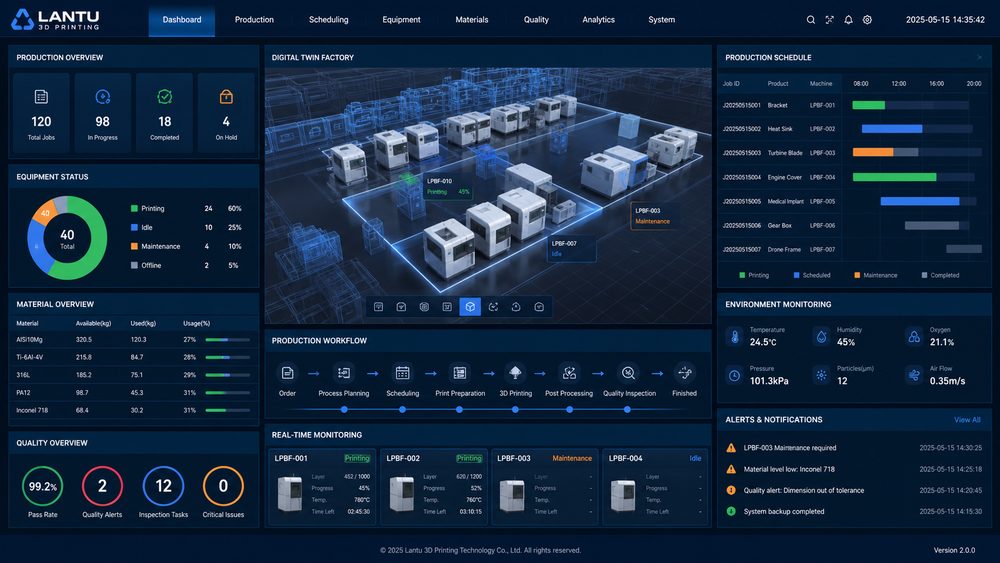
Equipment operating status, task progress, failure alerts, environmental parameters, and maintenance records can help managers assess actual capacity. Even if a full MES cannot be integrated yet, companies can start with logs from key machines, task dashboards, and exception records, gradually building up production data assets.
4. Customer Experience Should Also Be Digitalized
Customers want to know project progress, risks, and delivery time. Online quoting, milestone notifications, file approval, inspection report downloads, and reuse of historical orders can significantly reduce communication costs. The positioning of lantu3D is precisely to connect design, manufacturing, and delivery, giving customers a manageable 3D printing service experience.
Conclusion
Digital transformation in 3D printing is not a one-time system purchase, but a step-by-step upgrade across file versioning, structured quoting, production scheduling, equipment data, and customer collaboration. Companies should prioritize high-frequency pain points first, allowing data to serve delivery efficiency, quality stability, and customer trust.
Submit a model, drawing, image or written notes. Engineers will review material, process, finishing and delivery based on actual use.