Characteristic Analysis and Application Scenario Guide for 3D Printing Flexible Materials TPU/TPE
With the rapid development of 3D printing technology today, material selection has become a key factor in determining printing quality, cost and performance. The characteristics and application scenarios of 3D printing flexible materials TPU/TPE are core knowledge that every engineer and purchasing decision-maker must master.
Material classification and technical principles
3D printing materials can be divided into four categories according to their physical form: powder materials, wire materials, resins and sheets. Powder materials are mainly used in SLS and SLM processes, wire materials are used in FDM processes, and resins are used in SLA/DLP/LCD light curing processes. Different forms of materials correspond to different forming principles, which also determine the performance characteristics of the final part.
From the perspective of chemical composition, 3D printing materials can be divided into three categories: polymers, metals and ceramics. Polymer materials are the most widely used, accounting for more than 80% of the market share; although metal materials are relatively expensive, they are irreplaceable in fields such as aerospace and medical implants; ceramic materials are in a rapid development stage and show great potential in fields such as dentistry and electronic packaging.
Comparison of key performance indicators
When choosing 3D printing materials, you need to focus on the following performance indicators:
Mechanical properties: Tensile strength, flexural modulus, impact toughness and other indicators determine the load-bearing capacity of the part. For example, the tensile strength of standard resin is about 40-60MPa, while engineering grade resin can reach 80-100MPa, which is close to the performance level of injection molded ABS.
Thermal properties: The heat distortion temperature (HDT) and glass transition temperature (Tg) determine the upper limit of the use temperature of the part. The HDT of ordinary resin is usually lower than 50°C, while the high-temperature resistant resin can reach over 200°C, which can meet the requirements of high-temperature processes such as reflow soldering.
Dimensional stability: Water absorption, thermal expansion coefficient and creep properties affect the dimensional accuracy of parts in long-term use. Nylon material has a high water absorption rate (approximately 1.5%), so size compensation needs to be reserved during the design stage.
Application scenarios and selection suggestions
Different materials are suitable for different application scenarios:
Prototype verification: Standard resin or PLA filament is low in cost and suitable for appearance prototypes and functional verification, but is not suitable for long-term use.
Functional testing: Engineering-grade resin, nylon or metal prints can withstand real-world testing to provide reliable performance data.
Small batch production: Metal printing or high-precision resin printing can directly produce final parts, avoiding mold opening costs and shortening the delivery cycle.
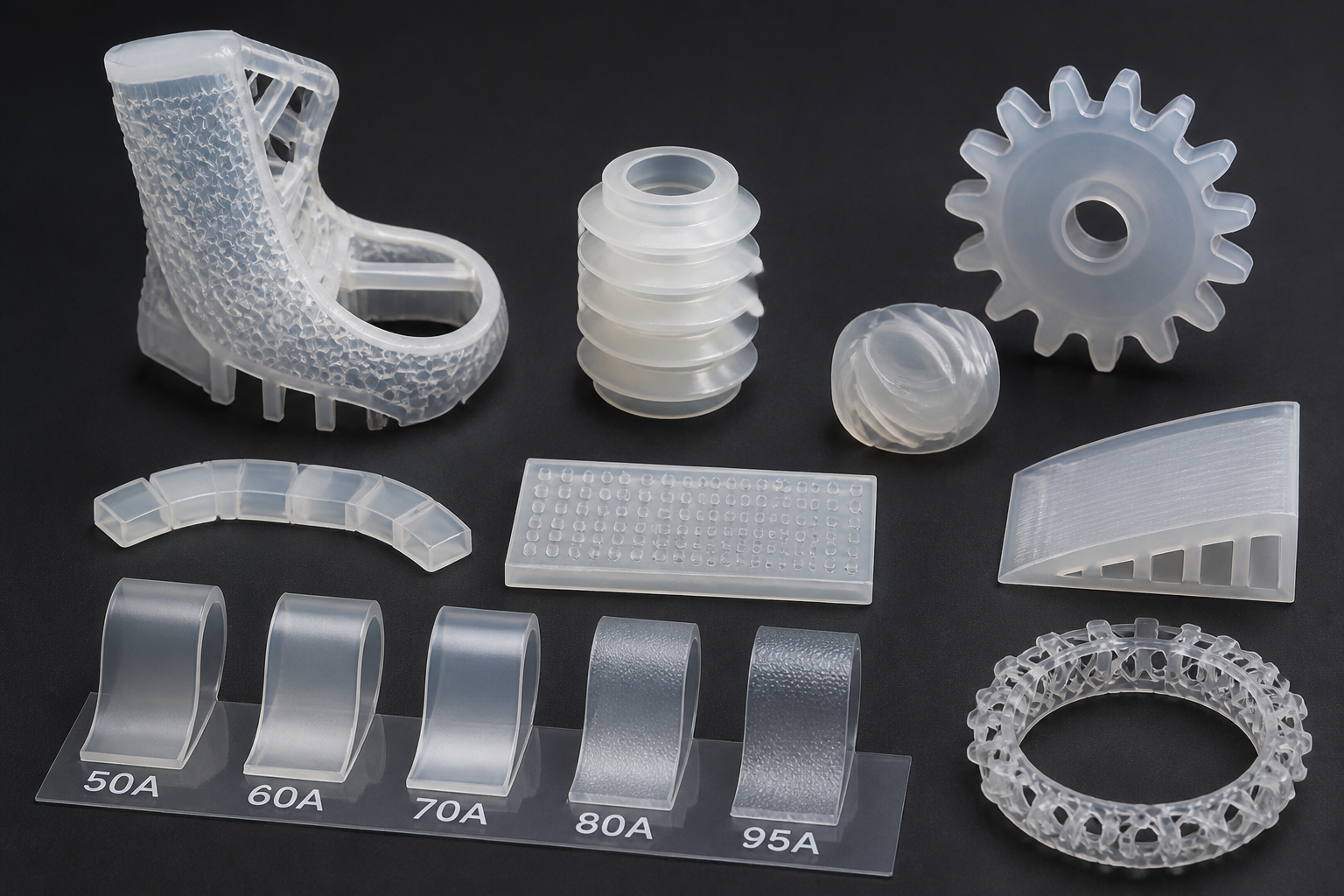
Special environment: Transparent resin is used for lampshades and fluid pipes; flexible resin is used for seals and shock-absorbing pads; ceramic materials are used for high-temperature and corrosion-resistant scenes.
Cost-benefit analysis
Material costs are only part of the total cost. When choosing materials, you also need to consider the following cost factors:
Printing failure rate: Some materials are sensitive to process parameters and have a high failure rate, resulting in a double waste of materials and time. For example, moisture absorption issues with nylon powder can cause printing bubbles and require strict storage and pre-processing.
Post-processing costs: Metal prints require multiple processes such as support removal, heat treatment, and finishing. The post-processing costs may exceed the material cost itself. Resin prints require cleaning, curing and surface treatment.
Lifetime: Although engineering-grade materials are more expensive, their longer lifespan and lower failure rates may lead to better overall economics. In critical application scenarios, choosing high-performance materials is a wise investment.
Material storage and management
3D printing materials have high requirements for storage conditions. Improper storage can lead to material performance degradation or even complete failure. Resin materials should be protected from light and stored at 15-25°C; powder materials need to be sealed against moisture; wire materials should avoid high temperature and high humidity environments. Establishing a material traceability system to record batch numbers, production dates and usage is crucial to quality control.
Future development trends
3D printing materials are developing towards high performance, multi-functionality and sustainability. Nanocomposite materials can significantly improve their mechanical properties and functional properties by adding nanofillers such as carbon nanotubes and graphene; 4D printing materials can change shape under specific stimuli; bio-based and recyclable materials respond to environmental protection needs and reduce carbon footprints. It is expected that more innovative materials will be introduced to the market in the next 3-5 years.
In short, the characteristic analysis and application scenario guidance of 3D printing flexible materials TPU/TPE is a systematic project that requires comprehensive consideration of technical performance, economic benefits and application scenarios. lantu3D has rich experience in material application and can provide customers with professional material selection suggestions and technical support to ensure that every project can achieve optimal printing results.
Submit a model, drawing, image or written notes. Engineers will review material, process, finishing and delivery based on actual use.