Customized production model
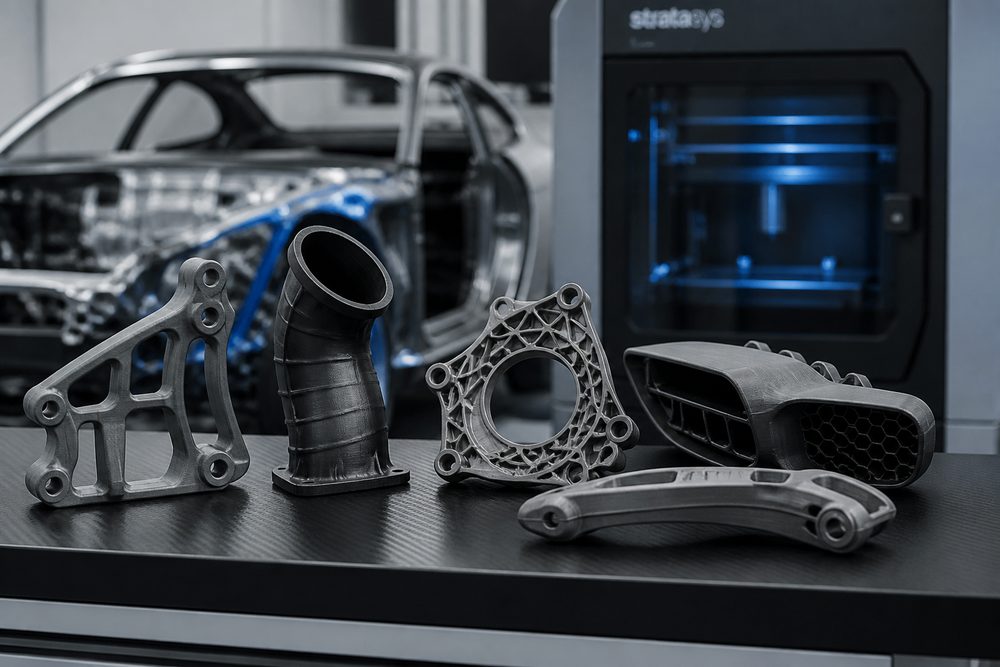
With the rapid development of the 3D printing industry today, the value of 3D printing in customized automobile production: manufacturing innovation from concept cars to mass-produced cars has become a key issue for enterprises to enhance their core competitiveness. With the diversification and personalization of market demand, the traditional manufacturing model is facing unprecedented challenges. 3D printing technology has brought revolutionary changes to the manufacturing industry with its unique advantages.
According to the latest market research report, the global 3D printing market size is expected to maintain rapid growth in the next five years. In this context, how to effectively use 3D printing technology to enhance corporate competitiveness has become the focus of many companies. This article will provide an in-depth analysis of the value of 3D printing in customized automobile production from multiple dimensions: related content on manufacturing innovation from concept cars to mass-produced cars.
Flexible manufacturing system
The value of implementing 3D printing in customized automobile production: Manufacturing innovation from concept cars to mass-produced cars requires systematic planning and professional technical support. First, companies need to establish a clear technology roadmap and clarify short-term and long-term goals. Secondly, appropriate 3D printing processes and materials must be selected to ensure the feasibility and economy of the technical solution.
During the technical implementation process, the following points require special attention:
1. Technology selection and evaluation: Based on product characteristics and production needs, select the most suitable 3D printing technology route, such as FDM, SLA, SLS, SLM, etc.
2. Process design: Optimize the complete process from design to finished product, including preliminary preparation, printing parameter settings, post-processing process, etc.
3. Quality control system: Establish a whole-process quality monitoring mechanism to ensure product consistency and reliability.
Quality control standards
The value of 3D printing in customized automobile production: Manufacturing innovation from concept cars to mass-produced cars has shown great application value in many industry fields. Taking a real case as an example, a well-known manufacturing company successfully shortened the product development cycle by 40% and reduced prototype production costs by 30% by introducing 3D printing technology.
In terms of application scenarios, this technology is particularly suitable for the following situations:
Small batch customized production: Traditional manufacturing methods are more expensive in small batch production, while 3D printing can achieve low-cost small batch production to meet personalized needs.
Complex structure manufacturing: 3D printing can easily handle complex geometric shapes that are difficult to achieve with traditional processing, expanding the degree of design freedom.
Rapid prototype verification: In the early stages of product development, rapid production of functional prototypes through 3D printing can identify design problems early and reduce development risks.
Cost-benefit analysis
Ensuring the value of 3D printing in customized automobile production: The successful implementation of manufacturing innovation from concept cars to mass-produced cars requires the establishment of a complete quality control system. This includes but is not limited to raw material inspection, process parameter monitoring, finished product performance testing and other links.
In terms of quality standards, industry best practices and international standards should be referred to, such as ISO 9001 quality management system, ASTM related standards, etc. At the same time, more detailed and operable internal standards should be formulated based on the company's own characteristics.
It is worth noting that quality control is not only the inspection of final products, but also a management system with full participation and full process control. From DFM (Design for Manufacturability) analysis at the design stage, to real-time monitoring during the production process, to multi-dimensional inspection of finished products, every link is crucial.
Delivery cycle optimization
Looking to the future, the value of 3D printing in customized automobile production: manufacturing innovation from concept cars to mass-produced cars will continue to deepen and develop, showing the following trends:
Intelligent upgrade: Combining artificial intelligence and big data technology to achieve intelligent optimization and predictive maintenance of the production process.
Material Innovation: The research and development of new printing materials will expand the application boundaries of 3D printing and improve product performance and functionality.
Process Fusion: 3D printing will be deeply integrated with traditional manufacturing processes to form a more flexible and efficient hybrid manufacturing model.
Green Manufacturing: The concept of sustainable development will run through the entire production process, promoting the development of 3D printing in a more environmentally friendly direction.
As the industry's leading one-stop 3D printing service platform, lantu3D will continue to focus on the value of 3D printing in customized automobile production: the latest developments in manufacturing innovation from concept cars to mass-produced cars, and provide customers with the most professional technical support and solutions. We believe that through continuous technological innovation and service optimization, 3D printing will bring a better future to the manufacturing industry.
Submit a model, drawing, image or written notes. Engineers will review material, process, finishing and delivery based on actual use.