Introduction: ESG Compliance Has Become a Core Issue for Corporate Sustainable Development
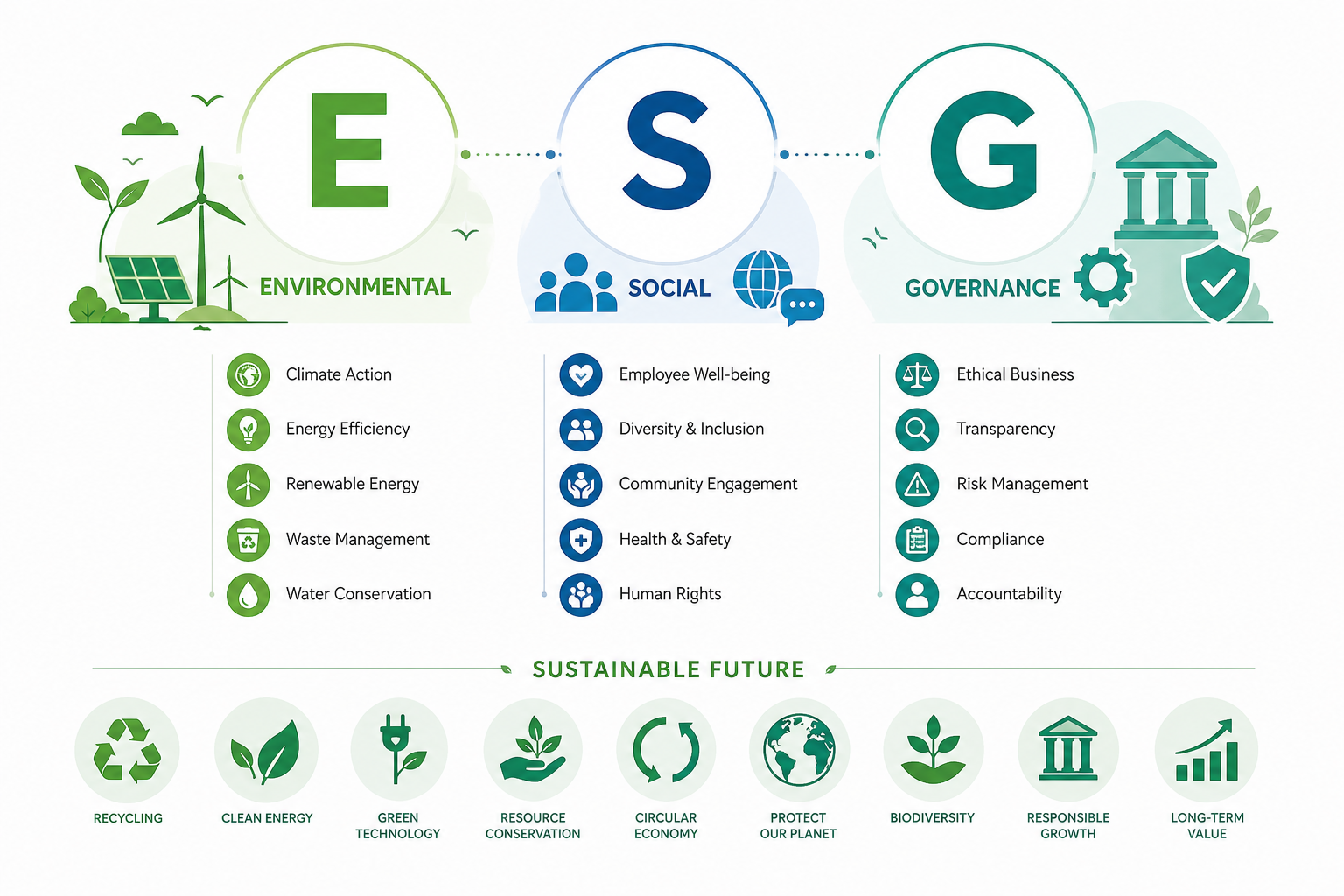
Environmental, Social, and Governance (ESG) has been one of the hottest topics in the global business community in recent years. Investors, customers, regulators, and the public are paying increasing attention to corporate ESG performance, and ESG ratings have become an important indicator for assessing a company's sustainable development capabilities. For 3D printing service enterprises, establishing a robust ESG compliance system is not only a necessity to respond to external pressures but also a strategic choice to enhance corporate competitiveness, mitigate operational risks, and achieve long-term sustainable development.
3D printing technology inherently possesses the characteristics of green manufacturing: high material utilization rates (approaching 100%), reduced need for molds and logistics, and support for localized production. However, these advantages require systematic ESG management to be fully transformed into corporate competitive advantages. This article will systematically introduce how 3D printing service enterprises can establish an ESG compliance system, covering three dimensions: environmental management, fulfillment of social responsibilities, and corporate governance optimization, providing practical implementation guidelines for enterprises.
Environmental Dimension: Green Manufacturing and Carbon Footprint Management
The Environmental aspect is the core of the ESG framework for 3D printing enterprises. The environmental advantages of 3D printing are primarily manifested in material savings, energy efficiency, and waste reduction. However, translating these environmental advantages into quantifiable ESG performance requires the establishment of a systematic environmental management system. First, a comprehensive assessment of the enterprise's environmental footprint should be conducted, including energy consumption (electricity, natural gas), material consumption (plastics, metal powders, resins), water consumption, and waste generation (failed parts, support materials, waste liquids). By quantifying these metrics, an environmental baseline can be established to provide a benchmark for future improvements.
Carbon footprint management is a key focus of the environmental dimension. Carbon emissions from 3D printing enterprises primarily stem from electricity consumption (equipment operation, air conditioning, lighting), material production (upstream emissions), and transportation (raw material transport, finished product delivery). Calculating the carbon footprint requires adopting the Life Cycle Assessment (LCA) method to comprehensively evaluate environmental impacts from a "cradle-to-grave" perspective. Many 3D printing materials (such as PLA bioplastics and recyclable nylon) possess the advantage of a low carbon footprint and should be prioritized. Furthermore, reducing material usage by optimizing printing parameters (such as lowering infill density and optimizing support structures), and lowering electricity consumption through equipment energy efficiency management (such as nighttime standby mode and intelligent temperature control), can effectively reduce carbon emissions.
Waste management is another critical aspect of environmental management. Waste generated from 3D printing includes failed parts, support materials, waste resin, powder waste, packaging materials, etc. Establishing a system for waste classification, recycling, and disposal can significantly reduce environmental impact. For example, SLS nylon powder can be recycled multiple times (typically 5-10 cycles), and failed parts can be crushed and reprocessed into printing materials; waste liquid from photopolymer resins requires professional recycling and treatment; metal powder waste can be recovered and refined. Establishing a waste management ledger and conducting regular audits of waste generation volumes and disposal methods are fundamental requirements for environmental compliance. Obtaining ISO 14001 Environmental Management System certification can systematically enhance an enterprise's environmental management standards.
Social Dimension: Employee Rights and Community Responsibility
The Social dimension focuses on the impact of enterprises on employees, customers, suppliers, and communities. For 3D printing companies, social compliance is primarily reflected in the protection of employee rights. 3D printing workshops present various occupational health risks: resin volatiles (VOCs) can irritate the respiratory tract, metal powders can cause pneumoconiosis, lasers and UV light can damage vision, and noise can lead to hearing impairment. Enterprises must establish a comprehensive occupational health and safety management system, provide appropriate personal protective equipment (PPE), conduct regular occupational health examinations, and ensure that the working environment complies with OSHA or local occupational health standards.
Employee training and development is an important reflection of social responsibility. 3D printing technology evolves rapidly, requiring employees to continuously learn new technologies and processes. Enterprises should establish a systematic training system, including new employee orientation, job skills training, safety training, and management skills training. Investment in training not only improves employee skills but also enhances employee loyalty and corporate cohesion. Furthermore, providing fair compensation and benefits, establishing smooth promotion channels, and fostering an inclusive and diverse corporate culture are all essential components of the social dimension. Obtaining ISO 45001 Occupational Health and Safety Management System certification can systematically improve an enterprise's social responsibility performance.
Customer responsibility and community contribution are of equal importance. Clients utilizing 3D printing services may operate in highly regulated industries such as healthcare and aerospace; therefore, enterprises must guarantee service quality and data security. Establishing mechanisms for handling customer complaints, protecting customer intellectual property rights, and ensuring on-time delivery rates are fundamental requirements of customer responsibility. In terms of community contribution, enterprises can promote 3D printing technology and cultivate future talent through open days, science popularization activities, and school-enterprise cooperation. Participating in community public welfare projects (such as providing assistive devices for people with disabilities or emergency supplies for disaster-stricken areas) can enhance an enterprise's social image and sense of community identity. Performance in the social dimension can be quantitatively assessed using indicators such as employee satisfaction, customer satisfaction, and the level of community contribution.
Governance Dimension: Compliant Operations and Risk Management
The Governance dimension focuses on the management structure, compliant operations, and risk management of enterprises. Compliance requirements faced by 3D printing enterprises include: business registration and tax registration, environmental protection approval and pollutant discharge permits, fire safety acceptance and safety evaluation, special equipment filing (such as pressure vessels and lifting equipment), and intellectual property protection. Establishing a compliance checklist, regularly reviewing compliance status, and ensuring lawful business operations are foundational work of the Governance dimension.
Risk management is the core of the governance dimension. 3D printing enterprises face various risks: technical risks (equipment failure, printing failure), quality risks (dimensional deviations, substandard performance), safety risks (fire, explosion, chemical leakage), legal risks (intellectual property infringement, contract disputes), and market risks (demand fluctuations, price competition). Establishing a comprehensive risk management system, including risk identification, risk assessment, risk control, and risk monitoring, can effectively reduce operational risks for enterprises. It is recommended that enterprises establish a risk management committee to regularly assess risk conditions and formulate risk response plans. Purchasing appropriate commercial insurance (such as product liability insurance, public liability insurance, and employer's liability insurance) can transfer certain risks.
Corporate governance structure directly affects the decision-making efficiency and transparency of an enterprise. For small and medium-sized 3D printing enterprises, it is recommended to establish a clear equity structure, a standardized board of directors system, an independent audit mechanism, and a transparent information disclosure system. Governance documents such as the Articles of Association, Shareholders' Agreements, and Board Charters should be formulated to clarify the rights and responsibilities of all parties. An internal control system should be established, including financial, operational, compliance, and information technology controls, to ensure the standardized operation of the enterprise. For enterprises planning to seek financing or go public, the development of the governance dimension is particularly important, as investors will focus on scrutinizing the enterprise's governance level. Obtaining ISO 27001 Information Security Management System certification can enhance the enterprise's data governance level.
ESG Reporting and Rating Improvement Strategies
ESG reports serve as the primary vehicle for enterprises to demonstrate their ESG performance to external stakeholders. The preparation of ESG reports should adhere to leading international standards, such as the GRI (Global Reporting Initiative) Standards, SASB (Sustainability Accounting Standards Board) Standards, or TCFD (Task Force on Climate-related Financial Disclosures) recommendations. ESG reports should include: ESG strategies and objectives, ESG performance data (quantitative indicators), ESG management measures, ESG case stories, and future improvement plans. Reports should undergo third-party audit or verification to enhance credibility.
Improving ESG ratings requires systematic efforts. Mainstream ESG rating agencies (such as MSCI, Sustainalytics, and FTSE Russell) have different focuses in their rating methodologies, and companies should study the rating criteria of their target agencies to improve their ESG performance in a targeted manner. Common measures to enhance ratings include: setting science-based carbon reduction targets (such as SBTi targets), publishing carbon neutrality timelines, establishing board-level ESG committees, disclosing supply chain ESG management, and publishing diversity and inclusion reports. Improving ESG ratings is an ongoing process that requires long-term commitment and continuous improvement from companies.
The collection and management of ESG data form the foundation of ESG reporting. It is recommended that enterprises establish an ESG data management system to automatically collect environmental data (electricity, water, and gas meter data), social data (employee, training, and safety data), and governance data (compliance, risk, and board data). The data management system should ensure the accuracy, completeness, and consistency of data, and support multi-dimensional analysis. Digital management of ESG data not only improves reporting efficiency but also provides data support for ESG performance improvement. Some enterprises have started using blockchain technology to ensure the immutability of ESG data, enhancing data credibility.
ESG Opportunities and Challenges Unique to 3D Printing
3D printing technology possesses inherent ESG advantages, and enterprises should fully leverage and communicate these benefits. Environmentally, the on-demand manufacturing model of 3D printing reduces inventory and waste, distributed manufacturing cuts transportation emissions, and lightweight design lowers energy consumption during the product use phase. Socially, 3D printing lowers the barriers to manufacturing, enabling small and medium-sized enterprises (SMEs) and individual creators to participate in production, thereby promoting the democratization of manufacturing. In terms of governance, the digital manufacturing process generates vast amounts of data, providing a foundation for transparent management.
However, 3D printing also faces unique ESG challenges. From an environmental perspective, certain 3D printing materials (such as ABS and certain resins) are non-recyclable or difficult to recycle, and some metal printing processes are extremely energy-intensive (SLM energy consumption is more than 10 times that of traditional manufacturing). From a social perspective, the automation of 3D printing may lead to job displacement for traditional manufacturing workers, necessitating a focus on workforce transition. From a governance perspective, the risk of intellectual property infringement in 3D printing is relatively high (as designs can be easily replicated), requiring strengthened IP protection. Enterprises should squarely address these challenges, formulate targeted management strategies, and transform challenges into opportunities for improvement.
The circular economy is a key direction for 3D printing ESG. By establishing a material recycling system (recycling failed parts, support materials, and scraps), the circular utilization of materials is achieved; by designing repairable and upgradable products, product lifespans are extended; and by providing remanufacturing services, old products are given new life. The circular economy not only reduces environmental impact but also creates new business opportunities. Some innovative companies have begun offering a "Printing-as-a-Service" model, where customers pay based on actual usage, and the company is responsible for equipment maintenance and material recycling, achieving a win-win for both business and environmental value.
Conclusion: ESG Is the Cornerstone of Long-Term Competitiveness for 3D Printing Enterprises
Establishing an ESG compliance system is not an additional burden but rather the essential path for 3D printing enterprises to achieve sustainable development. Through systematic environmental management, fulfillment of social responsibilities, and optimization of corporate governance, enterprises can reduce operational risks, enhance brand image, attract responsible investment, and strengthen customer trust, thereby standing out in the fierce market competition.
In the future, as ESG regulations tighten and stakeholder expectations rise, ESG will become a "license to operate" for enterprises. 3D printing enterprises should initiate the construction of an ESG compliance system as early as possible, integrate ESG concepts into corporate strategy and daily operations, cultivate ESG professionals, and establish ESG performance evaluation mechanisms. Through continuous efforts, they should transform ESG from a compliance requirement into a competitive advantage, achieve the unification of economic, environmental, and social values, and lay a solid foundation for the long-term development of the enterprise. ESG is not merely about "doing the right thing," but also about "doing things the right way"; it is the essential path for 3D printing enterprises to achieve excellence.
Submit a model, drawing, image or written notes. Engineers will review material, process, finishing and delivery based on actual use.